


We return to The Open Thread, our periodic check-in on past stories and a look at what’s ahead. Today we revisit four of them: A.I. safety landed on the diplomatic agenda at the U.S. and China summit, the fight for competitive congressional elections has gotten much harder, local news got a rare break, and college sports' new system governing how student athletes are paid is beginning — albeit shakily — to show its shape. All series (for reading or listening — I narrate each one) are at solvingfor.io.
AI Safety: Reconsidered
When we covered A.I. safety last fall, the central tension was this: the U.S. and China were locked in a race that neither side felt it could slow down, even as the creators of A.I., top CEOs and leading researchers warned of the risks of moving too fast. The prisoner’s dilemma of A.I., where mutual caution is the rational choice but unilateral restraint feels like surrender, seemed nearly impossible to escape.
The solution we highlighted: the U.S. and China sitting down to negotiate ways to manage the risks of A.I., just as the U.S. and Soviet Union did nearly 60 years ago (at the height of the Cold War) to control the growth and spread of nuclear weapons.
Last week, we may have seen the start of it.
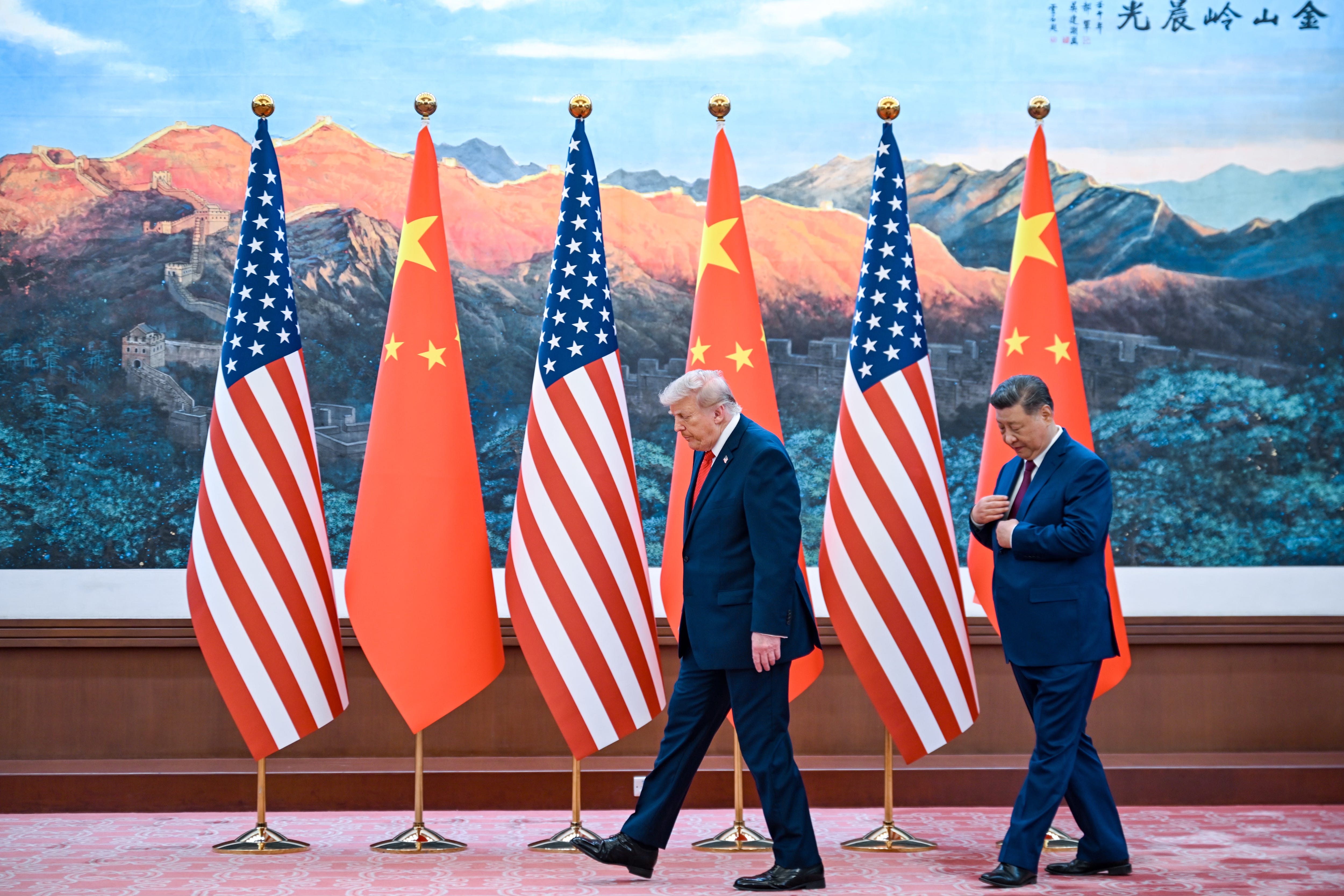
Ahead of the summit between Trump and Xi in Beijing, both The Wall Street Journal and The New York Times reported that A.I. safety would be on the agenda. It came as the Trump administration had done an about-face on the need to explore guardrails, as frontier A.I. models by the likes of Anthropic, Google DeepMind, and China’s DeepSeek grow more powerful on both sides of the Pacific.
The previous posture was clear. Vice President J.D. Vance gave a speech last year in Paris declaring that the “A.I. future is not going to be won by hand-wringing about safety.”
Why the change? The catalyst is Anthropic’s powerful new model, Claude Mythos, whose advanced hacking capabilities spooked government officials and set off a scramble about what the government’s role should be in managing the release of the most powerful AI systems. The White House has since moved toward considering pre-deployment safety testing — a sharp reversal from its earlier position of prioritizing rapid innovation without any guardrails.
But the fear remains: any slowdown by one side gives the other an advantage. Hence the push for a global framework established by today’s great powers. Not only rules governing the release of ever-more-powerful A.I. models — systems that could pierce financial networks or assist in the development of bioweapons — but procedures to manage a crisis. Proposals include establishing an emergency hotline between the U.S. and China for A.I. matters, modeled on the one the U.S. and Soviet Union created during the Cold War.
“The two A.I. superpowers are going to start talking,” U.S. Treasury Secretary Scott Bessent said during the meetings in Beijing. “We’re going to set up a protocol in terms of, how do we go forward with best practices for A.I. to make sure nonstate actors don’t get ahold of these models.”
Following the summit, President Trump was circumspect about specifics, but confirmed the change in approach. “AI is fantastic,” Trump said aboard Air Force One, according to The Hill. But “it’s also got some drawbacks and we’re talking about…we’re going to work together.”
A protocol. A hotline. The echoes of the nuclear age are getting harder to ignore.
If you missed it, you can explore the three-part series, The Control Problem: Solving For AI Safety, here.
Congress: Not a Competition of Ideas — Just Power
Start with the baseline: in 2024, just 37 of 435 House races were decided by five points or less — nine percent. Most Americans now live in districts where the outcome is effectively predetermined long before Election Day. The consequence: rising polarization, a dearth of genuine debate, and a Congress no longer structured to reward solving problems — only holding power.
The House was designed by the Framers to be the chamber closest to the people — directly elected, up for election every two years, meant to mirror public sentiment. It has become the opposite.
When we covered the alarming lack of congressional competition, the core problem was structural: the way districts are drawn drains Congress of the competitive pressure that produces accountability to the entire electorate. Closed primaries compound it, pushing candidates toward the extremes before a general election audience ever weighs in. The solutions we examined — including independent redistricting commissions, open primaries, and ranked-choice voting — were slow and contested, but at least still in play.
In recent weeks, the landscape has gotten dramatically worse — and it is worth being clear about how we got here.
Facing increasingly dire polling numbers last summer, President Trump urged Republican-led states to gerrymander their congressional districts to boost the party’s chances in the upcoming midterms. It was a politician choosing his voters rather than voters choosing their politicians — and an extraordinary departure from tradition: congressional redistricting typically follows the decennial census, not a president’s approval ratings. Texas, North Carolina and Missouri quickly complied. Florida recently did too. It was nakedly political — and it set the stage for what followed.
The legal architecture enabling it came in two steps. In Rucho v. Common Cause, the Supreme Court ruled in 2019 that partisan gerrymandering is a political question — federal courts would stay out entirely. Then on April 29th, the Court went further in Louisiana v. Callais, effectively gutting the one remaining constraint: the Voting Rights Act’s protection of minority voters. Justice Kagan, in dissent, warned the majority had rendered Section 2 of the Voting Rights Act “all but a dead letter.” Together the two decisions form a closed loop — partisan gerrymandering is unreviewable, and race can no longer meaningfully constrain it.
The human cost is concrete. About one-third of Louisiana's population is Black, yet under the new map being advanced, the state would go from two majority-Black congressional districts back to one. The partisan math is equally stark: Louisiana has nearly identical numbers of registered Democrats and Republicans — and will now likely send five Republicans and one Democrat to Congress.
The ruling immediately opened a new front. Tennessee drew a new map intended to eliminate the state's last Democratic House seat. South Carolina's governor called the legislature into special session to pursue a redraw. In Alabama, the attorney general was candid about his goal: a congressional map that "favors Republicans seven-to-zero." In a state where 27% of the population is Black — and where Black voters overwhelmingly vote Democratic — eliminating Black representation and maximizing Republican advantage are a single goal.
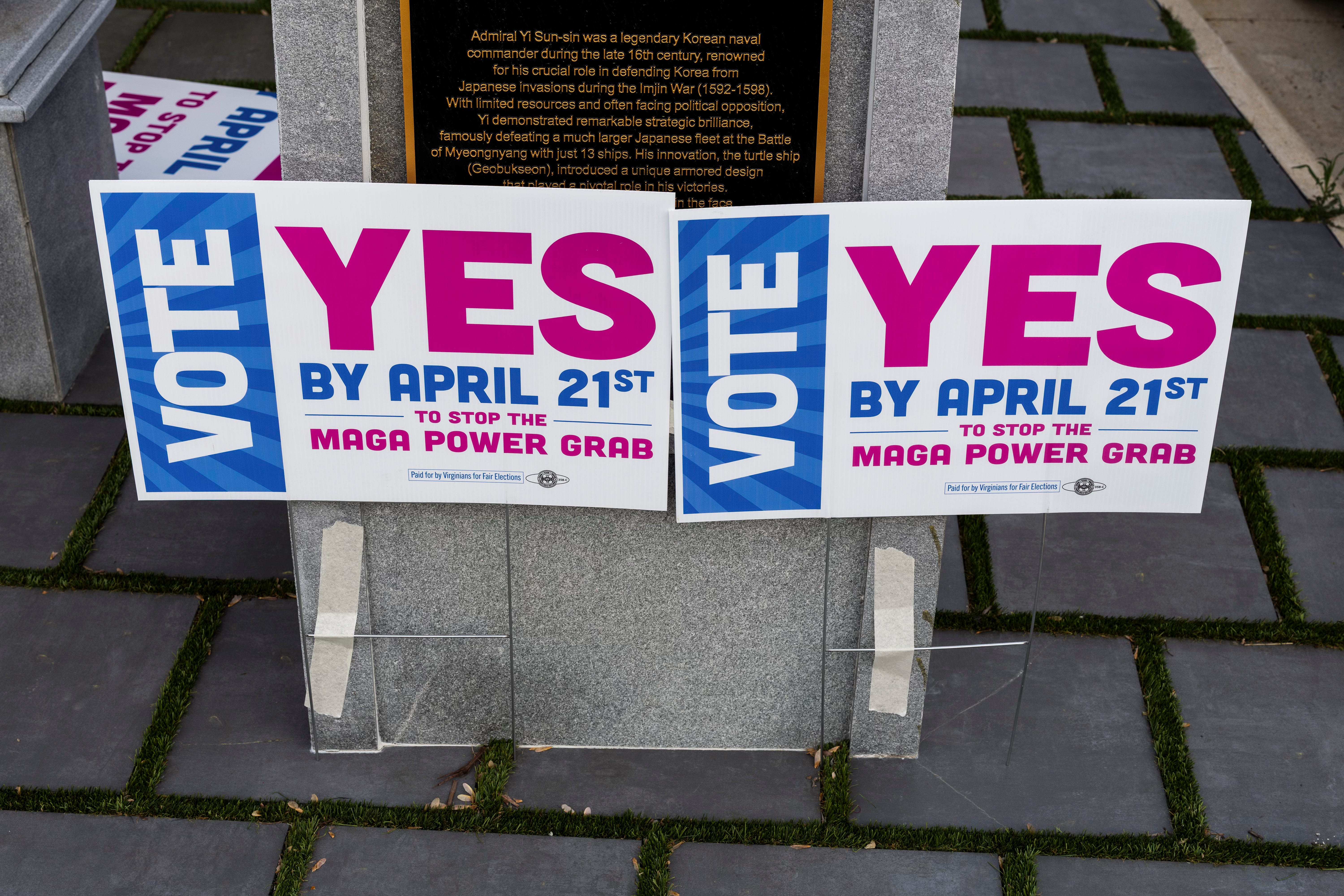
Democrats have tried to fight back. California voters passed a new map adding five Democratic-leaning districts. Virginia voters approved a redistricting referendum, only to have the Virginia Supreme Court strike it down 4-3, leaving the state's current maps in place through the midterms.
The point is this: the effort to make Congress more competitive, more representative, and more accountable has not stalled — it has been deliberately dismantled.
The remedies we explored still exist on paper: a federal ban on partisan gerrymandering, independent redistricting commissions, open primaries, multi-member districts, and ranked-choice voting all remain possibilities. But the wheels for reform have completely come off. What’s left is the rawest version of the problem we identified — not a competition of ideas, but a competition for power, with the maps drawn accordingly.
If you missed it, you can explore the three-part series, The Democracy Deficit: Solving For Competition in the People’s House, here.

Local News: A Model Worth Watching
When we covered the collapse of local news, the story was grim: newsrooms gutted, communities left without watchdogs, and no sustainable business model emerging to fill the void at scale.
Here’s a piece of good news.
The Pittsburgh Post-Gazette, a 240-year-old newspaper set to close, was purchased by the Venetoulis Institute for Local Journalism — the nonprofit parent of The Baltimore Banner — which took ownership May 4th and pledged $30 million over five years to keep it running. The Venetoulis Institute was established by Baltimore billionaire Stewart Bainum after he failed to acquire The Baltimore Sun. Instead, he launched the Baltimore Banner from scratch in 2022 — a digital-only nonprofit that won the Pulitzer Prize for local reporting. This isn’t a philanthropic rescue with no model behind it. It’s an organization that has already proven nonprofit journalism can produce serious work.
The Post-Gazette would become only the second major metro daily to fully convert to nonprofit, following The Salt Lake Tribune. One rescue does not reverse a national crisis. But Pittsburgh — which had been on the verge of becoming the largest American city without a daily newspaper — now has a model worth watching.
If you missed it, you can explore the three-part series, The Community Gap: Solving For Local News, here.
Paying College Athletes: Still Taking Shape
When we covered the end of amateurism in college sports, the headline was simple: the old system was dead. What remained was the harder question — how do you fairly compensate athletes who generate billions while preserving the traditions and educational mission that give college sports its meaning; and fund the non-revenue Olympic sports like track and field that football and basketball have historically bankrolled?
The system is a work in progress. But it has structure now, and that structure recently faced its first real test.
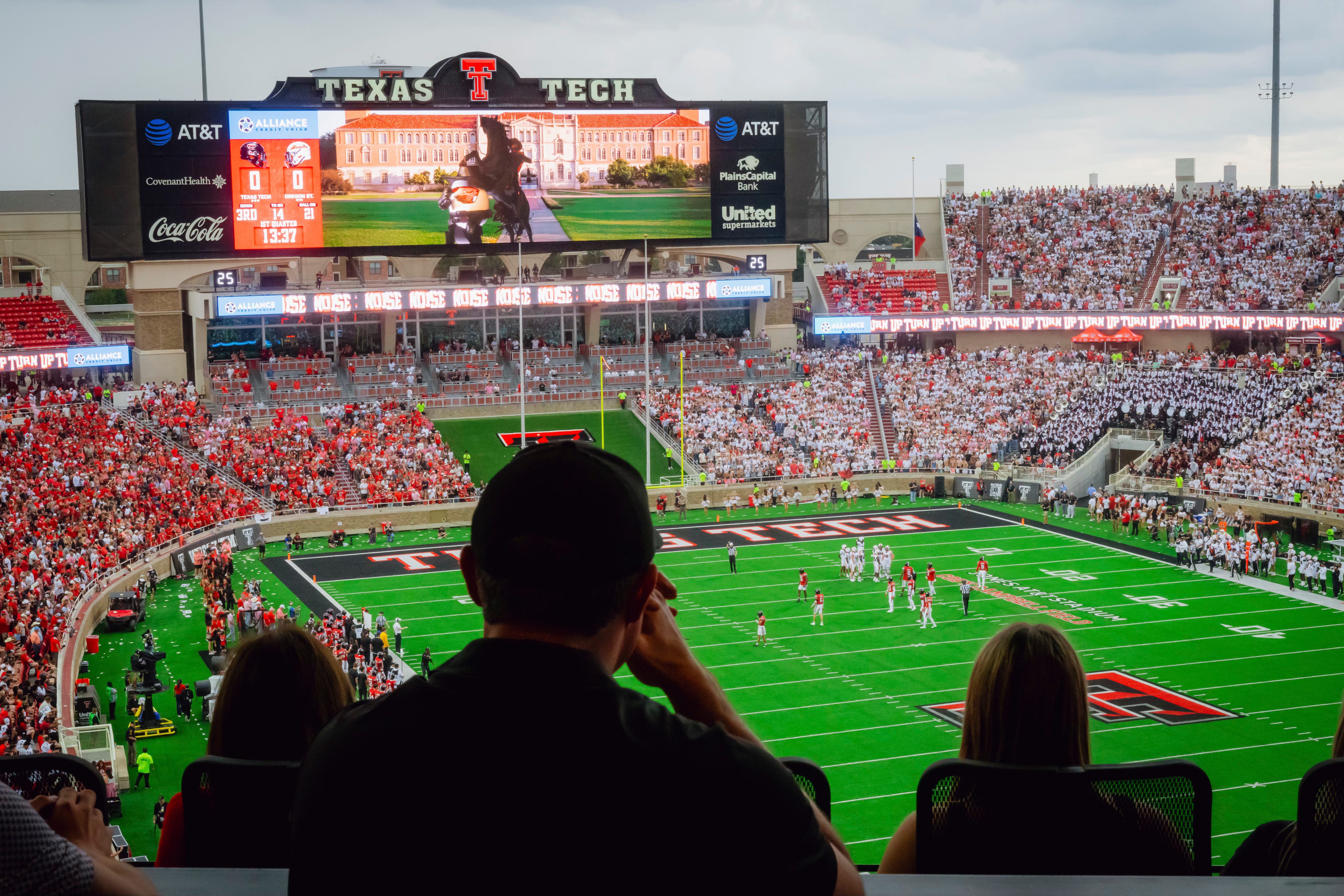
At the center of it is the House settlement, reached last year, which established a $20.5 million per-school pool for direct revenue sharing between schools and athletes — policed by a newly created body called the College Sports Commission. But the richest programs have been spending well beyond that cap. An ESPN report said the most competitive college football programs spend between $30 to $40 million to assemble their rosters. The mechanism: name, image and likeness — NIL — deals structured through third-party marketing firms, which sit outside the cap entirely. The CSC’s position is that those deals have to represent genuine commercial value — a company paying for specific, identifiable use of a player’s likeness — not a backdoor salary payment in disguise.
Last week, an arbitrator upheld the CSC’s decision to deny NIL deals involving 18 Nebraska football players and Playfly Sports, Nebraska’s multimedia rights partner, which had pledged more than $8 million to athletes through arrangements ruled to be “warehousing” — purchasing NIL rights without specifying how they’d actually be used. The ruling signals the new system has teeth. But it is less an ending than a first skirmish: a federal court hearing is scheduled for May 27 to review the CSC’s authority over exactly these kinds of deals, and Nebraska’s attorney general has signaled he may intervene.
A system taking shape. The tests are just beginning.
If you missed it, you can explore the three-part series, The Amateur Myth: Solving For College Athlete Pay, here.
Next up
For our next series, we turn to the U.S. federal debt. The numbers alone are stark: the debt now exceeds the entire U.S. gross domestic product — a milestone that is casting a harsh new light on how the government taxes, spends, and borrows. We’ll unpack the problem, trace how we got here, and examine what might actually be done about it.
Note: Prefer to listen? I narrate each story myself. Use the Article Voiceover at the top of the page, or find all narrated editions in the Listen tab at solvingfor.io.
Solving For is a deep-dive series that takes on one pressing problem at a time: what’s broken, what’s driving it, and what a path forward might look like.
Previous series have examined rare earth dominance, AI safety, the decline of local news, the end of amateurism in college sports, shrinking competition in Congress, and a world rearming as the global rules-based order weakens. Learn more at solvingfor.io.
To see the full roster of deep dives, take a look below —
The 21st Century’s Oil: Solving For China’s Rare Earth Dominance
The Control Problem: Solving For AI Safety
Part 1, AI: The Race and the Reckoning
Part 2, AI: The Prisoner’s Dilemma
Part 3, AI: The New Nuclear Moment
The Democracy Deficit: Solving For Competition in the People’s House
Part 2, Congress: How We Got Stuck
The Amateur Myth: Solving For College Athlete Pay
Part 1, College Sports: How It Was Broken By a $60 Video Game
Part 2, College Sports: How the NCAA was Born of Death and Money — Death was the Easy Part
The 80-Year Peace: Solving For a Rearming World
Part 1, War & Peace: The World Rearms
The Community Gap: Solving For Local News
Part 1, Local News: The Civic Unraveling
Part 2, Local News: The Internet Was the First Disruption. AI Is the Next.
Part 3, Local News: The Bet That Wasn’t Made, But Could Still Be
Engineered Addiction: Solving for Teen Mental Health