


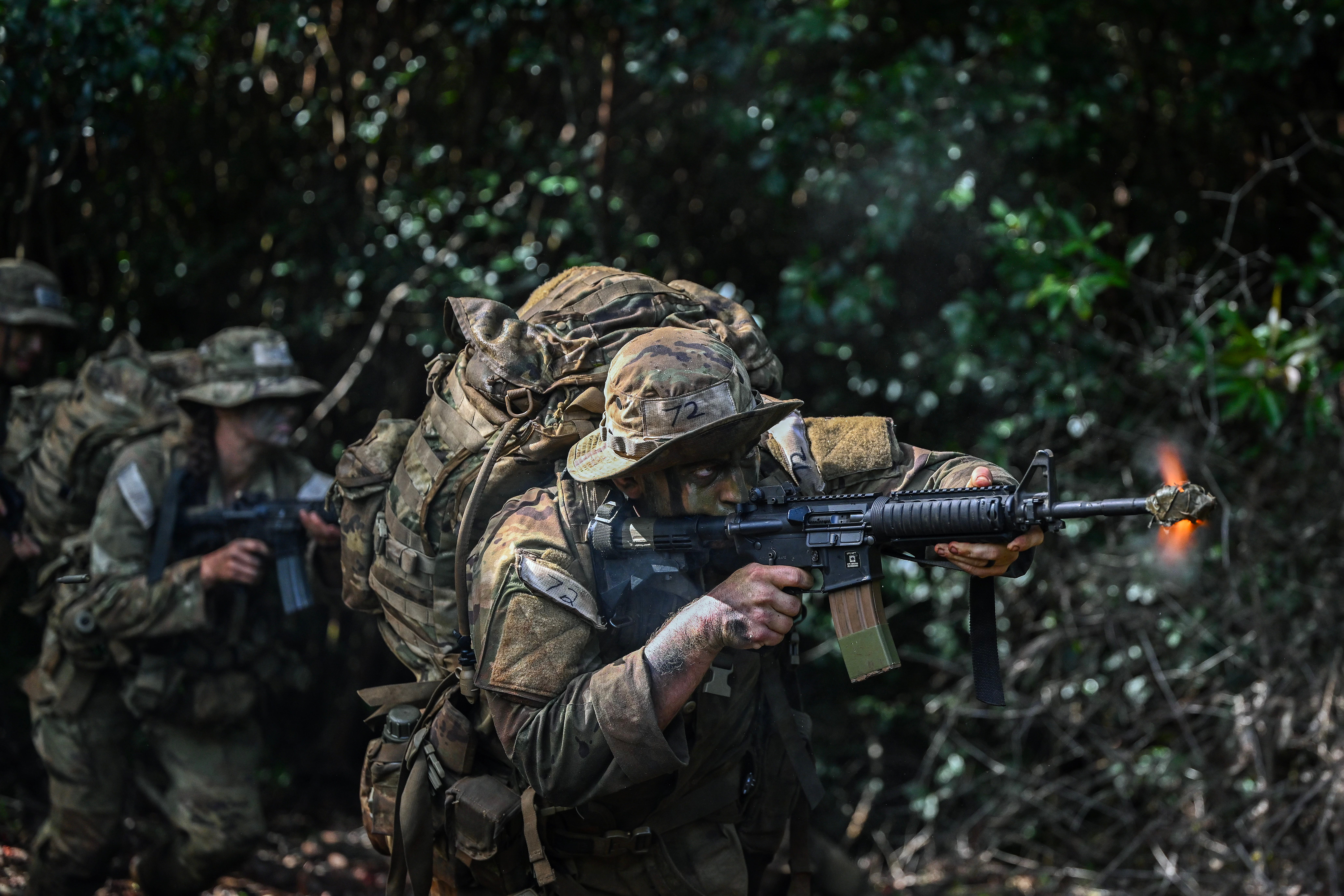
For this series we examine the world’s return to large-scale militarization—the fastest rearmament since the Cold War. After 80 years without direct great-power conflict, the longest such peace in modern history, nations are arming at unprecedented speed just as the system that prevented catastrophe begins to fracture.
Today’s installment examines the problem; next week, the forces that brought us here; the third part, solutions.
What you’ll learn in part one:
How the world is rearming across every major region, with military spending at record levels and flashpoints from Ukraine to Taiwan.
Why the post–World War II system—built deliberately to prevent another global war—worked for eight decades, and why it’s now fracturing.
What the Thucydides Trap reveals about why rising and established powers so often end in war—and whether the U.S. and China can escape it.
Solving For tackles one pressing problem at a time: what’s broken, what’s driving it, and what can be done. New posts weekly. Check out previous series on rare earth elements, AI safety, vanishing competition in Congress, and the end of amateurism in college sports.
The world is rearming at a pace not seen since the Cold War.
Global military spending is at the highest level on record. Last year marked the steepest annual increase in three decades. All five regions of the world increased spending on arms and defense, with more than 100 countries raising their budgets, according to the Stockholm International Peace Research Institute.
Europe is racing to rebuild arsenals. Asia is accelerating naval, missile, and air power buildups. The U.S. defense budget now approaches a trillion dollars a year.
At the same time, the world’s major flashpoints remain unresolved — and several are intensifying. Ukraine. Taiwan. The Korean Peninsula. The Middle East. Each is heavily armed, with opposing forces in close proximity. Each is one miscalculation away from escalation — a potential spark for wider conflict.
Underlying all of it is the defining rivalry of the century: the contest between the United States and China.
History offers a bleak guide. When a rising power challenges an established one, conflict often follows — not because leaders wanted war, but because the dynamics made it difficult to avoid. Of the sixteen cases over the past 500 years where a rising power threatened to displace a ruling one, twelve ended in war, Harvard’s Graham Allison writes in his bestselling book, Destined for War.
The return of large-scale militarization is often framed as necessary. In many cases, it is. Peace through strength. Deterrence can work.
But history suggests that arms buildups are safest when paired with strong guardrails: diplomacy, communication channels, shared rules, mutual restraint. They grow dangerous when those systems erode.
And now those guardrails are eroding — on multiple fronts.
Arms control treaties that limited nuclear arsenals and weapons deployments have collapsed or expired. The institutional architecture that managed great power competition is fraying. And the underlying consensus about international order itself is fracturing.
Russian President Vladimir Putin’s invasion of Ukraine has cast aside respect for international borders and openly champions a sphere-of-influence global order over a rules-based one. U.S. President Donald Trump puts a premium on bilateral deals, leverage, and transactions — and likewise favors a power-based order over one rooted in rules and alliances.
This week, Trump withdrew the U.S. from more than 60 international organizations intended to foster multilateral cooperation.
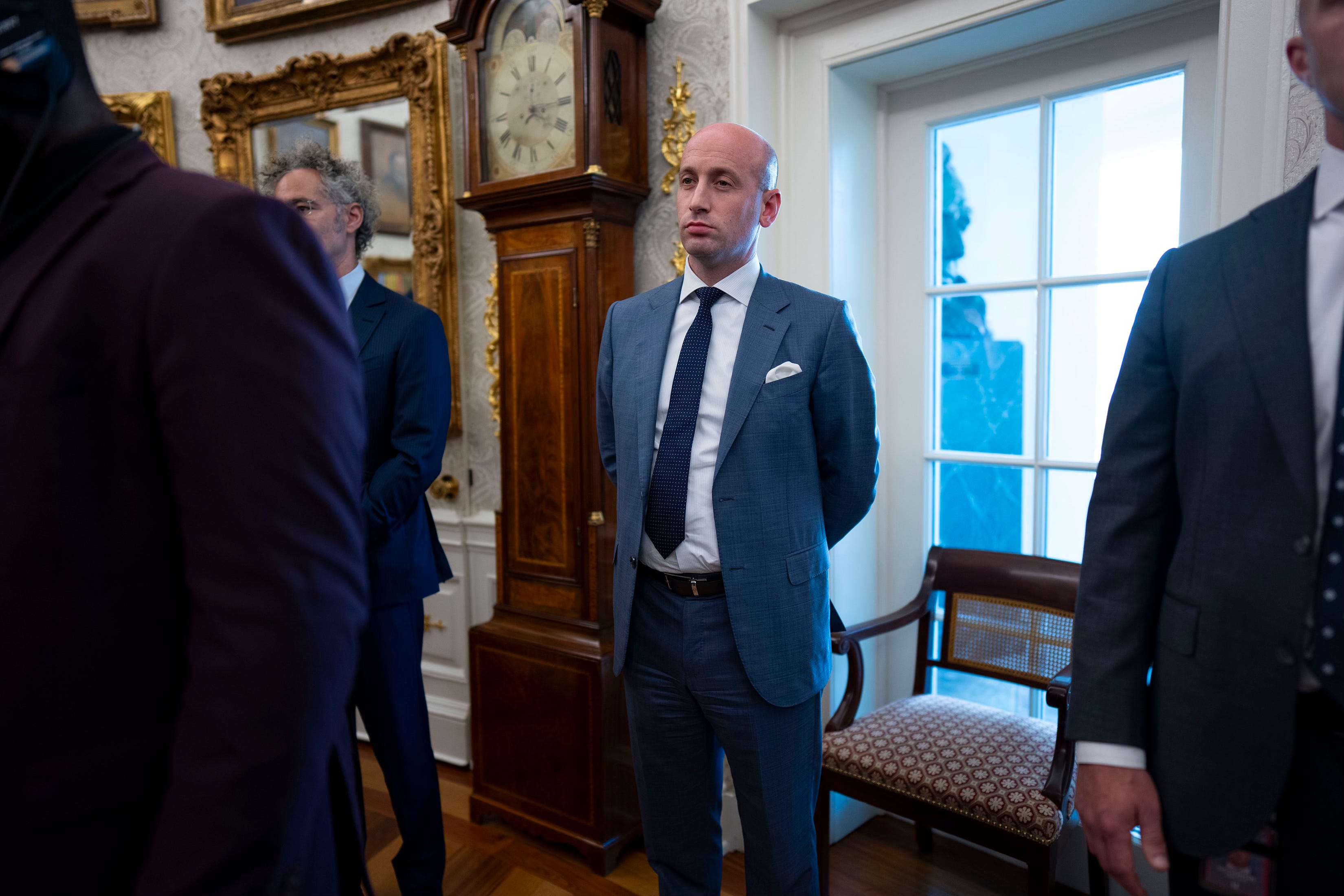
Stephen Miller, a top advisor to President Trump, explained the administration’s worldview in stark terms: the world is governed not by rules or norms but by sheer strength, force, and power. “These are the iron laws of the world since the beginning of time,” he said in a CNN interview.
If the current trajectory holds, the pattern is clear: more weapons, weaker rules, and the conditions that have repeatedly led to war.
Unless, that is, the arc of history is bent deliberately — through leadership, restraint, and a recognition that the path we’re on doesn’t have to be the one we take.
For this Solving For series the question is not whether countries should have robust militaries or defend themselves. It is whether they can do so without turning preparation into provocation — and deterrence into disaster.
The 80-Year Peace
We are living in an extraordinarily rare moment in history — so rare, and sustained for so long, that it’s easy to overlook. The world’s great powers have avoided direct war for nearly 80 years — the longest such stretch since the Roman Empire.
There have been devastating regional conflicts, proxy wars, and nerve-wracking confrontations like the Cuban Missile Crisis. But there has been no shooting war between great powers. The U.S. and Soviet Union never fought each other directly during the Cold War. Nor have the U.S. and China.
This outcome involved some luck. But it was no accident.
After World War II — which capped a half-century that saw the world twice convulsed by global war — the United States and its allies made a conscious decision: this pattern of catastrophe could not be allowed to continue. They set out to build an international system deliberately designed to prevent another great-power war.
The core insight was clear. Lasting peace required more than military might. It required institutions, rules, and economic ties that made war both harder to start and harder to justify.
Rather than withdrawing from global leadership, the United States chose to anchor its power within a network of multilateral frameworks that aligned stability with shared prosperity.
The system rested on three pillars, built in rapid succession between 1944 and 1949.
First, a renewed commitment to diplomacy over conquest, embodied in the launch of the United Nations.
Second, a shared economic framework linking former enemies through reconstruction and growth — built through new institutions like the International Monetary Fund and World Bank, and reinforced by the Marshall Plan.
Third, a permanent security alliance. The North Atlantic Treaty Organization bound the security of the United States and Canada to Europe’s defense, reducing incentives for arms races and deterring unilateral aggression. At its core is Article 5, the treaty’s collective-defense clause: an attack on one NATO member is treated as an attack on all, obligating every ally to respond.
Together, these arrangements produced an unprecedented outcome — what historian John Lewis Gaddis famously described as “The Long Peace.” Not because conflict disappeared, but because it was constrained — channeled into diplomacy, deterrence, and economic competition rather than open battle.
But this peace is not self-sustaining. It requires active upkeep, sustained political will, and a shared commitment to a rules-based order rather than one built on power alone. As successive generations have lived without great-power war, it has become easier to assume this stability will last forever. Now, what was once essential infrastructure for peace is increasingly seen as outdated — or optional.
It’s a belief being tested.
In November 2025, Harvard Kennedy School’s founding dean Allison and former Vice Chairman of the Joint Chiefs of Staff James Winnefeld laid out the stakes in Foreign Affairs. The most important question facing Americans today, they wrote, “is whether the nation can gather itself to recognize the perils of the moment” and “find the wisdom required to navigate it and take collective action to prevent — or more accurately, postpone — the next global convulsion.”
A Call to Arms
The erosion of this framework matters because countries are rearming at speeds not seen in generations.
One person who illustrates how the world has changed: Armin Papperger.
For most of his career, the stocky, white-haired Papperger ran a German manufacturing company largely forgotten to history. Now he and his company are so important that Russian intelligence wants him dead.
Papperger is CEO of Rheinmetall, a more than century-old conglomerate headquartered in a quiet, tree-lined section of Dusseldorf. In the 1930s the company was a pillar of Hitler’s massive rearmament of Germany. It used forced laborers to produce weapons and ammunition fueling the Nazi war effort.
After World War II its weapons production was halted by the Allies. The company sought to make amends for what it called its “misconduct during the Nazi era” and pivoted to making civilian goods, from typewriters to automotive parts. For a time it considered spinning off its defense business altogether.
Then Russia invaded Ukraine in 2022.
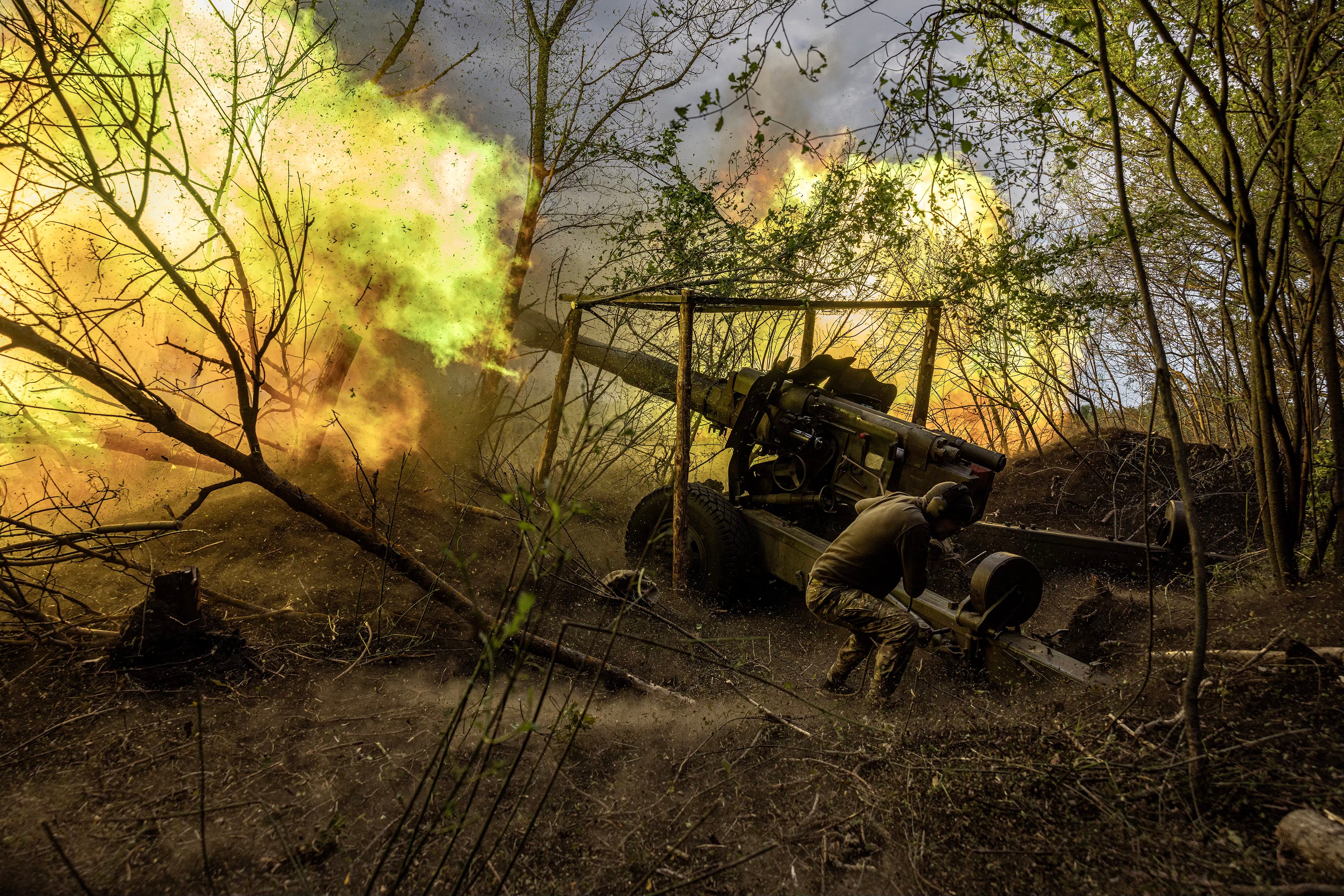
Rheinmetall, one of the few European firms that had retained the know-how to produce artillery shells at scale, suddenly became indispensable. It’s now among Europe’s most important defense suppliers. Its factories are expanding. New production lines are running around the clock making artillery shells, armored vehicles, air defense systems, ammunition. Since 2022 the company’s stock price has increased more than twentyfold.
In December 2025 The Economist magazine named Papperger its CEO of the Year, citing the executive’s stalwart support for Ukraine and defense of Europe. But perhaps the starkest illustration of Papperger and his company’s new global clout — in 2024 U.S. intelligence warned German authorities that it had uncovered a plot by Russia to kill him.
“We are now a key player in the global defense super cycle,” Papperger told Bloomberg Businessweek last year. “We were always prepared, and this is now paying off.”
The numbers tell the story. Germany increased its defense spending 28 percent to $88 billion. Across Europe, every country increased its military spending last year except tiny Malta. Poland’s spending jumped 31 percent to $38 billion. Romania increased its spending 43 percent to $8.7 billion, according to the Stockholm International Peace Research Institute.
Europe has good reason to rearm: Russia’s invasion of Ukraine and the possibility of further incursions. For its part, Russia has increased its military budget by 38 percent, to an estimated $149 billion.
But this trend extends far beyond Europe and Russia. It’s being replicated around the world.
There isn’t a single major military power cutting back — every top spender is spending more.
In Asia, Japan increased its military spending by 21 percent to $55.3 billion, its largest annual increase since 1952. India has increased military spending 42 percent in the last decade to $86.1 billion, making it the fifth biggest military spender in the world.
China, the world’s second biggest spender on defense after the U.S., increased its military budget by nearly 60 percent over the past decade, pushing its annual spend to an estimated $314 billion.
The biggest global spender of all, meanwhile, is the U.S. with an annual budget of nearly $1 trillion. This week President Trump posted on social media that “in these very troubled and dangerous times,” the U.S. defense budget should be increased to $1.5 trillion — a 50 percent increase — in 2027.
The scale and speed of the world’s military buildup are alarming some international leaders.
In September a United Nations report warned about the world’s rapid rearmament. “Excessive military spending does not guarantee peace,” declared UN Secretary-General Antonio Guterres. “It often undermines it.”
A World of Triggers
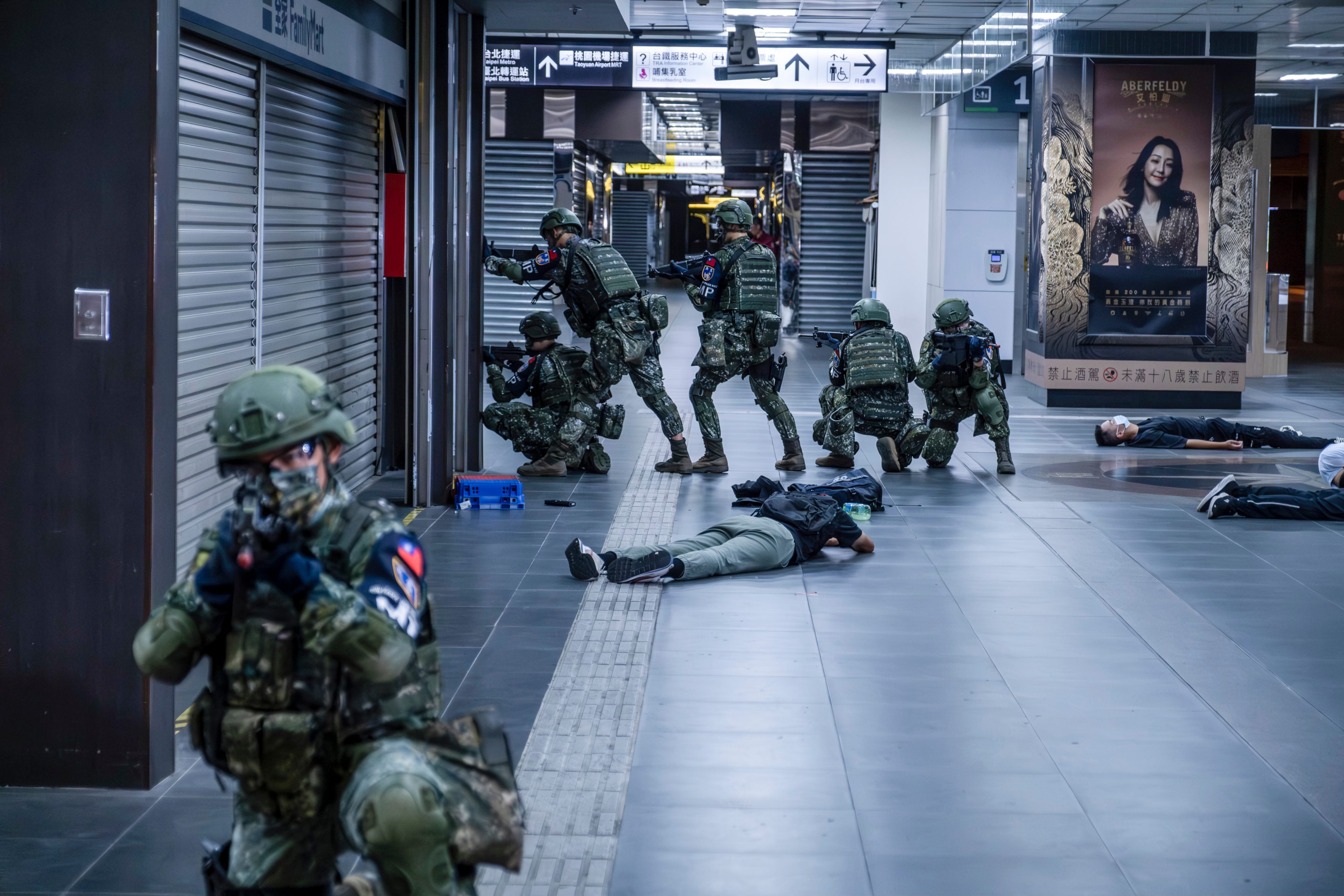
What makes today’s military buildup especially dangerous is not only how much the world is arming—but where and how many potential triggers now exist.
The post–World War II international system was built to manage rivalry between great powers through rules, institutions, and predictability. That system is fraying at the same moment military power is spreading. The result is a world with more weapons in more places, weaker guardrails, and an unusually dense set of flashpoints—any one of which could escalate far beyond its origins.
Active or simmering flashpoints now span nearly every major region:
Ukraine
Taiwan
Korean Peninsula
Middle East
And these are just the known pressure points — the next trigger could come from somewhere no one predicted.
What makes these flashpoints especially dangerous is that each carries the potential to pull major powers into direct military confrontation. A Russian strike on NATO territory — accidental or deliberate — could trigger the alliance’s Article 5 mutual defense clause, forcing a direct U.S.–Russia conflict. A Chinese move against Taiwan — which produces more than 90 percent of the world’s most advanced semiconductors — would almost certainly draw American military intervention, creating the first direct shooting war between nuclear-armed superpowers.
These are not distant or theoretical risks. They are scenarios defense planners actively war-game — moments where a single miscalculation could push a regional crisis across the threshold into global conflict.
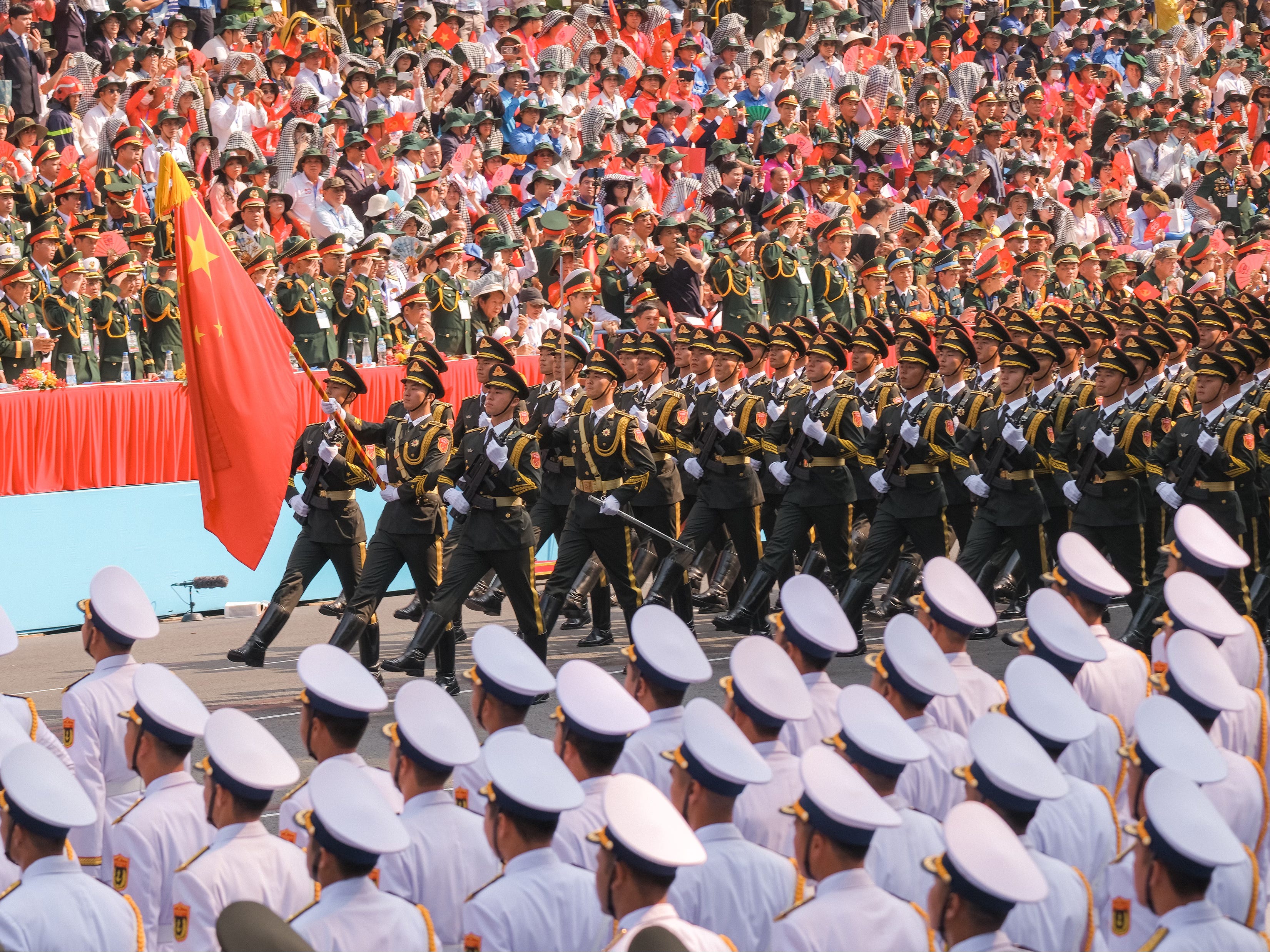
Thucydides’s Trap
One of the most influential frameworks for understanding today’s great-power tensions comes from an ancient source—and a modern scholar.
The idea is known as the Thucydides Trap, named for the Greek historian Thucydides, who chronicled the Peloponnesian War between Athens and Sparta in the fifth century BCE. Thucydides famously wrote that “it was the rise of Athens and the fear that this inspired in Sparta that made war inevitable.” The insight is stark: when a rising power threatens to displace a dominant one, fear, mistrust, and miscalculation often follow—even when neither side seeks war.
In the modern era, this idea has been explored by Graham Allison, the longtime Harvard professor who also had several stints in the U.S. Defense Department. Through his research at Harvard’s Kennedy School—known as the Thucydides Trap project—Allison examined sixteen historical cases over the past five centuries in which a rising power challenged a ruling one. In twelve of those cases, the rivalry ended in war. The pattern spans centuries and continents: Germany challenging Britain before World War I, the United States and Japan in the Pacific, France challenging Habsburg Spain in the early 1500s.
Allison distilled this research into his book Destined for War, applying the framework to the defining rivalry of our time: the United States and China. His conclusion was not that war is inevitable—but that history shows it is alarmingly common unless leaders actively work to escape the trap.
What makes the Thucydides Trap so unsettling is that it shifts attention away from ideology or intent. Wars, in this telling, are not primarily driven by villainous leaders or aggressive cultures. They emerge from structural stress: fear on the part of the established power, ambition and insecurity on the part of the rising one, and crises that harden perceptions on both sides.
That dynamic is increasingly visible today. China's rapid economic growth, military modernization, and technological ambition have challenged assumptions that underpinned U.S. primacy for decades. Each side insists it is acting defensively. Each views the other as destabilizing.
Allison’s central warning is that the greatest danger lies not in deliberate aggression, but in escalation born of fear, pride, and miscalculation—especially in moments of crisis. History shows that even small incidents can become catalytic when they occur inside a larger rivalry already under strain.
Whether the United States and China can escape this trap—at a moment when the world is rearming and global guardrails are weakening—is one of the defining questions of the 21st century.
Next week: The forces that brought us here. When the Cold War ended, it was dubbed the “end of history.” Democracy, free markets, global trade — and peace — were the entire world’s future. Until it wasn’t.
Note: Prefer to listen? Use the Article Voiceover at the top of the page, or find all narrated editions in the Listen tab at solvingfor.io.