


This is Part II of our series, “The 21st Century’s Oil: Solving For China’s Rare Earth Dominance.” If you missed Part I, click here. Your thoughts and feedback really help — comment below or, if you’re reading by email, just hit reply (it comes straight to me.) Thanks for reading. I’m grateful to be on this journey with you.
Solving For tackles one pressing problem at a time — unpacking what’s broken, exploring the forces shaping it, and spotlighting clear, credible solutions. Each series unfolds weekly with new posts every Thursday. Learn more.
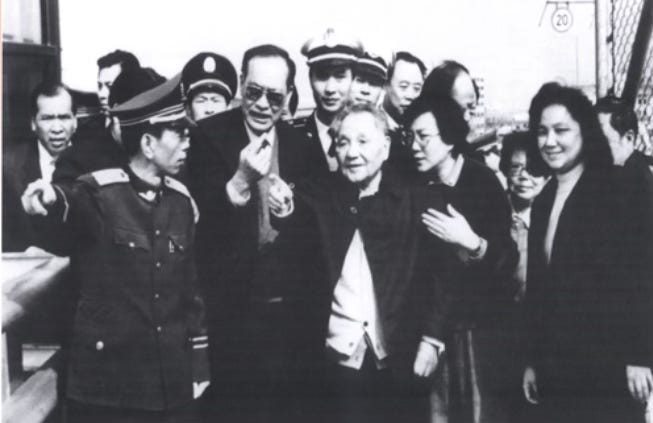
Chinese leader Deng Xiaoping famously declared in 1992, “The Middle East has its oil, China has rare earths.”
But China’s dominance in rare earth elements — the invisible building blocks of modern technology — wasn’t born of geological luck. It was the product of long-term strategy: deliberate policy choices from the top, expertise built and guarded closely, and a willingness to absorb enormous human and environmental costs.
All of it unfolded against the backdrop of a globalizing economy, where China was rising as the world’s factory and the U.S. was focused on building the technology of the future — not the raw materials that powered it.
Look around: rare earth elements are everywhere — in the iPhone in your hand, the laptop on your desk, the flat-screen TV streaming Netflix, the LED bulb in your living room, the MRI at the hospital, even the Ford F-150 on the road. Rare earths make the modern world go.
For Part Two of our series, The 21st Century’s Oil: Solving For China’s Rare Earth Dominance, we trace how China built a near-monopoly in mining, processing, and manufacturing seventeen obscure elements on the periodic table—rare earth elements—vital to the modern economy. Why it succeeded, what it sacrificed, and why the U.S., once the global leader, let it happen.
Deng’s Strategic Bet
When Deng Xiaoping made his now-famous remark, he was steering China into a new chapter. Often called the architect of modern China, Deng was accelerating market reforms, inviting foreign investment, sending students abroad, and preparing the country for integration into the global economy.
Those choices set the stage for one of the most dramatic transformations in modern history. In the span of a generation, China went from a poor, inward-looking nation on the margins of the global system to a central power reshaping economics, technology, and geopolitics—rivaling the United States for global leadership.
Rare earth elements weren’t yet labeled as critical to national security, but they were already essential. Found in televisions and computer hard drives, they hinted at far bigger things to come. And with the vast reserves of Bayan Obo mine outside Baotou in Inner Mongolia—believed to be the largest rare earth deposit in the world—Deng saw a strategic edge.
Just as oil powered the 20th century, rare earths could power the 21st. In a 1992 speech in Jiangxi Province, another region rich in rare earths, Deng called the materials “of extremely important strategic significance” and urged that China “handle the rare earth issue properly and make the fullest use of our country’s advantage.”
A Priority at the Highest Levels
So how did we get here?
China’s rare earth dominance wasn’t just a national priority. It became a personal priority for its top leaders.
“Rare earth metals were an afterthought for most world leaders until China temporarily suspended most exports of them a couple of months ago,” wrote The New York Times Beijing bureau chief Keith Bradsher in July. “But for almost half a century, they have received attention from the very top of the Chinese government.”
It started with Deng, but his successors deepened the focus. Jiang Zemin, Deng’s successor, was an electrical engineer who served as Minister of the Electronics Industry—a role central to advancing semiconductors, telecommunications, and defense technology, all reliant on rare earths.
Hu Jintao, who followed Jiang, rose through leadership posts in resource-rich provinces, giving him firsthand exposure to mining. And Wen Jiabao, who served as Premier under Jiang and Hu, held a master’s degree in rare earth sciences from the Beijing Institute of Geology. Even as Premier — responsible for running the government of the world’s most populous country — Wen personally directed rare earths policy.
In a 2010 state visit to Europe, he declared, according to The New York Times: “Little happened on rare earth policy without him.”
Exporting rare earths — not talent, know-how or equipment
With rare earths elevated as a national priority, China built its dominance on several pillars: heavy subsidies for mining operations, sustained investment in the technologies needed to process and manufacture rare earths, and a deep pipeline of talent trained in universities and state labs.
Once it gained near-total control of the supply chain, Beijing set the rules—flooding the market to crush rivals, or leveraging its dominance to force companies into building inside China. Beneath it all was a posture of secrecy and control.
That stands in stark contrast to the open-source ethos that fuels innovation elsewhere. Tesla pledged its patents “in good faith” to hasten the adoption of electric cars. Even in China, the AI startup DeepSeek has published its code online, inviting scrutiny and collaboration. The logic is simple: openness builds ecosystems, accelerates innovation, and expands influence.
Rare earths followed the opposite path. Expertise cultivated in universities and state institutes stayed in China. Processing technologies were kept from foreign partners. Equipment designs remained proprietary. The real treasure wasn’t just the ore, but the know-how of metallurgists, chemists, and engineers—concentrated inside China and rarely allowed to leave.
Rather than open-sourcing, Beijing locked everything down. Every skill, every process, every piece of equipment was treated as a strategic secret. The aim was dependence: if the world needed rare earths—or the technologies they make possible—it had no choice but to go through China.
As Australian industry advisor Dudley Kingsnorth put it: “China and rare earths is a bit like France and wine—France will sell you the bottle of wine, but it doesn’t really want to sell you the grapes.”
The Costs of Dominance: “I was developing these sores on my skin”
China also did what many other countries would not: it accepted steep environmental and human costs. Where Western nations hesitated, Beijing pressed ahead—betting that long-term dominance was worth the heavy price.
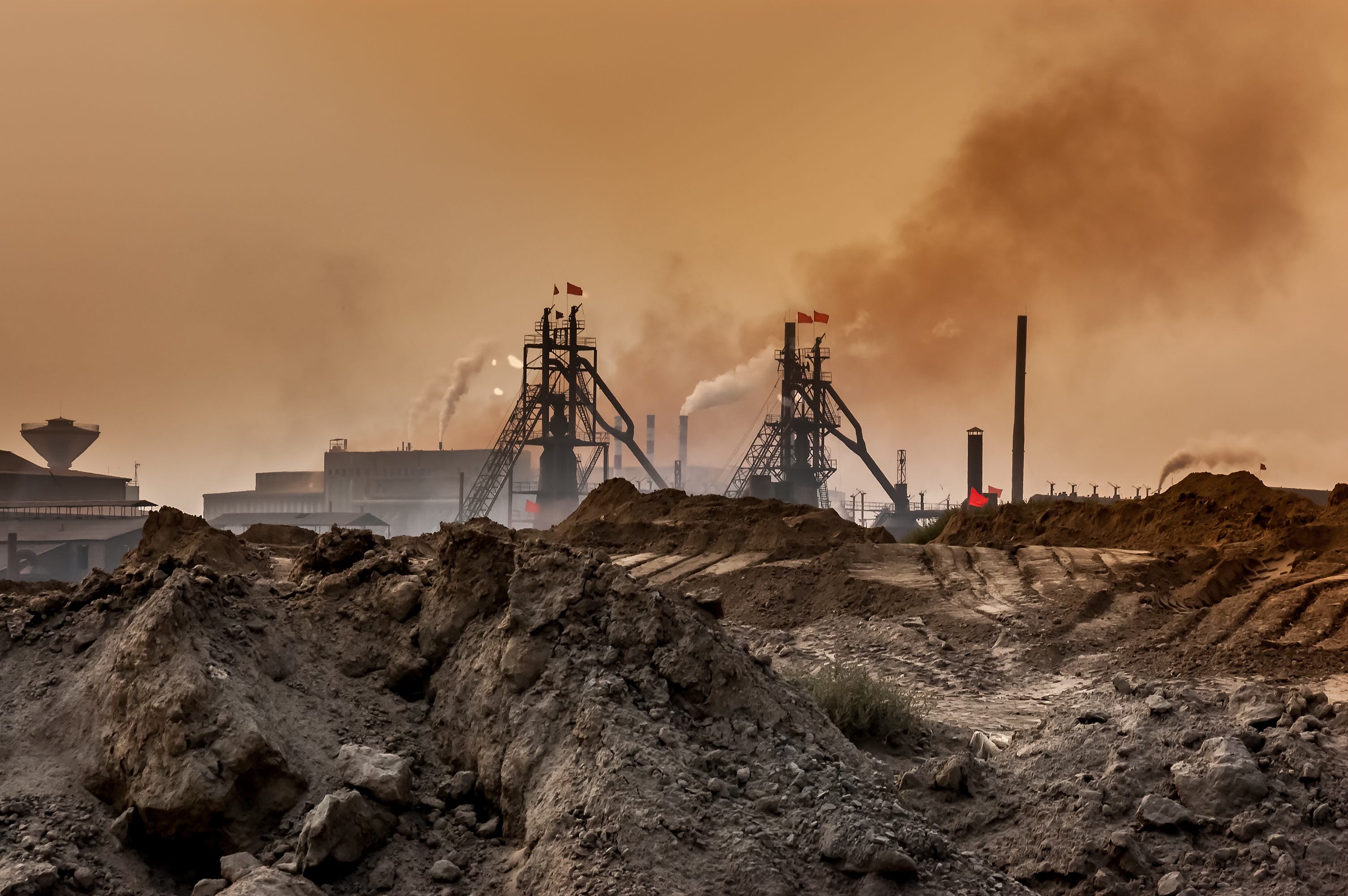
Julie Klinger, a geographer and author of Rare Earth Frontiers: From Terrestrial Subsoils to Lunar Landscapes, saw those costs firsthand. During her fieldwork visiting Baotou near the Bayan Obo mine in Inner Mongolia—the world’s largest rare earth deposit—she often stayed for weeks at a time.
“I was developing these sores on my skin,” she recalled. “And I didn’t really know what they were.”
When she mentioned it to a local friend, the response was casual, almost dismissive. Everyone gets them, the friend explained. “Haven’t you noticed? A lot of people here have what looks like cuts or scrapes or lesions on their face.” The cause, the person added, was obvious: the mining.
The landscape around Bayan Obo bears it out—dust clouds, slag heaps, and vast tailings ponds, artificial lakes of toxic runoff created by the chemical-intensive process of separating rare earth metals from ore. Here, at the edge of the Gobi Desert, lies both the engine of the modern economy and a chilling portrait of its hidden costs.
The scale of destruction is staggering. According to the BBC, producing a single ton of rare earth elements can generate up to 2,000 tons of toxic waste.
The human toll is visible in surrounding villages: soaring cancer rates, respiratory disease, developmental disorders in children. In some communities, cancer mortality reaches one in seven adults, according to Klinger’s research. And across the wider region, home to six million people, she found that as many as 40 percent of children showed impaired cognitive development.
“After a while,” she told the Science History Institute, “I realized I could tell who was local and who was visiting—just by looking at their skin.”
Globalizing Fast: Why the U.S. - and the World - Failed To Respond
Many observers point to China’s willingness to absorb such costs as the key to its rare earth dominance. But another force mattered too: globalization.
As China expanded its rare earth industry, the world was going all-in on global trade—and Beijing positioned itself as the planet’s back office. The timing was pivotal. China’s rise coincided with the end of the Cold War. Liberal democracy, free markets, and global integration became the dominant ideals. Deregulation, privatization, and sprawling supply chains weren’t just trends—they were gospel. Advances in shipping, logistics, and the internet supercharged it all.
By 1994, the U.S., Canada, and Mexico had signed NAFTA, creating the world’s largest free trade zone. The next year brought the birth of the World Trade Organization. Then, in 2001, the big milestone: China joined the WTO and gained full access to global markets.
U.S. corporations rushed in. Nike, Walmart, Apple—all embraced China as the new engine of production. In the 2000s, Apple’s manufacturing shifted almost entirely to China. At its peak, 95% of all iPhones were assembled there, according to the Financial Times.
To global business, China wasn’t a threat; it was an opportunity. It offered low-cost labor, vast industrial capacity, government-backed infrastructure—and, crucially, a rising, highly skilled workforce. As Apple CEO Tim Cook once explained, the appeal wasn’t just about cost. It was about talent.
“The products we do require really advanced tooling,” Cook said at a Fortune magazine event in 2017. “In the U.S. you could have a meeting of tooling engineers and I’m not sure we could fill the room. In China you could fill multiple football fields.”
The deal was clear: China would be the world’s factory. The West would get cheap gadgets and steady growth.
When concerns arose, they weren’t geopolitical—they were ethical. Protests centered on sweatshops, labor conditions, and human rights, not national security. As geographer Julie Klinger put it, comparing rare earth villages to garment factories in Southeast Asia: “To see the suffering, and then to use my laptop, to use my cell phone—it was very eye-opening for me… We don’t have to create immense human suffering in order to have our laptops and our iPhones.”
Meanwhile, U.S. priorities were elsewhere. The focus wasn’t on the raw materials inside iPhones and laptops, but on the companies building the technologies that ran on them.
“We didn’t want to get involved in producing rare earths,” said David Abraham, author of The Elements of Power: Gadgets, Guns, and the Struggle for a Sustainable Future in the Rare Metal Age.
“The thinking was, mining and processing is last generation,” Abraham continued. “We have Facebook, we have tech — that’s where the money is. Who wants to get involved in materials? We don’t understand them, we’re not educated to do them and they are dirty. Why do we want to get involved in the business of getting involved in antiquated tech — who needs more blacksmiths?”
Globalization had promised efficiency and growth. What it delivered, in rare earths, was dependence.
Uneven response
When China cut exports of rare earths to Japan after the Senkaku Islands incident in 2010 (see Part I), it was recognized as a turning point. Then–Secretary of State Hillary Clinton called it a “wake-up call.” It was now clear China was willing to use its monopoly as a geopolitical weapon.
Yet the U.S. response—across Democratic and Republican administrations—was halting, fragmented, and not at the scale needed to challenge China’s dominance.
The Obama administration called for diversifying supply chains and later joined Japan and the EU in filing a WTO complaint against China. “American manufacturers need to have access to rare earth materials,” Obama declared.
China lost the case—but won the aftermath. It flooded the market, slashed prices, and drove out competitors. Molycorp, owner of California’s Mountain Pass mine—the largest rare earth facility in the U.S.—went bankrupt in 2015.
Mountain Pass was revived in 2017, but rebuilding an entire supply chain proved slow. In 2020, President Trump declared a national emergency on rare earths, unlocking grants and loans while easing environmental rules. President Biden built on those efforts, with the Pentagon investing more than $180 million by 2022 and setting a target of eliminating all Chinese-sourced rare earths from U.S. defense systems by 2027.
“We can’t build a future that’s made in America,” Biden said, “if we’re dependent on China for the materials that power the products of today and tomorrow.”
This year, the second Trump administration doubled down, making the largest U.S. investment yet in MP Materials, the owner of Mountain Pass. It included direct investment, loans and price guarantees that could total well over $1 billion. Apple and General Motors signed on as customers, marking the first real step toward a domestic end-to-end supply chain.
“Critical minerals, including rare earth elements, are essential for national security and economic resilience,” the Trump White House declared.
And yet, China’s grip on rare earths remains as strong as ever. Even before Beijing’s latest rare earth export restrictions that temporarily shuttered assembly lines and sent prices soaring, investor Andrew King warned that trouble loomed. In an editorial last year in the New York Post, he wrote:
“We need a Manhattan Project for rare earths.”
Note: Prefer to listen? Use the Article Voiceover at the top of the page, or find all narrated editions in the Listen tab at solvingfor.io.
Series Overview
The 21st Century’s Oil: Solving For China’s Rare Earth Dominance
Part I: The Invisible Backbone, Sept. 4, 2025
The Problem — What’s broken, and why it matters
Part II: The Middle Kingdom’s Monopoly, Sept. 11
The Context — How we got here, and what’s been tried
Part III: The Race to Rebuild, Sept. 18
The Solutions — What’s possible, and who’s leading the way