


For Part Three in our series, “The Amateur Myth: Solving For College Athlete Pay,” we turn to solutions. For this installment we’ll explore:
Why fixing the injustice of unpaid football and men’s basketball players — in a system where everyone else profited — risks destabilizing the non-revenue sports that depend on revenue-generating college athletics to survive.
How three competing futures — athletes as employees, revenue sharing without employment, and a football super league — would reshape college sports in profoundly different ways.
Why Congress, rather than the NCAA or the courts, now holds the power to decide whether Olympic non-revenue sports endure or disappear.
If you missed them, check out Part One, which details the problem, and Part Two, which explores the forces that brought us here. If you find this work valuable, please share it with friends. If you were forwarded this, you can subscribe at solvingfor.io.
Solving For tackles one pressing problem at a time — what’s broken, what’s driving it, and what can be done. New posts weekly, in both written and audio form. See previous series on rare earth elements, AI safety, and the vanishing competition in Congress.
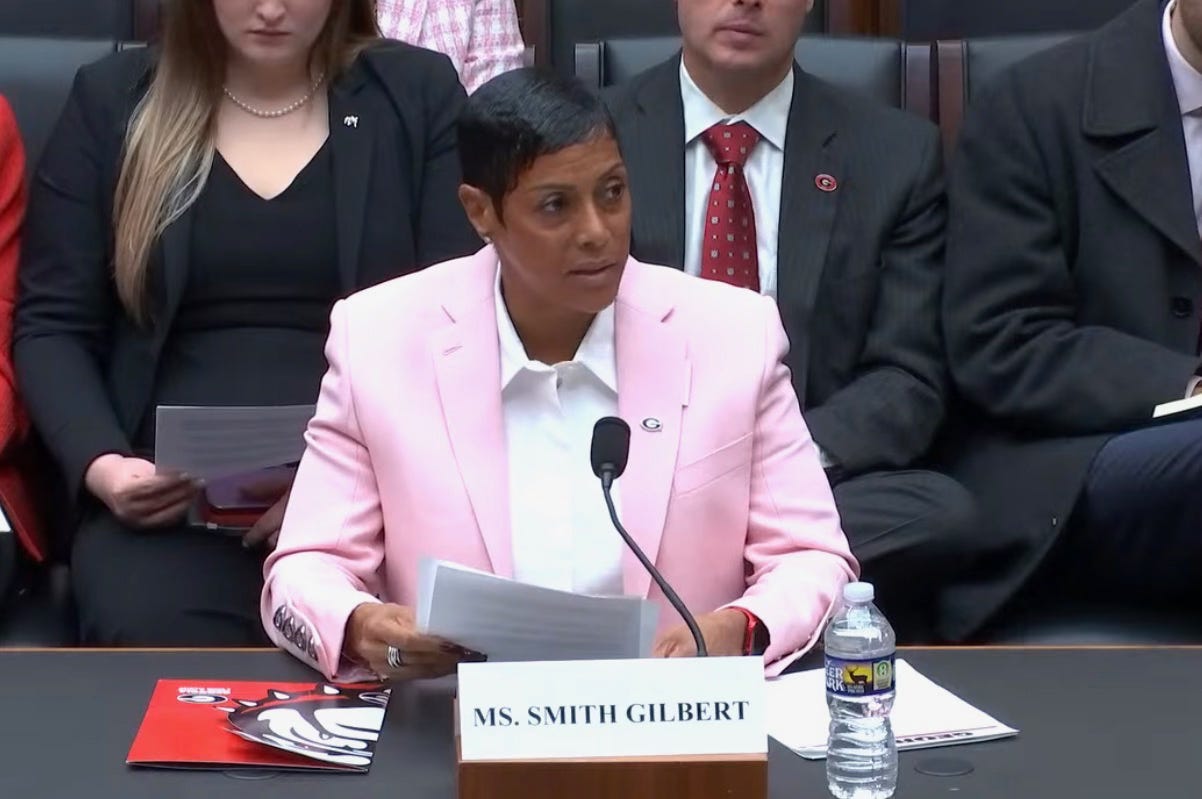
On March 11, 2025, Caryl Smith Gilbert took her seat in Room 2141 of the Rayburn House Office Building on Capitol Hill.
She wasn’t there to testify about the college athletes whose labor has generated billions of dollars — but about those whose labor hasn’t, and what the coming economic reckoning could mean for them.
Gilbert is among the most decorated track and field coaches in the United States. She led the University of Southern California to two national outdoor women’s championships and twice earned national coach of the year honors. She later became the first woman to lead both the men’s and women’s track teams at the University of Georgia, where she won a third national title.
On this day, she came with a single message: track and field — and other non-revenue sports — are at risk.
Track and field, Gilbert told lawmakers, is “one of the most diverse and accessible sports in the world,” offering a pathway to college for women and underrepresented students. For most of her athletes, scholarships are not a benefit — they’re a lifeline.
“Neither my husband nor I would have been able to afford the college education we received without an athletic scholarship,” she said. “Our college athletic experience saved our lives.”
The number of athletes who go on to lucrative professional careers in track and field is “infinitesimally small.” The real prize is the degree — and the network of academic and athletic support that makes earning it possible.
And that system, she warned, is now under threat.
Few now dispute that football and men’s basketball players — whose labor generated billions — were wrongly barred from sharing in the wealth they created. That system deserved to change — and now it has.
The question is whether fixing that injustice without care risks breaking something else — namely, non-revenue sports like track and field.
Without a uniform national standard, Gilbert said, the current name, image, and likeness system — known as NIL — is already putting pressure on scholarships and straining athletic department budgets.
More broadly, NIL has collided with the transfer portal — launched in 2018 as a compliance tool — to fundamentally reshape roster management. When athletes gained the ability to monetize their value in 2021, the portal evolved into a de facto system of college free agency. By 2024, one in four scholarship football players entered the portal annually.
Equally dangerous in Gilbert’s view is the push to classify college athletes as employees. An employment model, she argued, would shift costs onto athletes least able to absorb them — and force athletic departments to make brutal financial choices, as resources are increasingly concentrated around revenue-generating sports like football — leaving non-revenue programs such as track and field especially vulnerable.
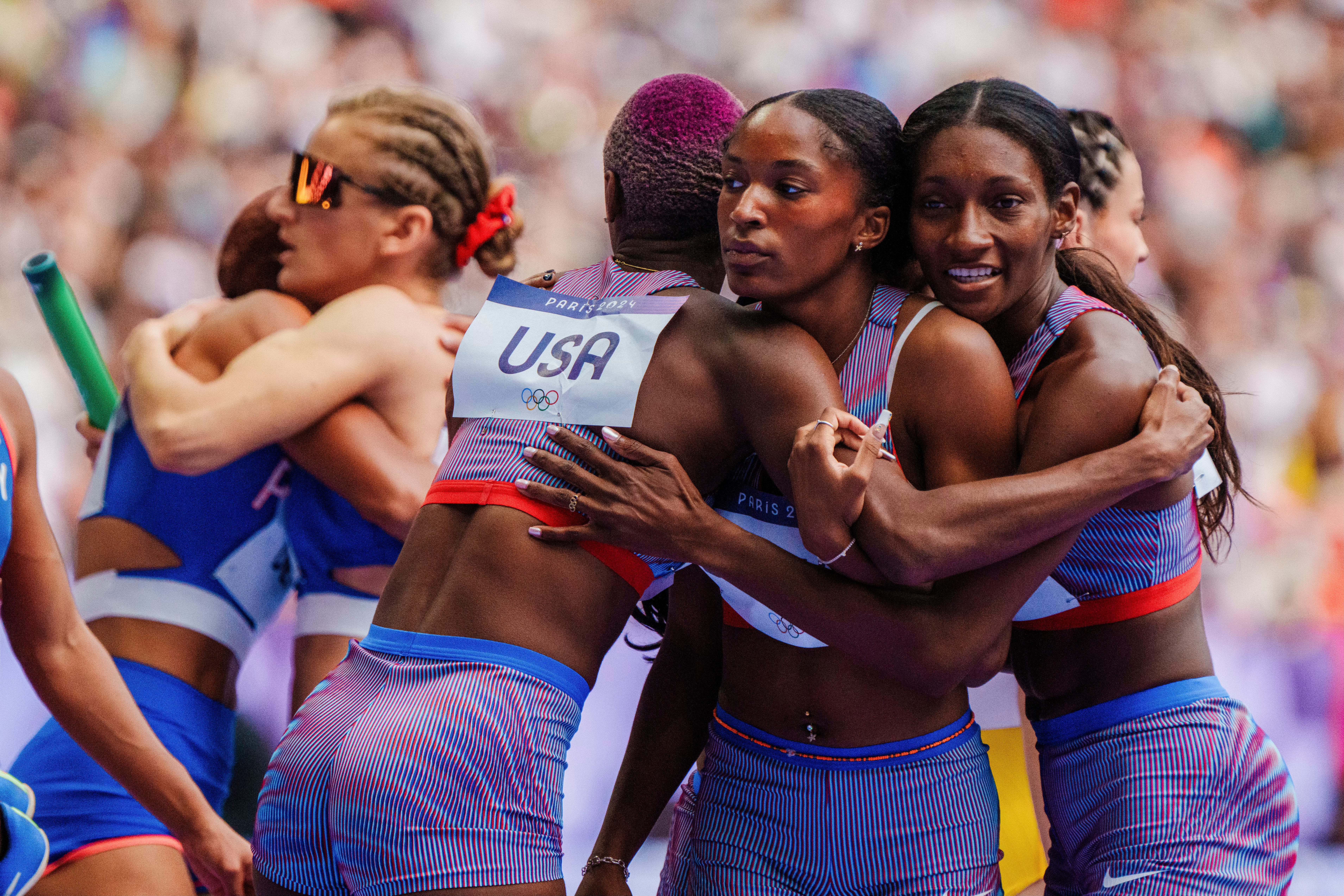
The consequences would extend well beyond campus. In track and field and swimming, for instance, college programs are the U.S. Olympic development system. Of the 118 athletes who competed for Team USA in track and field at the Paris Olympics, 114 developed through the college system.
“My personal fear is that without regulation…the impact on non-revenue and Olympic sports will be devastating,” she told members of a U.S. House Judiciary subcommittee in March. “I am concerned many universities will eliminate many Olympic sports programs, depriving countless athletes of the same opportunities that I experienced thanks to college track and field.”
The debate over paying college athletes is over. But almost everything else is not.
A race is underway to build a new system — one that compensates the athletes who generate billions while preserving the educational mission, continuing beloved traditions that unite so many, and sustaining the non-revenue Olympic college sports for both men and women.
Schools, conferences, the NCAA, and Congress face hard choices. And consensus is elusive while the window for deciding deliberately, rather than letting courts and market forces decide by default, is closing fast.
Competing Demands
The central problem is economic. College football does not merely generate enormous sums — it subsidizes nearly everything else. At the March subcommittee hearing, University of Wisconsin athletic director Chris McIntosh testified that 80 percent of his department’s revenue comes from football, supporting 23 varsity sports, from women’s volleyball and swimming to men’s wrestling and hockey. As more football revenues are redirected toward athlete compensation, the effects ripple across every sport.
Any workable solution must balance competing demands: fair compensation for athletes generating billions; protection for non-revenue Olympic sports; preservation of competitive balance and educational mission; and legal durability. The NCAA lacks authority to impose such a system, courts have spent a decade dismantling its restrictions through antitrust litigation, and conferences cannot self-regulate. That leaves Congress as the only institution capable of establishing uniform national rules and providing antitrust protection.
So what would a solution look like that meets these competing demands? Three frameworks now dominate the debate — each with different trade-offs, risks, and consequences.
Athletes as Employees
The most straightforward solution is also the most radical: treat college athletes as employees.
Under this model, athletes would be formally employed by their universities, receiving wages or salaries with the right to unionize and collectively bargain. Workers’ compensation, health benefits, and formal contracts would replace the fiction of amateurism.
The most visible test came at Dartmouth. In March 2024, the men’s basketball team voted to unionize — the first college sports team to do so. The National Labor Relations Board agreed, ruling the players qualified as employees even though they received no athletic scholarships.
“Let’s work together to create a less exploitative business model for college sports,” the players said after the vote.
In January 2025, the team withdrew its petition, fearing the precedent could be overturned by a changing political climate. The point, however, had been made.
Unionization offers advantages: formal worker protections, collective bargaining rights, and an antitrust exemption for any terms negotiated between athletes and their schools.
But employment carries significant consequences. Payrolls would balloon. Schools would face long-term contractual obligations and potential liability for injuries and benefits. With athletic departments operating under finite budgets, these new costs would almost certainly accelerate cuts elsewhere — a potentially existential threat for non-revenue sports, as Gilbert warned.
It would also fundamentally change the relationship between athletes and their schools. Wisconsin athletic director McIntosh, a former Badgers tackle and NFL first-round pick, said: as a student-athlete, his scholarship was guaranteed even if he was injured; as an NFL employee, “I was injured in the second year, and I was terminated after the third year.”
Revenue Sharing Without Employment
A second approach attempts to split the difference: compensate athletes without turning them into employees.
This is the model that underpins the landmark House v. NCAA settlement, which took effect July 1, 2025, allowing universities to distribute a portion of their athletic revenues directly to athletes while preserving their non-employee status. The settlement also establishes a College Sports Commission to oversee revenue sharing and NIL payments, ensuring they reflect legitimate market-value deals rather than pay-to-play arrangements with boosters.
Beginning with the 2025–26 season, schools may share up to 22 percent of average athletic department revenue with athletes — a cap of roughly $20.5 million per school. Early distributions reveal the priorities: North Carolina allocated $13 million to football players, $7 million to men’s basketball players, and just $250,000 each to baseball and women’s basketball.
Revenue sharing offers schools flexibility and provides athletes predictable income. Unlike an employment model, it preserves what already works for non-revenue sports — these programs continue operating through scholarships, facilities access, and elite coaching. And the highest-profile Olympic athletes can now pursue NIL endorsement deals without sacrificing eligibility.
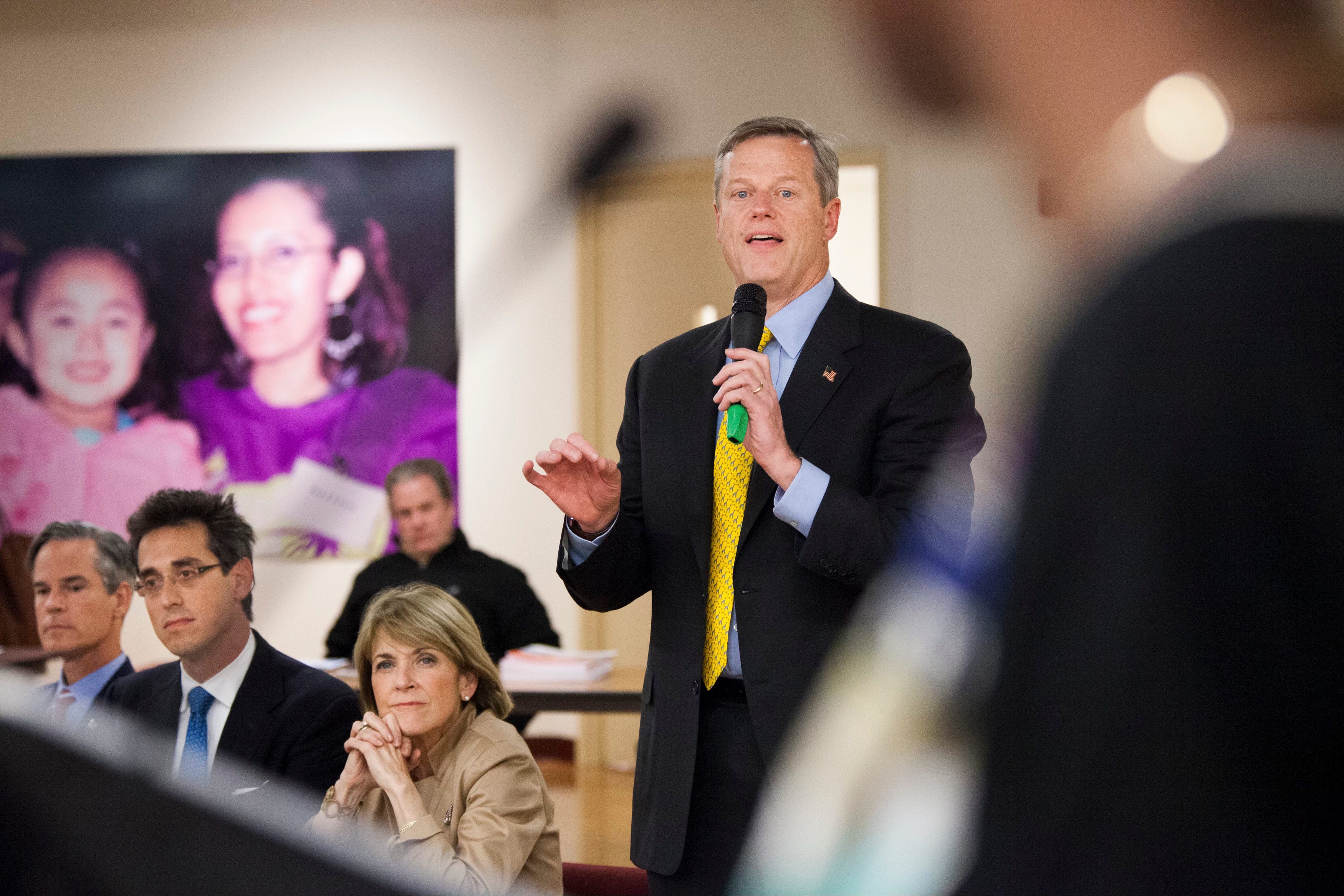
But the settlement did not resolve everything. When the House agreement was reached in June 2025, NCAA President Charlie Baker acknowledged that key questions remained — gaps that, he said, “only Congress can address.”
The following month, lawmakers introduced the SCORE Act to supply the framework the settlement lacks. The bill would codify the 22 percent revenue-sharing cap into federal law, formally declare student-athletes as non-employees, preempt state NIL statutes by setting a federal standard, limit portal transfers without penalty to one, require schools to sponsor at least 16 varsity sports to protect non-revenue programs, and shield the NCAA from antitrust lawsuits. It advanced through two House committees but was pulled before a floor vote earlier this month, blocked by opposition from both Freedom Caucus Republicans and progressive Democrats.
The objections ranged widely. Some saw federal overreach. Others opposed codifying a compensation cap that wasn't collectively bargained with athletes. Still others wanted to use the moment to address broader problems in college sports.
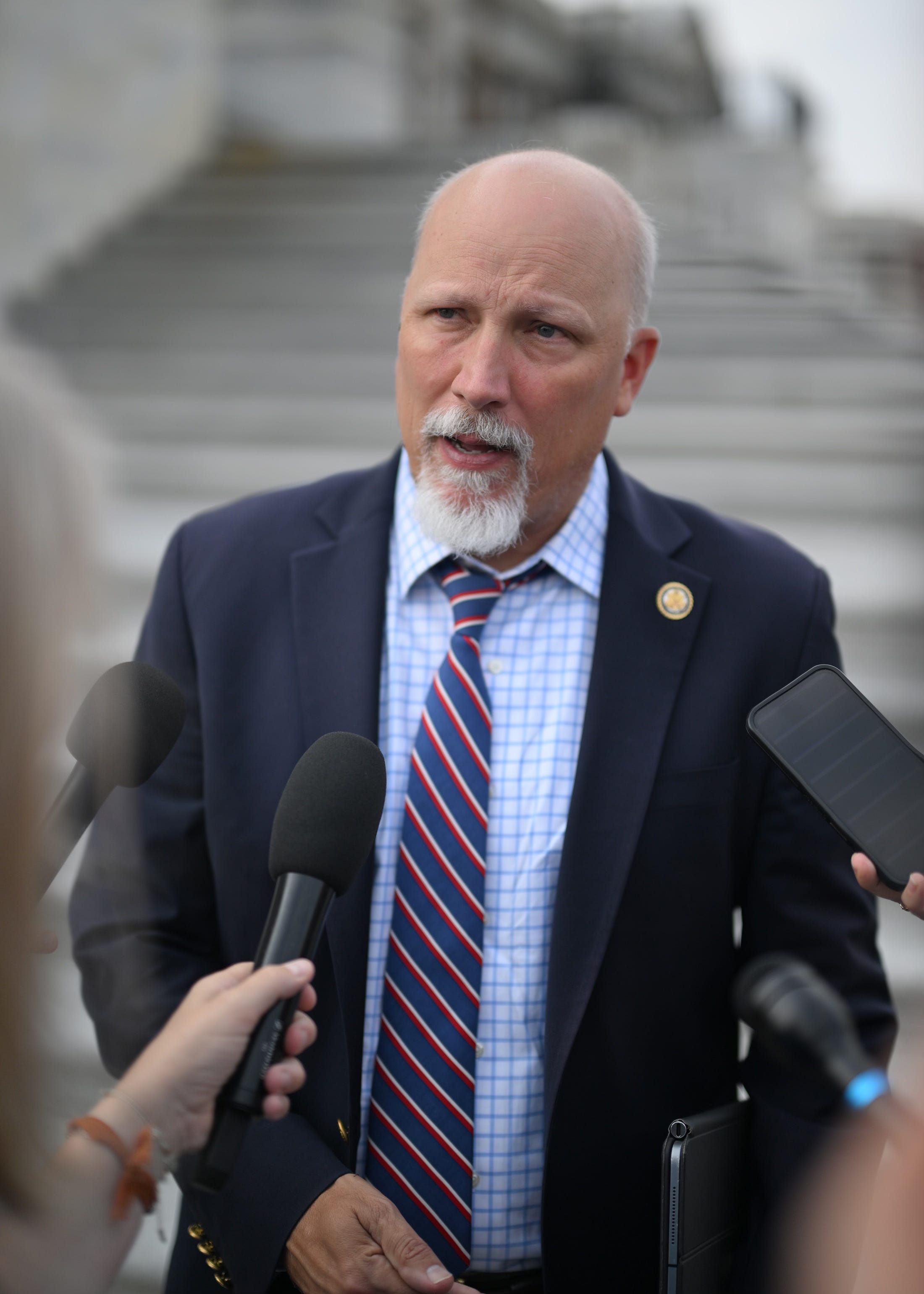
Texas Republican Congressman Chip Roy, who pledged to vote against the SCORE Act, posted on X: "If we are meddling—why continue a broken football 'playoff' system with massive super conferences which force student athletes to travel all over the nation (Berkeley and Stanford are in the ATLANTIC Coast Conference?) rather than require that for the price of 'liability protection' we return conferences to their pre-super conference regionality and protect in-state rivalries."
Meanwhile, a competing bill, the SAFE Act, introduced by Senate Democrats in September 2025, would establish a national NIL framework and limit penalty-free transfers to two per athlete — but it explicitly leaves open the possibility of athletes unionizing and provides no antitrust protection for the NCAA, rendering it unacceptable to college sports’ governing body.
Absent congressional protection, the revenue-sharing model established in the House settlement faces twin threats: legal vulnerability and economic strain. The 22 percent cap remains exposed to future antitrust challenges, while football and men’s basketball revenues must now fund both direct athlete payments and the non-revenue Olympic sports infrastructure those payments could undermine. Whether either pressure proves fatal remains uncertain.
The Super League
A third solution goes in an entirely different direction: it separates football from the rest of college athletics and reorganizes it to make as much money possible. This so-called super league model seeks to leverage college football’s status as one of the most valuable media properties in American sports and use the resulting financial windfall to deliver fair compensation, athlete representation, protection for Olympic sports, competitive balance, preservation of the educational mission, and legal durability all at once.
The most developed version of the idea comes from College Sports Tomorrow, a group led by Len Perna, whose executive search firm TurnkeyZRG has placed numerous conference commissioners and college head coaches at posts across the country.
The economic logic is straightforward: eliminate competing conferences and establish one top league of college football, create a single playoff structure, and negotiate television rights as one entity — in effect, replicate the NFL model. Advocates argue that unified media rights bargaining would generate significantly more total revenue than the current conference-by-conference approach, even for schools with lucrative individual media deals.
Under the proposal, the top 72 college football programs would be reorganized into 12 regional divisions built around geographic proximity and historic rivalries — for example, a Southeast Division including Miami, Florida, and Florida State, and a Southwest Division including USC, UCLA and Arizona State. The top 24 teams—12 division champions and 12 wild cards—would advance to a national playoff.
The promise is that increased television revenue would resolve the system’s core tensions. Football players would receive direct compensation through collective bargaining while remaining students. Non-revenue Olympic sports from wrestling to women’s volleyball would be sustained by the larger revenue pool. NIL caps, limits of two portal transfers every five years, and results-based scheduling would aim to improve competitive balance. Congressional action, meanwhile, would provide antitrust protection, ending the litigation that has paralyzed NCAA governance.
The model would apply only to football. Athletes in other sports would retain full NIL freedom, while those programs return to traditional regional conferences, reducing cross-country travel and costs.
“It is not the case that the money to do what’s right for our college athletes… is just going to emerge from nowhere,” said Syracuse University Chancellor Kent Syverud. “Somehow it has to be generated. That’s what we are trying to figure out.”
But the vision hinges almost entirely on Congress. The framework depends on lawmakers creating a legal category in which athletes are classified as non-employees while still engaging in collective bargaining — a structure that does not currently exist. Absent that intervention, courts will continue reshaping college sports by default, one lawsuit at a time.
On paper, the super league resolves contradictions that have stymied other approaches: college football professionalizes without dragging the rest of the athletic department with it; players gain compensation and representation; Olympic sports receive funding; schools preserve their educational mission — assuming institutions are willing to surrender autonomy they have spent decades accumulating.
In practice, it faces a fundamental obstacle. The plan asks college football’s biggest winners — particularly schools in the Southeastern Conference and Big Ten Conference, whose media deals are worth hundreds of millions — to believe they would earn more by pooling revenue with 70-plus other programs. Existing conference contracts run into the 2030s, and a new College Football Playoff agreement has only just begun. Unwinding those commitments may prove impossible.
“We understand the timing is probably not right for this idea right now,” College Sports Tomorrow’s Perna said. “But I’m telling you, what we’ve outlined in our proposal is the manifest destiny of where college football will wind up.”
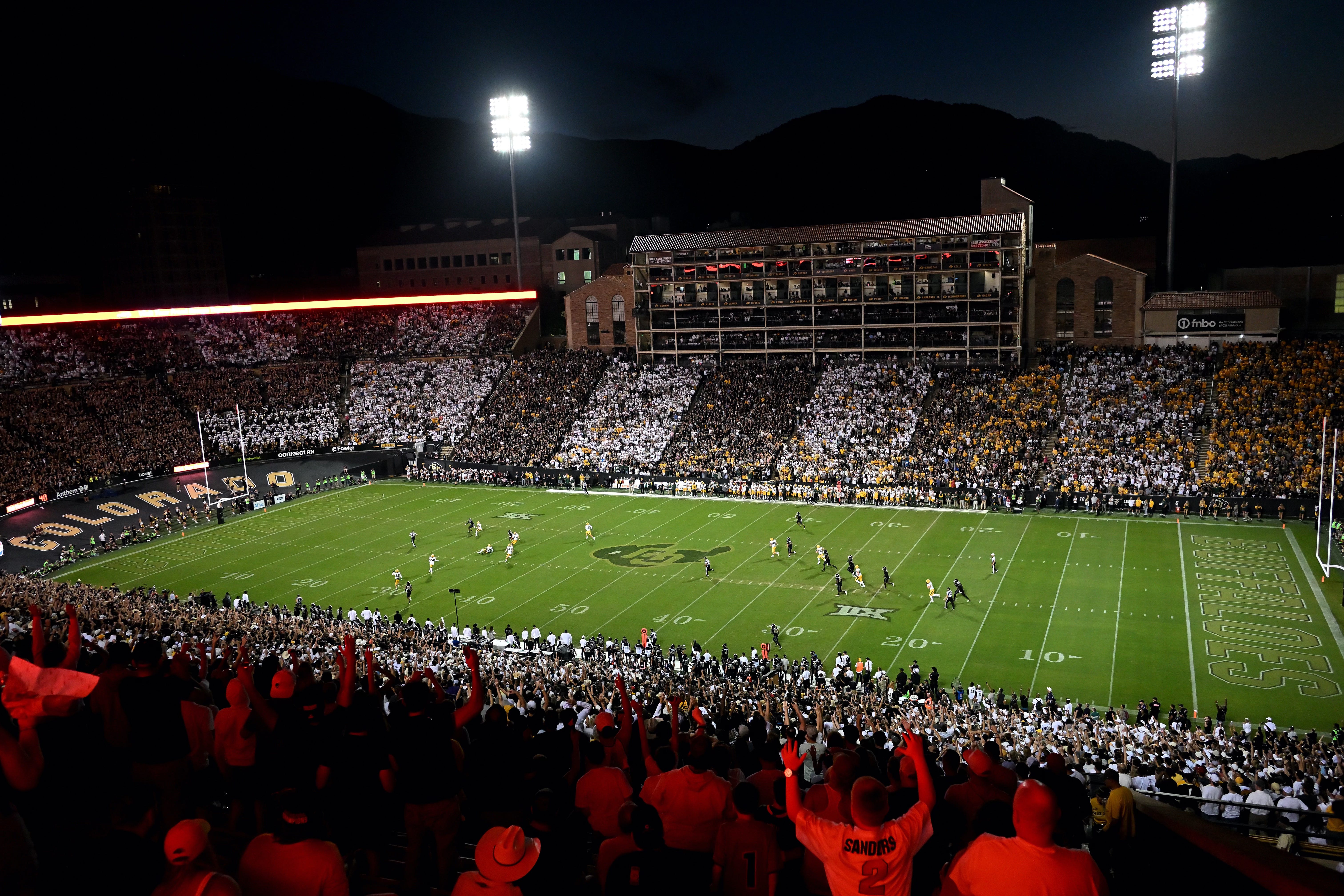
What Hangs in the Balance
In 1905, Theodore Roosevelt convened college leaders to solve the problem of players dying on the football field. They created the NCAA, which under Walter Byers would build an amateur myth so profitable it took decades of antitrust litigation to crack. When Ed O’Bannon discovered his likeness in a video game he was never paid for, he set those challenges in motion — culminating in 2021 with U.S. Supreme Court Justice Brett Kavanaugh calling the NCAA’s business model of paying everyone but the players “flatly illegal.”
Now Charlie Baker presides over the wreckage: a settlement that ends amateurism without clearly defining what comes next or providing durable legal protections, conferences splintering over media rights, and a transfer portal that has turned roster management into free agency.
Yet through all this institutional turbulence runs something else: the enduring reality that college sports has brought joy, belonging, and transformation not only to hundreds of thousands of athletes across dozens of sports—gymnasts and swimmers, track stars and softball pitchers—but to fans and communities across the country.
When Caryl Smith Gilbert went to Capitol Hill, she wasn’t asking Congress to stop college sports from changing. She was asking it to notice who might be left behind.
In the rush to correct a long-standing injustice — to finally pay the athletes who generate billions — the danger is not that college sports will change too much. It’s that it will change carelessly. That solutions designed for football and basketball will quietly erase the pathways that brought thousands of athletes to college, to degrees, and, for a few, to Olympic podiums.
Gilbert's warning was not nostalgic. It was structural. And it still hangs over the debate: if reform is not designed with intention, the athletes who never created the old system's riches may end up paying the highest price for fixing it.
Note: Prefer to listen? Use the Article Voiceover at the top of the page, or find all narrated editions in the Listen tab at solvingfor.io.