


In this series, we turn to the health of American democracy — and a quiet crisis hiding in plain sight: the lack of competition in races for the U.S. House of Representatives. Today we focus on understanding the problem; next week, how we got here; and the week after, solutions.
Why this matters:
In 2024, 37 of 435 House races were decided by five points or less—just 9%.
Most Americans now live in districts where the outcome is predetermined long before Election Day.
The result: rising polarization, fewer moderates, and a Congress that no longer rewards solving problems.
Solving For tackles one pressing problem at a time: what’s broken, what’s driving it, and what can be done. New posts every Thursday. Learn more.
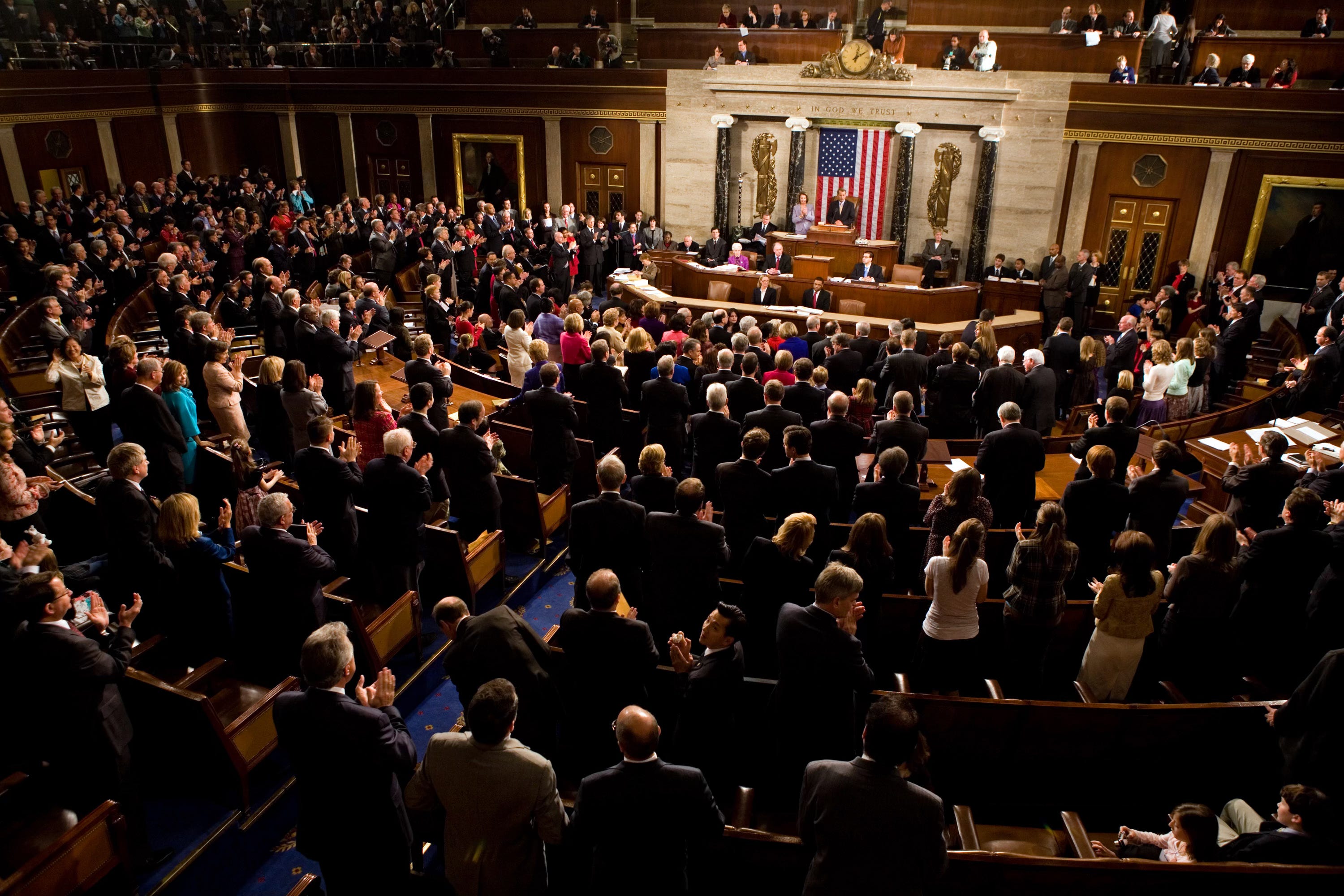
In the hot summer of 1787, the air inside Philadelphia’s State House was not only sweltering but thick with argument.
Four years after winning independence from Britain, the young nation was floundering. Under the Articles of Confederation, the states were strong but the federal government weak. States squabbled with one another, trade was chaotic, and the center could barely hold. So delegates from all 13 states gathered to try again—to design a system of government that could actually work.
For weeks that summer, with windows closed and neither the public nor press allowed in, the delegates—George Washington, Alexander Hamilton, James Madison, and an 81-year-old Benjamin Franklin among them—wrestled with the question that would define the new republic: Who should hold power, and how close to the people should it sit?
The Virginia Plan, backed by large states, demanded representation by population. The New Jersey Plan, championed by smaller ones, insisted each state be equal. The impasse nearly unraveled the Convention—until the Connecticut Compromise proposed a daring solution: two chambers, one for the states and one for the people.
That lower chamber—the U.S. House of Representatives—was conceived as the democratic engine of the new government.
When the delegates finally signed the U.S. Constitution on September 17, 1787, after nearly four contentious months, they celebrated with a farewell dinner at the City Tavern. But their work wasn’t over. Nine of the thirteen states still had to ratify the document for it to take effect—and the public was deeply skeptical.
After all, the delegates had been sent to amend the Articles of Confederation. Instead of tweaking, they had scrapped it entirely and wrote something new. Among the fiercest critics was New York’s powerful governor, George Clinton.
To win over a wary New York, Alexander Hamilton came up with the idea of an audacious writing project. He recruited James Madison and John Jay, and together set a frantic writing pace, publishing 85 essays over eleven months to make the case for the proposed Constitution. The essays, published in New York newspapers, became known as The Federalist Papers.
A key part of their argument was the House of Representatives. Madison described it as a body “drawn immediately from the people,” with members serving short terms to preserve, as he wrote in Federalist No. 52, “an immediate dependence on, and an intimate sympathy with, the people.” In Federalist No. 57, he promised the House’s design would keep alive “an habitual recollection of their dependence on the people.”
The House was meant to change as the country changed—frequent elections, constant accountability, and competition as the price of power.
More than two centuries later, that founding promise has gone quiet. In 2024, fewer than one in ten U.S. House races were truly competitive. Most Americans now live in districts where the outcome is predetermined long before Election Day. Once envisioned as the chamber most responsive to citizens, the People’s House has become one of the least contested institutions in American life.
For this Solving For series — The Democracy Deficit: Solving for Competition in the People’s House — we explore how the heart of American democracy has become dangerously uncompetitive, transforming what should be the people’s chamber into a collection of safe seats insulated from public accountability.
It’s a problem long recognized but rarely addressed. Scholars and reformers have warned about it for years — from the 2017 Harvard Business School case study by Katherine Gehl and Michael Porter on the alarming lack of competition in U.S. politics to nonpartisan groups like FairVote that have pushed for electoral reform. Yet meaningful change has proven elusive, as the pursuit of electoral wins has repeatedly eclipsed efforts to fix the system itself.
The consequences are profound: rising polarization, fewer moderates, and a Congress that no longer rewards problem-solving. This week, we examine the problem. Next week, the forces that created and sustain it. And in the final installment, the solutions that could restore competition to an institution meant to be the beating heart of American democracy.
The Growing Divide
Across the country, candidates are already campaigning for one of the 435 seats in the U.S. House of Representatives up for election next November. They’re dialing donors, posting launch videos, and fine-tuning stump speeches to tell voters why they’re running.
The stakes are high. Democrats are aiming to win back control of the House. President Trump — in a move widely criticized as partisan gerrymandering — is urging states to redraw congressional maps now to create more Republican-leaning districts, breaking with the long-standing practice of redistricting only after the decennial census. In response, Democrats have launched their own counter-efforts.
But it’s a fight playing out in a small fraction of the overall seats. Beneath the headlines over redistricting lies a quieter reality: in most of America, congressional races aren’t really races anymore.
Today, genuine competition in House races is the rare exception. According to the Cook Political Report, only 38 of the 435 House contests in 2026 are projected to be competitive — less than 9 percent of the total. That figure includes both “toss-ups” and races leaning toward one party but still considered competitive. Narrow the focus to true toss-ups — contests either party has a real chance of winning — and just 17 races, or 4 percent, make the cut.
“It makes sense that over 80 percent of Americans don’t feel like elected officials care what they think. Over 80 percent of Congress is effectively guaranteed re-election,” said Meredith Sumpter, president and CEO of the nonpartisan organization FairVote, in April. “Uncompetitive elections lead to unrepresentative outcomes.”
The numbers bear her out. In 2024, only 69 of 435 races — about 15 percent — were competitive, Cook found. Nearly 85 percent of House contests were decided by double-digit margins, and roughly 60 percent were blowouts of 20 points or more, according to FairVote. The average margin of victory across all House races was 27 points, and 12 states didn’t have a single contest closer than 20 points.
This isn’t an outlier — it’s the norm. Over the past 13 election cycles, from 2000 to 2024, only two — 2010 and 2018 — featured more than 100 competitive races. And even those “wave years” were no high-water mark for competition: just 31 percent of races were competitive in 2010 and 26 percent in 2018, according to Unite America, another nonpartisan reform group.
By contrast, in the 1990s, every election cycle had over 100 competitive House races. In 1992, 1994, and 1996, there were more than 200. Since then, the number has steadily eroded — a slow hollowing out of electoral competition for the U.S. House that has left most Americans living in districts where general elections no longer matter.
In short, the problem has been building for decades, but as Unite America concludes, it has become “more acute over the past two decades.”
What was once one of the world’s most dynamic legislative chambers has become one of its most static — a House designed to reflect the will of the people is now insulated from them.
Election Day Is No Longer Election Day
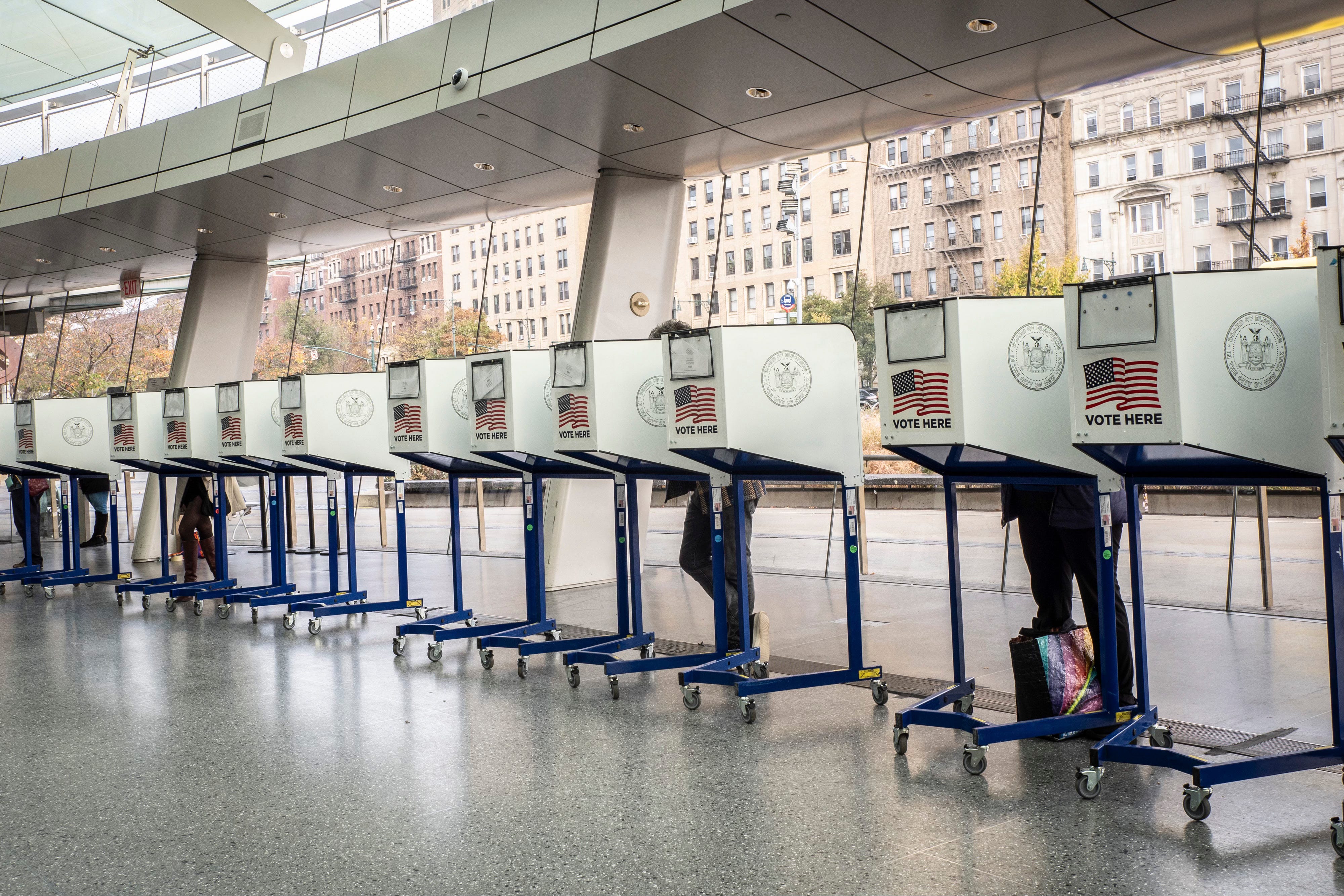
In much of America, the real election for U.S. House seats no longer happens in November — it happens months earlier, in the spring or summer, when the parties hold their primaries. In hundreds of districts, the general election has become little more than a formality.
The most decisive moment for the legislative body designed to be closest to the people is happening when few are paying attention. And even fewer are voting.
Since 2000, turnout in general elections has been more than twice as high as turnout in primaries, according to a States United Democracy Center study released last year.
And it’s not just the size of the electorate that changes — it’s the shape. Primary voters tend to be more ideologically rigid than the broader electorate. In safe Republican districts, that often means staunch conservatives; in safe Democratic ones, progressives. Candidates, in turn, tailor their messages not to the median voter but to the most motivated slice of their party’s base.
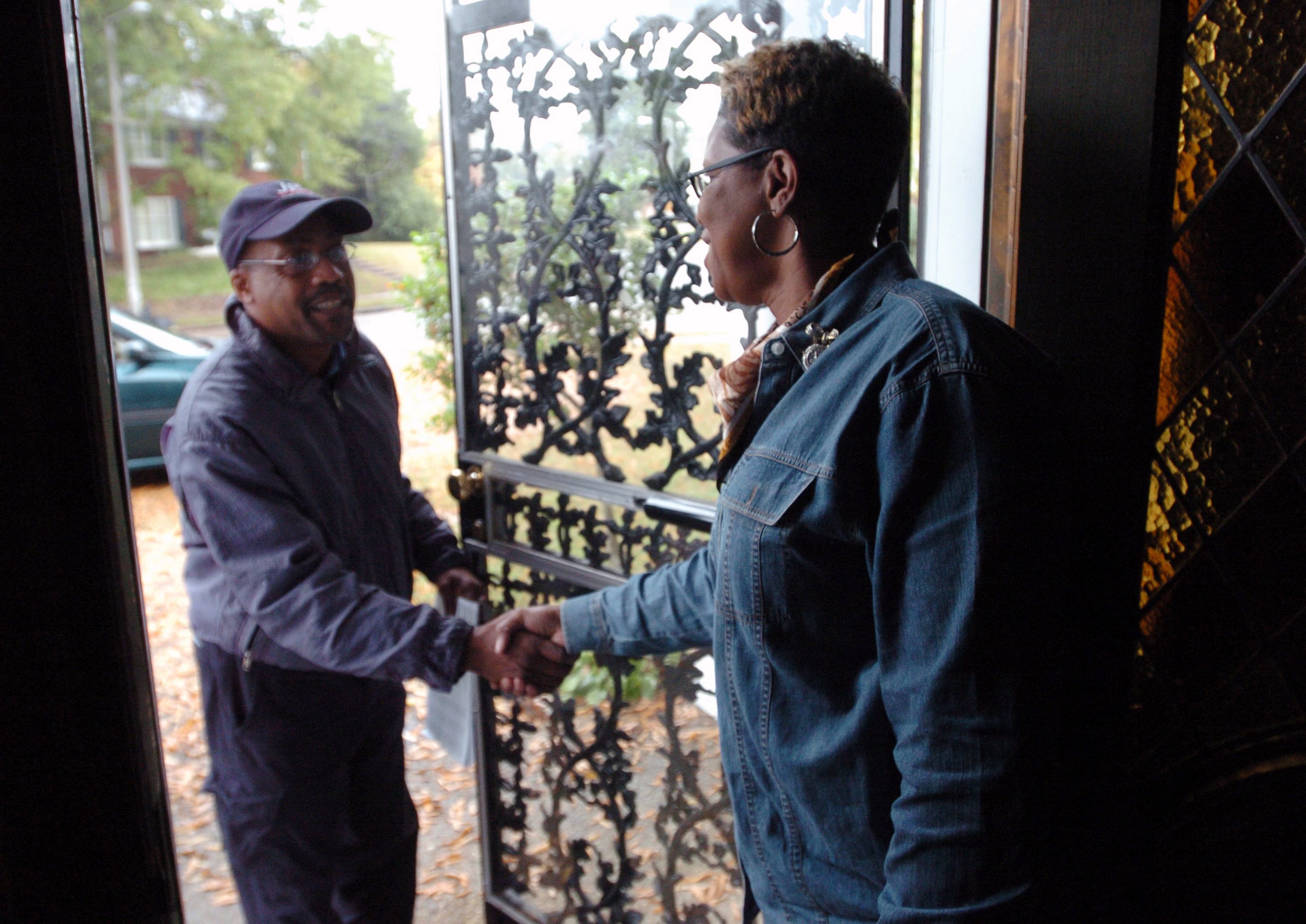
Beyond message, many candidates no longer even have conversations with the broader electorate. When they go door to door, they’re typically handed lists with addresses of only the most likely voters in their own party — skipping everyone else entirely. Campaign strategists see it as the most efficient path to victory. The cost is a thinner, more exclusionary democracy.
When elections are effectively decided in the primary, the incentives shift. The real threat to an incumbent isn’t losing in November — it’s being “primaried” by someone further to the left or right. Research from Northwestern University’s Institute for Policy Research finds that legislators face stronger pressure to appeal to primary voters, who are more unified and responsive than those in general elections.
That dynamic rewards ideological purity over pragmatism. Members of Congress, ever aware of their next primary, have little political room to compromise across party lines. The fear of angering activists or donors within their own ranks often outweighs the desire to build broad coalitions. The result: more polarization, less problem-solving.
The effect ripples outward. In Washington, gridlock becomes a strategy. For voters, futility deepens—especially when some can’t participate at all.
Twenty-two states still hold closed primaries, allowing only registered Democrats or Republicans to participate in their party contests, according to a 2024 Unite America report. The result: millions of independents are locked out of what is, in practice, the decisive stage of the election.
Consider Florida, with 13.4 million registered voters: 5.5 million Republicans, 4.1 million Democrats, and 3.8 million independents or minor-party voters. Nearly 30 percent of Floridians can’t vote in primaries — even though primaries effectively determine the winners.
When the general election is predetermined, accountability weakens further. Representation flows through an ever-narrowing funnel. Policies tilt toward ideological extremes. Trust in institutions erodes. And the feedback loop tightens: as fewer people feel their vote matters, fewer participate, leaving even more influence to an activist minority.
For the U.S. House, it only compounds the problem. What was designed as a deliberative body of broad representation—a marketplace of ideas fueled and tempered by recurring elections—has become an institution of factional control, disconnected from the very public it was meant to serve.
But What If We’re Not So Divided
It’s often assumed that rising polarization simply mirrors an electorate that is itself deeply divided. But what if we’re not so divided? What if, instead, we have a political system that amplifies the divide?
Harvard Law Professor Nicholas Stephanopoulos has been making that argument for several years. In his alignment theory, he contends that the true test of democracy is whether government policies reflect the preferences of the people. When that alignment weakens—when representatives drift from the voters they’re meant to serve—polarization in politics can rise even if the public itself remains relatively moderate.
His research points to a striking reality: the median American voter hasn’t grown nearly as polarized as Congress has. Surveys show broad consensus on a range of issues. Yet our political institutions increasingly reward ideological purity over problem-solving.
The reason, Stephanopoulos argues, lies in how the system is built—particularly through gerrymandered districts and campaign finance incentives that amplify the influence of small, motivated extremes.
“Politicians’ knowledge of their constituents’ views is worse than you’d expect for professionals whose careers depend on public approval,” Stephanopoulos wrote in the Election Law Blog last year. Citing a 2018 study of Republican state legislators, he noted that when asked to estimate voters’ positions on divisive issues such as abortion, gun control, and immigration, the lawmakers “almost always err in a conservative direction, mistakenly believing voters are far more right-wing than they actually are.”
The implication, he argues, is that polarization isn’t just a problem of disagreement—it’s a problem of misperception. When politicians systematically overestimate how extreme their constituents are, they legislate toward the edges rather than the center. The result is a politics that looks far more divided than the public itself.
To help close that gap between perception and reality, Stephanopoulos recently helped launch TrueViews, a nonprofit initiative that uses real-time data to show legislators where their constituents actually stand. The project rests on a simple but, perhaps, radical premise: much of our polarization stems from misinformation about ourselves.
Put another way, if policymakers could see their voters more clearly, they might govern more responsively—and the divide between public will and political behavior might begin to narrow.
It’s a hopeful takeaway. The country may not be hopelessly divided—the system is. Polarization, in this view, is a symptom of misalignment, not mass extremism.
And what causes that misalignment? A lack of competition. When elections stop being contests, representatives stop listening. Competitive elections are what keep alignment alive—forcing politicians to stay tethered to the people they serve.
When the vast majority of House races are decided before November, representatives face no pressure to appeal beyond their party’s base. Safe seats breed insulation. Without competition to enforce accountability, the gap between what voters want and what politicians think they want grows unchecked. The incentive shifts from persuasion to performance—from winning the public to winning the primary.
Reform the structures that shape these incentives—restore competition to the districts—and the temperature could fall. The divide may be less about who we are than about how we’re governed.
But how to change?
That brings us back to that hot summer inside Philadelphia’s State House nearly 250 years ago. The framers faced a system that wasn’t working—and they set out to make it better. The question now is whether we can do the same – and whether we have the courage to try.
Next week: How we got here — and the forces at work trying to keep us here.
Note: Prefer to listen? Use the Article Voiceover at the top of the page, or find all narrated editions in the Listen tab at solvingfor.io.
Previous Deep Dives
The 21st Century’s Oil: Solving For China’s Rare Earth Dominance
Part I - Rare Earths: The Invisible Backbone, Sept. 4
The Problem — What’s broken, and why it matters
Part II - Rare Earths: The Middle Kingdom’s Monopoly, Sept. 11
The Context — How we got here, and what’s been tried
Part III - Rare Earths: The Race to Rebuild, Sept. 18
The Solutions — What’s possible, and who’s leading the way
The Control Problem: Solving For AI Safety
Part I - AI: The Race and the Reckoning, Oct. 2
The Problem — What’s broken, and why it matters
Part II - AI: The Prisoner’s Dilemma, Oct. 9
The Context — How we got here, and what’s been tried
Part III - AI: The New Nuclear Moment, Oct. 16
The Solutions — What’s possible, and who’s leading the way