



We return to The Open Thread — our bridge between deep-dive series. It’s a less formal space to update past stories, experiment from time to time, and look ahead. This one marks a milestone — the halfway point of year one. I learn something new with each series — and I'd love to know what's landing for you, what could be better, and what problems you think deserve a deep dive. Hit reply or leave a comment. This project gets better with your input.
Solving For started for a personal reason: we have a lot of problems to solve, and I wanted to better understand ways to fix them. Naming a problem is easy. Becoming fluent in solutions is harder.
The idea: one pressing problem at a time. Each series is a long-form journalism project that unpacks what's broken, explores the forces shaping it, and spotlights credible solutions. Every installment is available to read or listen.
Six series in. Eighteen installments. We’ve explored:
China’s chokehold on rare earth elements — the invisible backbone of modern life. The race to build AI, but do it safely. A Congress so uncompetitive it’s marked more by posturing than problem solving. College athletes finally getting paid, with the rules still being written. A world rearming at the fastest pace since the Cold War, with the guardrails breaking down. And the collapse of local news — which turns out to be less a media story than a democracy one. (Go here to read or listen to each series — or scroll down for the full lineup.)
If this work has been worth your time and you’re not a paid subscriber, I have an ask: become a paid subscriber — and share Solving For with friends.
Ending in a Different Place
With each series I’ve found there’s a learning arc — arriving at conclusions I didn’t fully anticipate when I started. If I’m doing my job right, the same is true for you.
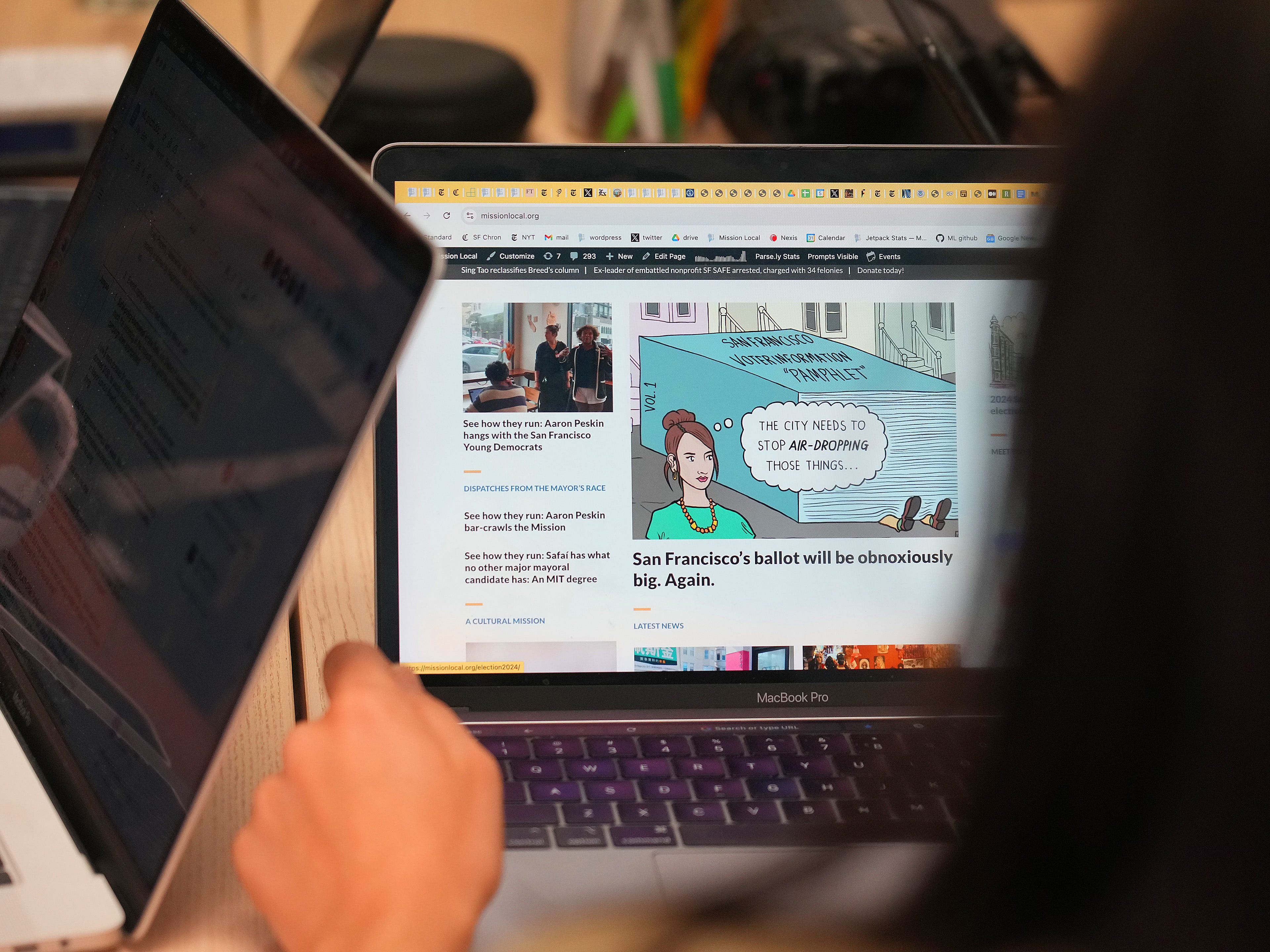
The most recent series was on local news — and the hardest to write, perhaps because I spent nearly a decade as a local news reporter. Here's what the learning arc produced: four takeaways I've been thinking about — and I'd love to hear yours.
First, it’s a democracy problem. The ripple effects of local news’ decline reach further than most people realize — and they’re measurable. Where accountability journalism disappears, voter turnout drops and cities’ borrowing costs rise — lenders, it turns out, price in the absence of scrutiny. National partisan media fills the vacuum, but what it offers isn’t information. It’s identity. Rooted in ideology, not place.
One statistic stopped me: a Gallup survey from late 2024 found that 80% of Americans believe we’re deeply divided over our most important values — a number climbing steadily since about 2005, the same moment local news began its collapse. In the two decades since, 3,500 papers have closed, erasing 40 percent of the nation’s local newspapers.
The decline in local news and rise in America’s divide have happened in parallel. That’s not a media story. That’s a democracy story.
Second, build journalism products people love. In our urgency to save local news, we assumed offering news was enough. It’s not.
Clunky websites, impersonal newsletters, podcasts abandoned after a few tries, sloppy design, events treated as afterthoughts — too often the work ends when the story goes up on the website. It’s not a resource problem. It’s cultural. Nobody wins a journalism award for a great user experience.
Lookout Santa Cruz — a for-profit startup launched in 2020 — proves the alternative is possible. They’ve built something people want to read, not just something people are glad exists. Pulitzer winner in 2024. Profitable in 2025. I liked their morning newsletter enough that I signed up to get it, too - even though I live in Miami, not California.
Great journalism is required. So is a great product.
Third, scale. Ted Williams founded Charlotte Agenda in 2015 and sold it to Axios for nearly $5 million in 2020. A point he made when we spoke: one of the most overlooked problems in local journalism is “the erosion of business talent.” Extraordinary reporters and editors exist across the country. Entrepreneurs in local journalism, not enough.
The people who know how to build, scale, and sustain — who in another era might have launched a local news outlet — are going elsewhere.
Seeding hundreds of small nonprofit newsrooms likely won’t solve the problem at the speed it requires. The economics of a single small operation have real limits. That’s why Knight Foundation’s consideration of buying McClatchy in 2020 — turning it into a locally rooted, nationally scaled, digital-only nonprofit — strikes me as the kind of bet that still needs to be made. Scale changes the math.
After two decades of experiments and seeding efforts, the moment calls for large bets on single ideas, bearing the risk of failure, and ambitions commensurate with the problem.
Fourth, AI. The internet arrived in the 1990s. Social media followed in the 2000s. Local news never fully recovered from either. Now AI is here. The response to the internet was fear, denial, and ambivalence. As University of Maryland's Tom Rosenstiel said, “Now we have another chance, because this is as big as the internet.”
Money is important — but maybe not everything?
Our deep dive, The Amateur Myth: Solving For College Athlete Pay, explored the challenge of paying athletes who generate billions in revenue while preserving the traditions and educational mission that give college sports meaning — and sustaining non-revenue programs like swimming and track. Players are now being paid, as they should be. How they're paid, and how athletic programs are funded, remains a work in progress.
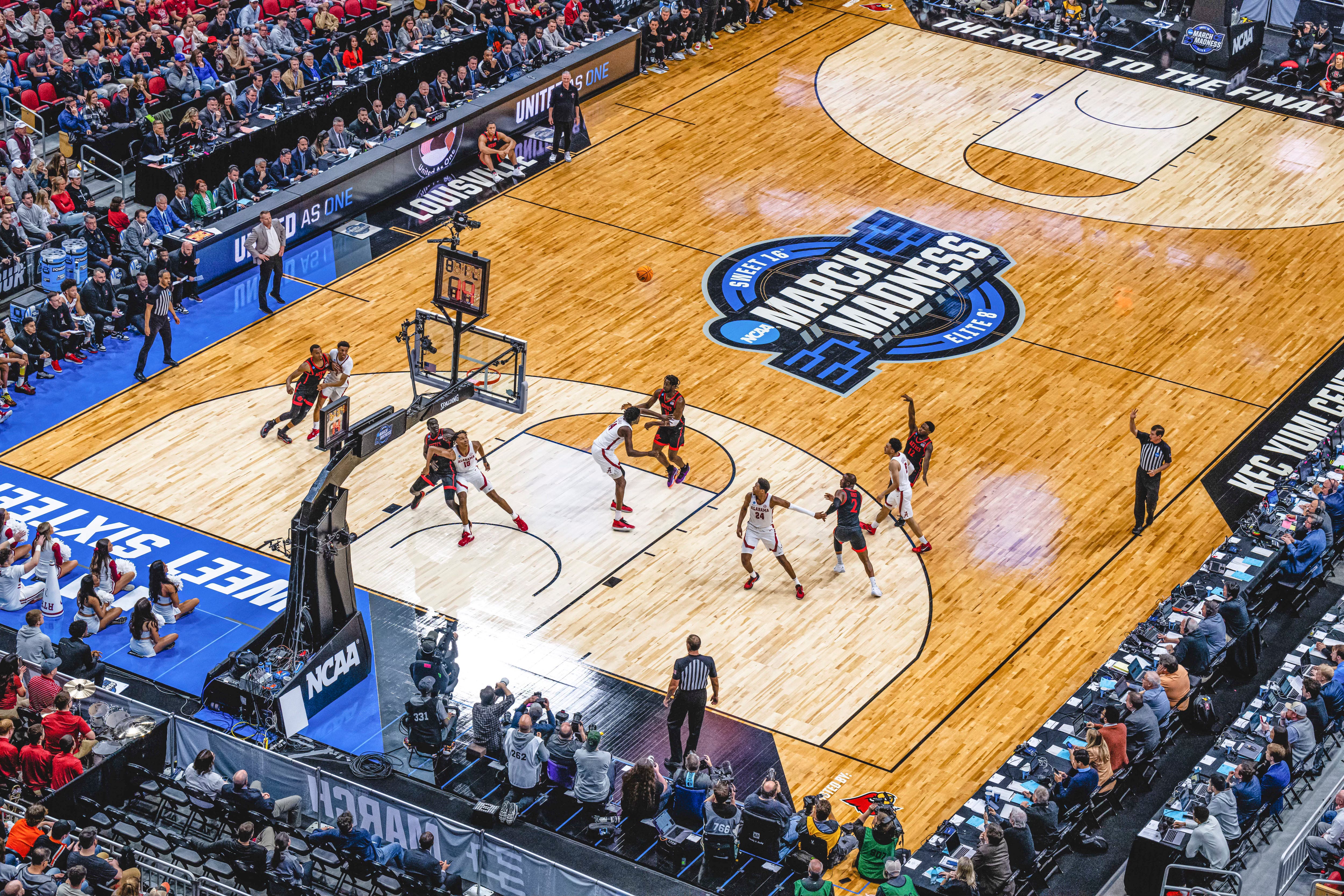
This year’s NCAA Men’s basketball tournament, which concluded in Indianapolis with the Final Four, has reminded us that money matters — but it’s not everything.
Just one team in the Final Four — Michigan — has players among the ten highest-paid in the country, according to On3, which tracks athlete compensation. Michigan forwards Morez Johnson (fifth) and Yaxel Lendeborg (seventh) each earn $2 million a year. But UConn, Illinois, and Arizona don't have a single top-ten earner.
Michigan and Arizona each crack the top ten in total roster pay, but aren’t at the very top. The Wolverines rank fifth, in a tie with three other schools, at $10.5 million; the Wildcats are tied for 10th at $9.5 million.
Kentucky, ranked first, paid its roster $20 million and was bounced in the second round. BYU ($13 million), Duke ($12 million), Arkansas ($11.5 million), Louisville, Texas Tech, and St. John's (each at $10.5 million) are all out.
Many of the top spenders aren't in Indianapolis. The teams that are suggest something else still matters.
Competition in Congress
Candidates for U.S. House and Senate seats sprinted this week to close out their first quarter fundraising. Final phone calls, texts, emails, and social media blitzes went right up until midnight on March 31. The numbers matter: they signal viability, reveal the depth and breadth of a candidate's support, and tell campaigns what they’ll have on hand to spend on advertising, field work, and staff.
Candidates have until April 15 to file with the Federal Election Commission — meaning the full picture comes into focus shortly.
Five states have already held primaries. The rest will follow between now and September, when voters select their party's nominees — before the closely watched midterms on November 3rd.
Democrats, currently shut out of power in Washington, are seeking to win back a majority in the U.S. House and, potentially, the Senate.
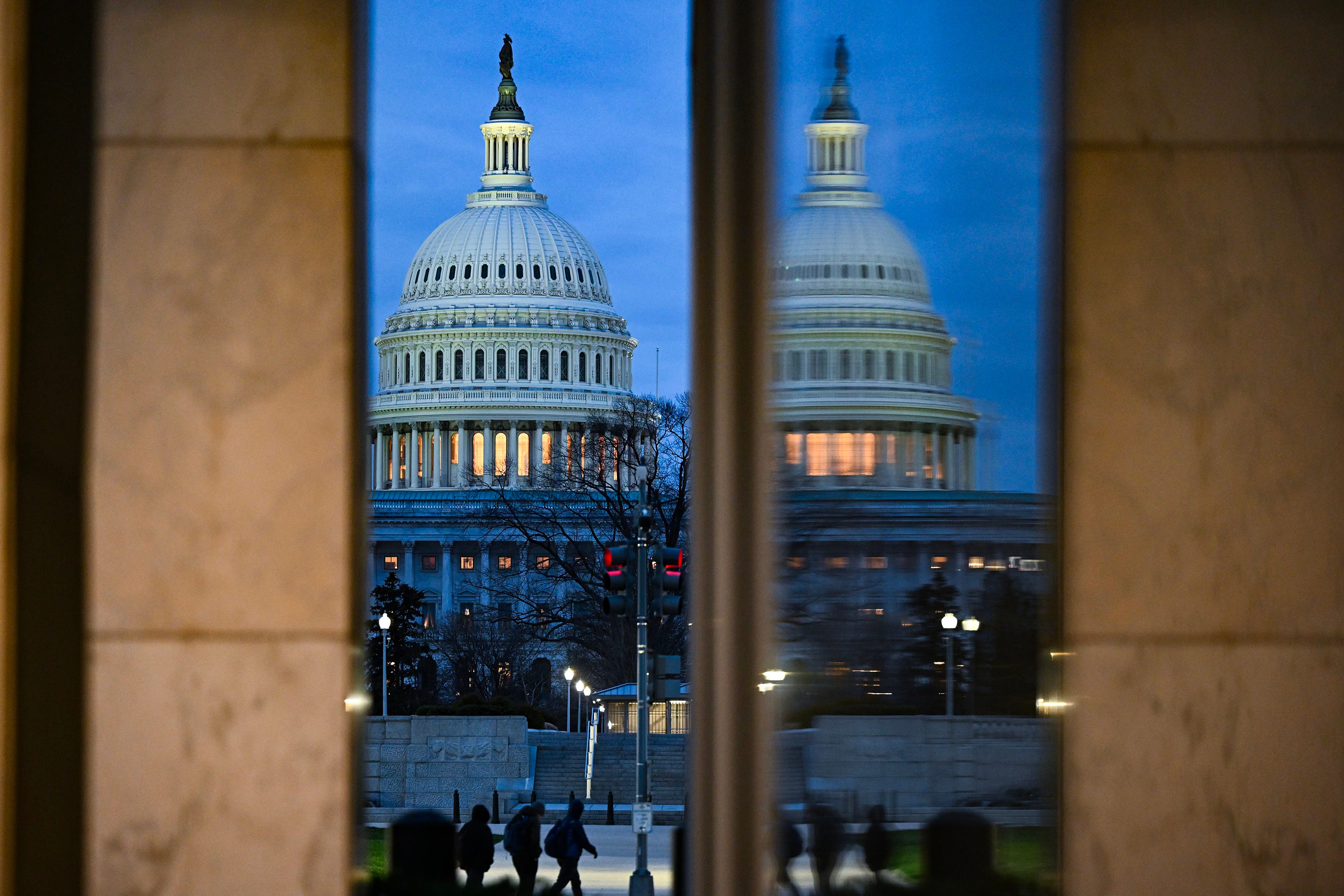
In our series, The Democracy Deficit: Solving for Competition in the People's House, we identified a quiet crisis hiding in plain sight: the U.S. House — designed by the framers to be the most responsive legislative body in America — is hardly competitive at all. As a result, it is marked more by posturing than problem solving.
For some time, reforms have been proposed to make congressional races more competitive. But it hasn't happened yet — and the current election cycle proves it. According to the Cook Political Report, just 17 of 435 House races this year are tossups. Less than four percent.
It's a far cry from James Madison's vision in Federalist No. 52 — a House with “an immediate dependence on, and intimate sympathy with, the people.”
Up Next
For our next series we dive into what's happening to a generation of kids — rising rates of anxiety, depression, and loneliness — and what, if anything, we can do about it. Australia banned social media for anyone under 16. Jonathan Haidt wrote a bestseller indicting the phone-based childhood. And on March 25th, a Los Angeles jury found Meta and YouTube negligent in a landmark social media addiction trial — drawing comparisons to the legal crusade against Big Tobacco in the 1990s.
The dam may be breaking. Or is it? The harder question is what comes next. If you have research, books, or personal experience that should inform this series, hit reply -- I'd love to hear from you.
Note: Prefer to listen? Use the Article Voiceover at the top of the page, or find all narrated editions in the Listen tab at solvingfor.io.
Solving For is a deep-dive series that takes on one pressing problem at a time — what’s broken, what’s driving it, and what a path forward might look like. Learn more here.
Previous Series
The 21st Century’s Oil: Solving For China’s Rare Earth Dominance
The Control Problem: Solving For AI Safety
Part 1, AI: The Race and the Reckoning
Part 2, AI: The Prisoner’s Dilemma
Part 3, AI: The New Nuclear Moment
The Democracy Deficit: Solving For Competition in the People’s House
Part 2, Congress: How We Got Stuck
The Amateur Myth: Solving For College Athlete Pay
Part 1, College Sports: How It Was Broken By a $60 Video Game
Part 2, College Sports: How the NCAA was Born of Death and Money — Death was the Easy Part
The 80-Year Peace: Solving For a Rearming World
Part 1, War & Peace: The World Rearms
The Community Gap: Solving For Local News
Part 1, Local News: The Civic Unraveling
Part 2, Local News: The Internet Was the First Disruption. AI Is the Next.
Part 3, Local News: The Bet That Wasn’t Made, But Could Still Be
DISCLOSURE: I served as Miami Director at Knight Foundation from 2011 to 2017, and as a staff writer at The Miami Herald from 2004 to 2011 — during which time the Herald was owned first by Knight-Ridder, then by McClatchy. The events described in the Local News series occurred after my tenure at Knight Foundation ended.