


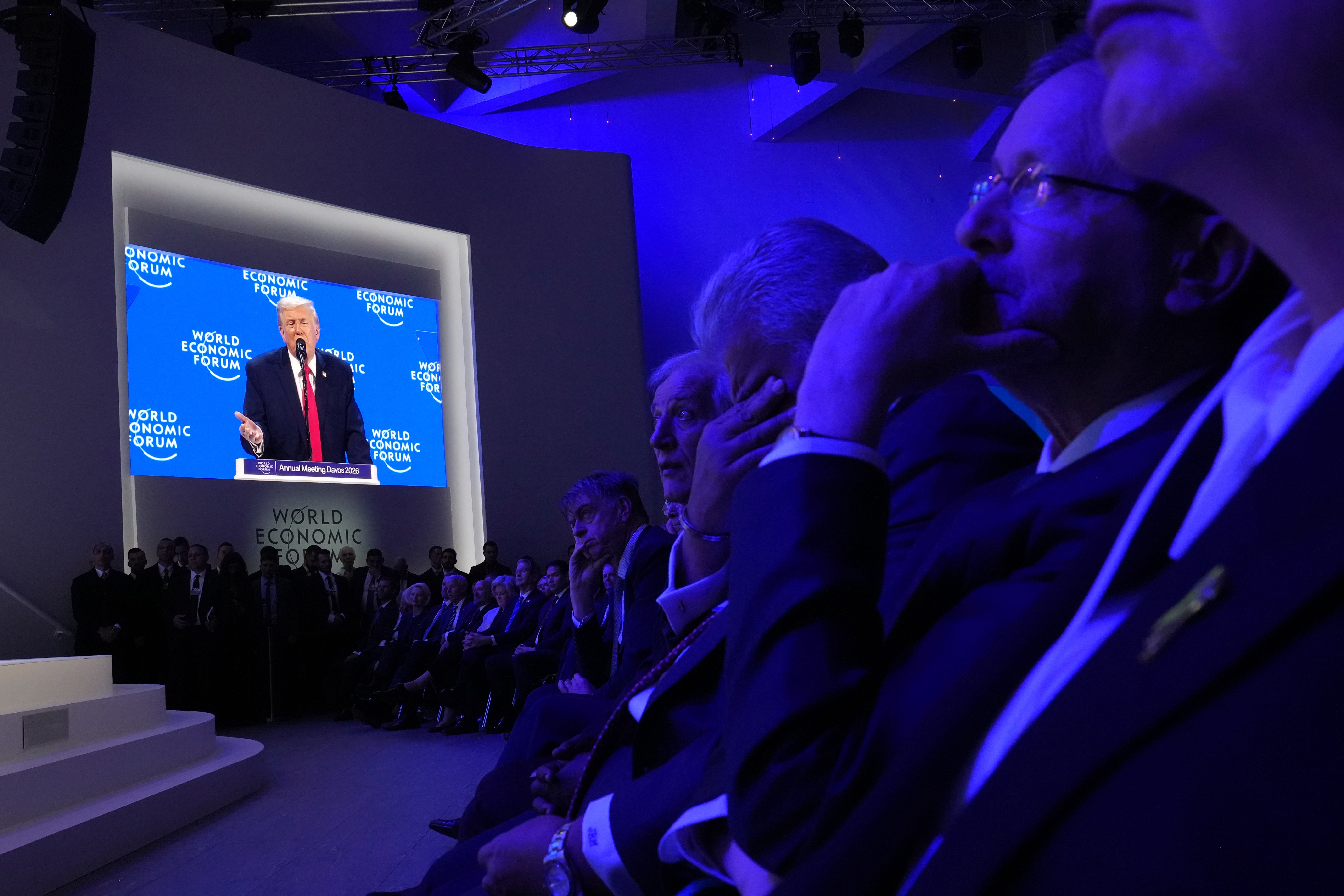
In Part Three of our series examining the biggest global military buildup since the Cold War—and the weakening of the international system designed to prevent war—we turn to solutions.
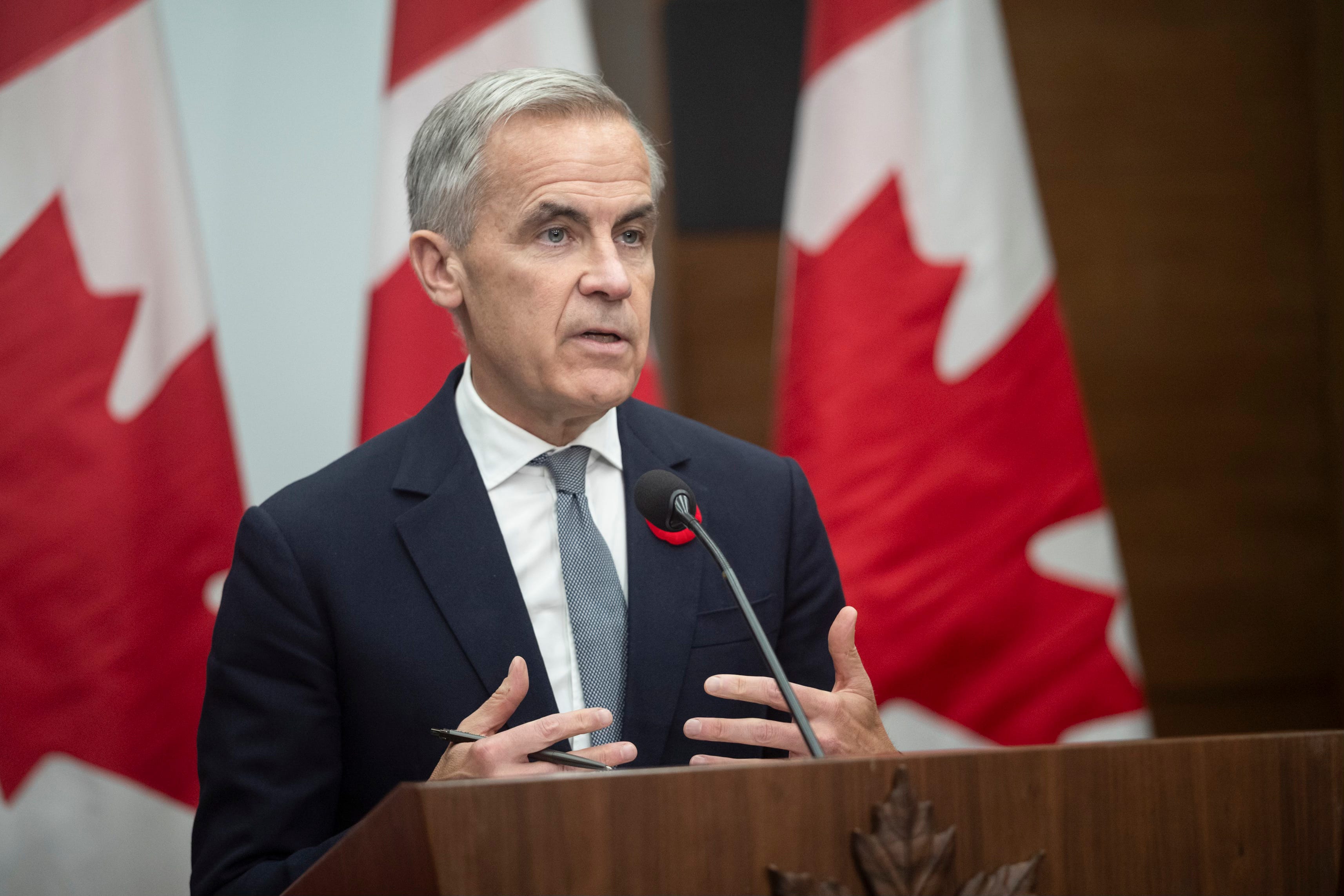
Last week, our topic moved to the top of news feeds when Canadian Prime Minister Mark Carney declared at Davos that the postwar rules-based order—the framework that has guided relations between countries for eight decades—is not weakening, it’s dead. And he proposed what comes next.
Part One unpacked the problem; Part Two examined the forces that brought us here. What you’ll learn in Part Three:
• Why Mark Carney’s Davos declaration made global headlines—but why his proposed alternative, “values-based realism,” focused on managing competition through flexible coalitions, may matter even more.
• Why the world is entering a dangerous transition between systems, with three competing visions: restoring the old rules-based order, accepting raw power and spheres of influence, or managing rivalry without abandoning core principles.
• Why the system that has prevented great-power war since World War II remains worth defending—and how Carney’s approach could serve as a bridge back to a renewed rules-based order, not a replacement.
Solving For tackles one pressing problem at a time: what’s broken, what’s driving it, and what can be done. New posts weekly. Previous series examined rare earth elements, AI safety, vanishing competition in Congress, and the end of amateurism in college sports.
It was February 1946, and Moscow was locked in winter.
George Kennan was sick. The American diplomat lay in bed at the U.S. Embassy on Mokhovaya Street, fighting off the flu in what he would later describe as Moscow’s sunless, vitamin-deficient environment. He was 42, serving as chargé d’affaires while Ambassador Averell Harriman was away.
Then came the cable from Washington. The Treasury Department wanted to know why the Soviet Union was refusing to join the newly created International Monetary Fund and World Bank.
Kennan had spent much of his two decades in the Foreign Service feeling ignored. Now, laid up and frustrated, he decided he wouldn’t simply answer the question. He would tell Washington everything.
Late into the night, Kennan dictated to his secretary, Dorothy Hessman. The words poured out—thousands of them. The Soviets, he argued, saw themselves locked in an enduring ideological struggle with capitalism. The only viable strategy was containment: firm, patient resistance at carefully chosen points, designed to avoid war while shaping long-term outcomes.
When Kennan finished, the telegram was so long it had to be transmitted in five separate batches.
The message ricocheted through Washington—to President Harry Truman, to military planners, to intelligence analysts. Kennan later recalled, “My voice now carried.”
That dispatch—remembered as “The Long Telegram”—became the intellectual foundation of American Cold War strategy. Despite proxy wars, constant tension, and tens of thousands of nuclear weapons aimed across continents, the United States and the Soviet Union never fought directly. By 1989, the Berlin Wall fell. Two years later, the Cold War ended.
Kennan’s telegram demonstrated that even in moments of deep uncertainty, strategic clarity can shape decades.
Today, nearly eighty years later, the U.S.-led system that produced the longest great-power peace since the Roman Empire is unraveling. An uncertain world is rearming at a pace unseen in more than three decades.
The result is not just the collapse of the old order, but something more dangerous: an interregnum marked by the absence of rules, shared assumptions, or clear restraint.
As the United States under President Trump increasingly casts aside pillars of the international system it once built, strategic clarity has become a scarce resource. In moments like this, answers cannot come from official Washington alone. Others must step forward to describe the world as it is—and to articulate a credible way forward—much as Kennan did nearly eighty years ago.
This past week offered a starting point.
A System Ends—and the Fight to Define What Comes Next
Speaking at the World Economic Forum in Davos last week, Canadian Prime Minister Mark Carney made headlines by declaring that the 80-year-old rules-based international order is dead. What’s ending, he said, is “a nice story”—replaced by a brutal reality in which great powers increasingly operate without constraint.
Invoking Greek historian Thucydides, Carney warned that the emerging system resembles a world where “the strong do what they can, and the weak suffer what they must.”
But Carney did something else—something that received less attention, yet may prove more consequential. He outlined a framework for what comes next.
He called it values-based realism.
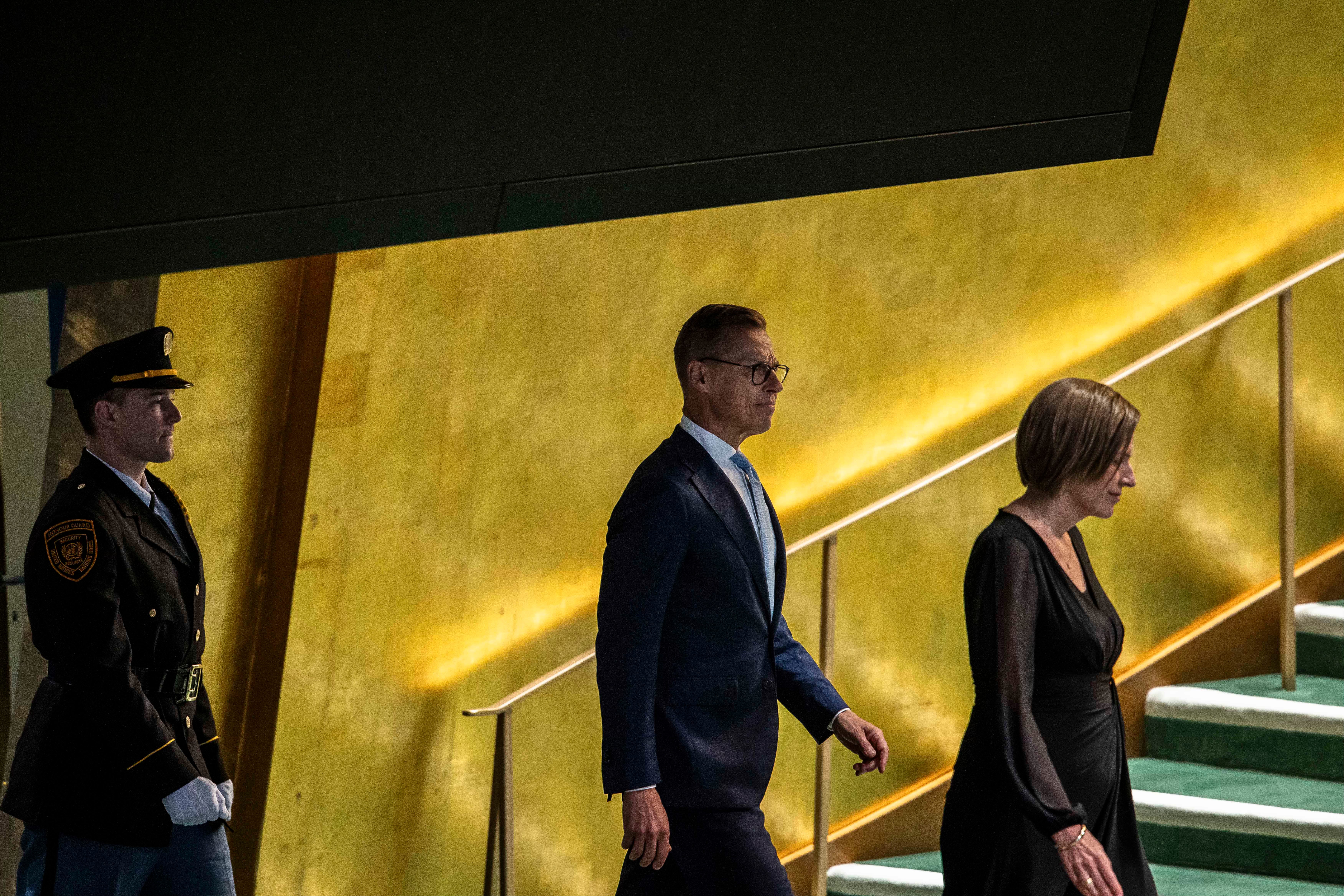
The concept was introduced by Finnish President Alexander Stubb in Foreign Affairs. Carney—the leader of one of America’s historically closest allies—gave it public voice.
At its core, values-based realism accepts that the universal rules-based order—one intended to bind all countries—is over, but rejects a slide into pure power politics. Instead, it proposes building flexible coalitions around shared interests and values, issue by issue, partner by partner.
The principles include respect for sovereignty and territorial integrity; prohibition of the use of force except as permitted under the UN Charter; and protection of basic human rights.
It’s pragmatic by accepting uneven progress and divergent interests, favoring what Carney calls “variable geometry”—coalitions built where interests and values align, without requiring comprehensive agreement.
“We know the old order is not coming back,” Carney said. “We shouldn’t mourn it. Nostalgia is not a strategy. From the fracture, we can build something bigger, better, stronger, more just.”
In the wake of World War II—the second devastating global conflict within three decades—the U.S. and its allies created a geopolitical architecture designed to ensure it would never happen again. It established institutions for diplomacy (the UN), deterrence (NATO), and economic integration (the World Bank and IMF). These came with shared rules intended to apply to all countries—like the prohibition on seizing territory by force—constraining power and raising the costs of conflict.
For eight decades, this rules-based system succeeded—preventing direct conflict between great powers even through the Cold War.
When the Cold War ended, expectations ran high that the rules-based system would only strengthen as democracy and free markets spread globally. But those hopes faded as China rose without political liberalization and a humiliated Russia turned antagonistic. Trust eroded—undermined by social media, the 2008 financial crisis, and the wars in Iraq and Afghanistan. Globalization delivered growth but not shared prosperity, fueling backlash that culminated in Brexit and Donald Trump's election.
Still, the rules-based system endured.
What makes this moment different is not pressure from outside, but retreat from within. Under Trump, the United States—the system’s chief architect and guarantor for eight decades—has turned away from the alliances, institutions, and norms it created. The global order is now being undermined by its principal author.
Over the past year, a cascade of actions—steep tariffs, territorial threats from Greenland to the Panama Canal to Canada as a “51st state,” wavering commitments to NATO, pressure for a Ukraine settlement favorable to Moscow, and withdrawals from multilateral institutions—has taken its toll. Most recently, Trump announced what he called a “Board of Peace,” framed as an alternative to the United Nations.
The pattern extends beyond Washington. Carney warned that great powers are weaponizing economic integration—deploying tariffs as leverage and treating supply chains as vulnerabilities to exploit—a clear reference to the United States and China. The economic ties that once anchored the rules-based system are becoming instruments of coercion.
In response, Carney called for “middle powers” to join together in coalitions that range from trade agreements to security arrangements. This week the EU and India announced a new free trade agreement — the kind of coalition-building Carney envisions.
Taken together: competition over what system replaces the rules-based order has begun.
In his Foreign Affairs essay, Stubb wrote that what’s decided in the next five to ten years will likely shape the global order for decades.
“Once an order settles in,” he writes, “it tends to stick for a while.”
The pivotal question now is which vision will prevail.
In the Space Between: Three Paths Forward
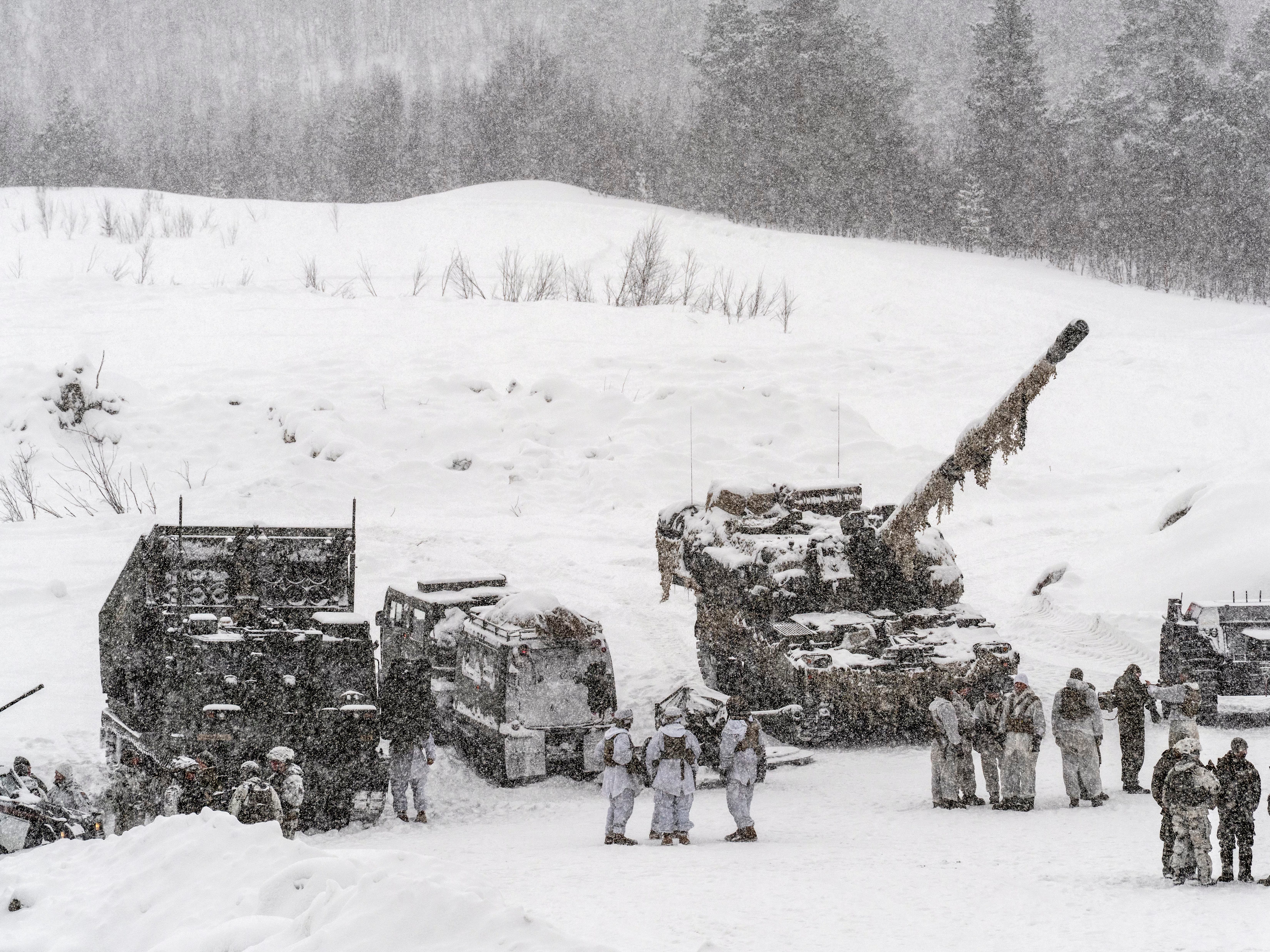
Global military spending is rising at its fastest pace since the end of the Cold War—and it is rising everywhere. More than 100 countries, including all of the world’s top 15 military spenders, increased their defense budgets last year, according to the Stockholm International Peace Research Institute.
Unresolved flashpoints—Ukraine, Taiwan, Korea, the Middle East—carry constant risk of escalation. China’s rise continues. The danger is no longer confined to a single theater or rivalry.
All of this is unfolding in a gray zone—old rules discarded, new ones not yet established—ripe for miscalculation and adventurism.
Broadly speaking, three competing frameworks are now vying to become the next global order.
Restoration: Renewing the Rules-Based System
Despite Carney’s declaration of rupture, this view contends that the post–World War II framework remains the most successful and can be saved. Its current failures reflect neglect, inconsistency, and departures from precedent—not fatal design flaws.
The task is repair: reform the United Nations; recommit to NATO; and, perhaps most importantly, make the case anew for international rules and norms that bind the powerful and weak countries alike. By and large, this has been the view of every U.S. president other than Trump.
For all of Trump’s bluster, he hasn’t withdrawn the U.S. from core multilateral institutions like the United Nations or NATO, even as he pulled out of dozens of others. Mark Rutte, NATO’s secretary general, credits Trump with pressuring European allies to increase defense spending.
The problem is time. Restoration requires rebuilding trust and reforming institutions fast enough to matter, yet the world is rearming and the international system is fraying now. Even if a future U.S. president makes the case for updating and embracing the rules-based system, that moment is at least three years away—and the system may not wait.
Raw Power: Spheres of Influence
The second path puts power ahead of rules. It assumes great-power rivalry is a permanent condition and that order emerges not from shared norms, but from hard recognition of reality: who holds power, where interests collide, and which red lines risk war.
From this perspective, spheres of influence are unavoidable. Great powers will always care more about their borders than distant states do. Insisting that places like Ukraine or Taiwan can align freely ignores this reality and invites confrontation. Better, this view holds, to acknowledge zones of influence than pretend universal rules apply everywhere.
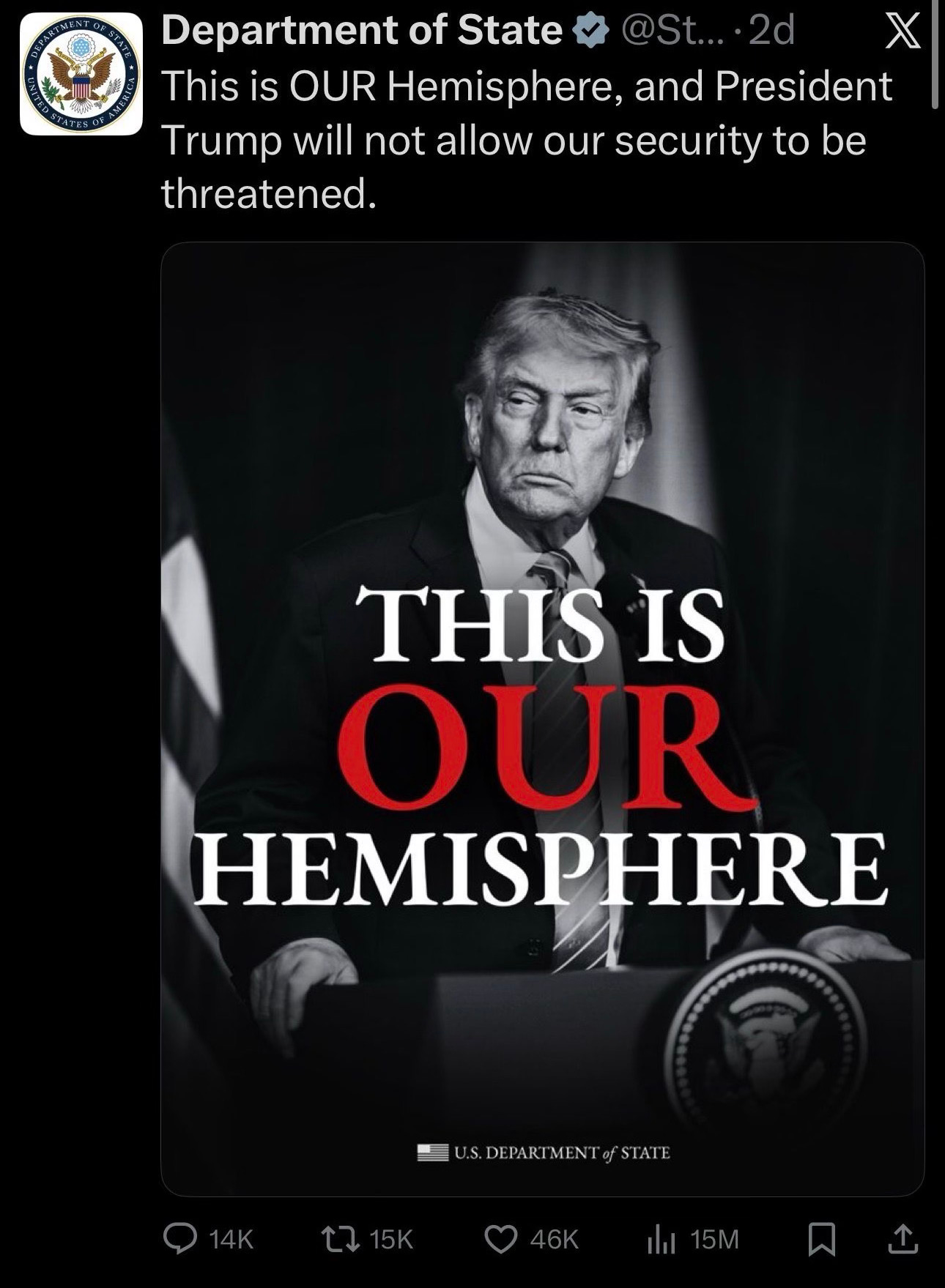
This is Trump’s worldview. He treats the postwar system not as a stabilizing achievement but as a bad deal—one that constrained U.S. freedom while allowing allies to free-ride and rivals to cheat. Alliances become transactional, commitments conditional. As top Trump aide Stephen Miller put it recently, we live in a world that is “governed by strength, that is governed by force, that is governed by power.”
The risks are substantial. Spheres of influence legitimize coercion, sacrifice smaller states, and normalize arms races in a world without guarantees. They may reduce friction in the short term—but when power balances inevitably shift, the only way to redraw boundaries is through force, making conflict more likely over time.
As The Economist warned last year, “nostalgia for spheres of influence is misplaced.”
Managed Competition: Values-Based Realism
The third path begins from a harder truth: great-power rivalry is here to stay, and no grand settlement is coming. The question is no longer how to end competition, but how to survive it.
This is what Canada’s Mark Carney and Finland’s Alexander Stubb are proposing. Values-based realism abandons the assumption that a rules-based system can be universally restored while rejecting a power-first approach to order.
It holds that democracies cannot trade principles for deals or accept spheres of influence. Instead, it pairs resistance to coercion and territorial revisionism with pragmatic cooperation—building coalitions where interests and values align, without expecting comprehensive agreement. The objective is not resolution, but stability: preventing escalation while preserving what makes the system worth defending.
It’s an approach that includes setting guardrails: crisis hotlines, military-to-military communication, confidence-building measures, and arms-control frameworks adapted to emerging technologies. It accepts that trust will be limited and cooperation narrow, but insists that miscalculation, accidental war, and uncontrolled escalation are not inevitable.
This offers no victory narrative and no final peace. It demands discipline, patience, and sustained investment in institutions designed not to end rivalry, but to contain it.
A Way Forward
Kennan, the architect of containment, spent his later years demonstrating what strategic discipline actually meant.
He opposed the Vietnam War, arguing that containment was being applied indiscriminately to the wrong fight. Decades later, he warned against NATO expansion into Eastern Europe, calling it — in a 1997 op-ed in The New York Times, when he was 92 — “the most fateful error of American policy in the entire post–Cold War era.”
This was not inconsistency. It was restraint: knowing what to defend.
Today’s challenge is more complex than Kennan’s in 1946. He was managing rivalry within an emerging international system. We’re confronting uncertainty about whether the system survives at all.
Yet the rules-based order worked for nearly 80 years. It did not eliminate rivalry or require ideological uniformity, but it succeeded at its core task: preventing great-power war. It remains the ideal—and worth defending. But while Carney presented values-based realism as replacement for the rules-based system, it can also be the bridge back to it.
The reason is that values-based realism builds on the same principles that made the rules-based system work: respect sovereignty, protect borders, resist coercion, resolve disputes through diplomacy. The difference is how you apply them. Instead of expecting every country to follow the rules, you defend these principles with countries that share your interests and build coalitions—through trade agreements, security alliances, whatever fits the situation.
If these arrangements work—if they prove that rules can still prevent conflict—they demonstrate viability and create momentum. Success attracts participation. Over time, this could expand from coalitions of willing partners back toward a more universal system.
Critically, it also buys time—creating space to rebuild trust and reform institutions while managing competition. The question isn't whether the rules-based order can be restored instantly, but whether values-based realism can bridge the gap until it can.
This is where Kennan’s example matters most. He offered both goal and method with precision: contain Soviet expansion—but do so through patient, sustained pressure rather than direct confrontation. Today’s challenge requires the same clarity. The goal remains a renewed rules-based international order. The method is values-based realism—a form of managed competition. Getting there requires three principles.
Selective Reform: Defend the Rules That Matter
Strengthen what still functions. NATO, reinvigorated by Russia’s invasion of Ukraine, is stronger than it has been in decades. The IMF and World Bank still matter. Push UN reforms where viable. Make the case for a rules-based system upgraded for the 21st century.
But accept what cannot be changed. China and Russia won’t become liberal democracies any time soon. The rules-based order never required ideological uniformity—it required shared rules about how states interact. Strategic clarity means knowing the difference between defending those rules and demanding political transformation.
Hard Limits: Reject Spheres of Influence
Resist legitimizing spheres of influence. History is clear: when great powers carve the world into zones of domination, they don’t create stability—they legitimize coercion and create conditions for future wars.
This doesn’t mean military intervention everywhere. But it does mean drawing clear red lines in defense of sovereignty and against territorial conquest. The line is territorial revisionism by force — not which camp a country joins.
Invest in Catastrophe Prevention
In a rearming world with multiple flashpoints, the risk of escalation is constant. New technologies intensify the danger: AI-enabled weapons accelerate decision-making, hypersonic missiles compress response times, and military activity in space risks cascading failure.
Crisis management is now central to statecraft. After the Cuban Missile Crisis, the U.S. and Soviet Union installed a hotline and later negotiated the Incidents at Sea Agreement—essential mechanisms that reduced the risk of accidental war.
They did not require trust; they compensated for its absence.
Strategic Humility
Kennan showed that even in the most uncertain times, strategic clarity is possible—and that it can shape decades. His Long Telegram didn’t promise peace or predict victory. It identified what was achievable: preventing catastrophic war through patient, disciplined resistance.
That time has come again. The question is not whether great powers will compete, but whether competition can be managed through a system that once constrained rivalry well enough to prevent it from escalating into catastrophic war. Values-based realism—committed to territorial integrity, resistant to coercion, and open to partnership where specific interests align—offers a path to rebuild what's worth preserving and bridge back to that system.
The world is rearming. The old order is fraying. And like Kennan in that Moscow winter, the answer will not come from waiting for consensus. It will come from clear thinking about what's possible and what we refuse to accept.
Answers exist. They are already emerging—as Carney demonstrated in Davos.
The work now is making them endure.
Note: Prefer to listen? Use the Article Voiceover at the top of the page, or find all narrated editions in the Listen tab at solvingfor.io.