


This week we return to The Open Thread — our monthly bridge between each deep-dive series. It’s a deliberately unstructured installment to experiment, update past stories, and look ahead. And if you missed any of our first two series, we recap each one at the bottom.
Solving For tackles one pressing problem at a time: unpacking what’s broken, examining the forces driving it, and spotlighting credible solutions. Each series unfolds weekly, with new posts every Thursday. Learn more.
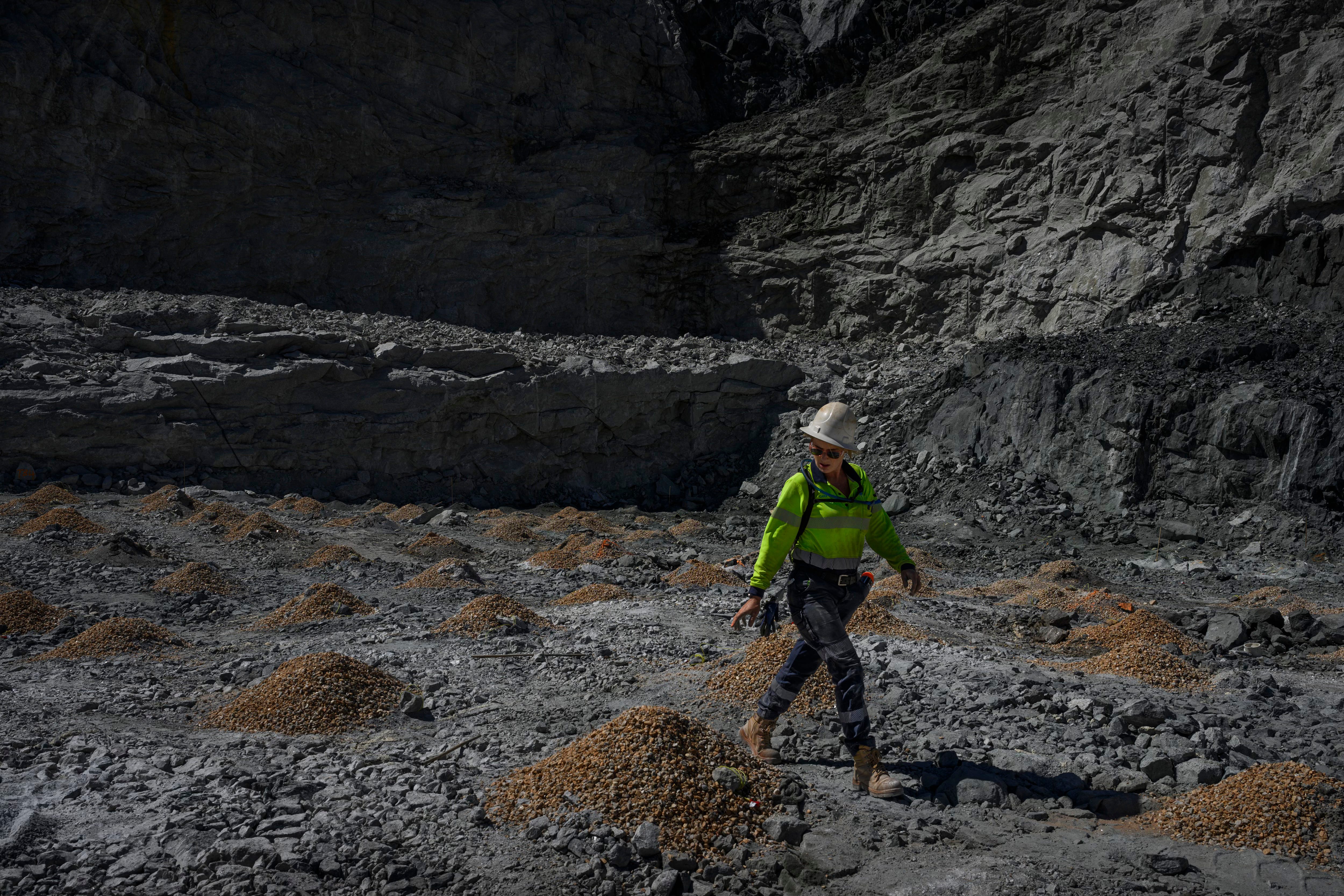
Finding Friends in Rare Earths
Our series last month on solving for China’s dominance in rare earth elements identified four key solutions. One of them — partnering with allies — made headlines this week.
On Monday, Australia’s Prime Minister Anthony Albanese met with U.S. President Donald Trump at the White House to announce a new agreement to boost mining, manufacturing, and processing of rare earths in both countries.
The two leaders unveiled a Critical Minerals Framework, pledging more than $3 billion in joint investment over the next six months, including a U.S. Defense Department partnership in a refinery in Western Australia.
Quick refresher: rare earth elements — seventeen metals scattered across the periodic table – form the invisible backbone of the modern economy. They’re inside everything from smartphones and electric vehicles to fighter jets and missile-defense systems. Yet China controls roughly 90 percent of global processing and manufacturing.
As we explored in our three-part September series — The 21st Century’s Oil: Solving For China’s Rare Earth Dominance (if you haven’t read it, start here)— China has used that dominance as geopolitical leverage.
And on October 8th, China did so again.
Beijing’s Commerce Ministry expanded export controls on rare earths, adding new elements to the restricted list it created in April in response to US tariffs. It also declared that any exports for military use — such as samarium, vital for F-35 fighter jets — “will not be approved.”
China, in addition, imposed limits on exporting mining and processing technology, a move meant to slow other nations’ efforts to build independent rare-earth supply chains.
In our series we outlined four priorities for a way forward: build domestic supply, partner with allies, scale recycling, and invest in research and talent. Over the summer, the Trump administration made major investments to improve domestic mining and manufacturing — and now we’re starting to see the diplomatic piece fall into place.
But one piece still lags behind: research and talent.
Remember Masato Sagawa from Part Three of our series? After cobalt prices spiked due to the Second Shaba War in 1978 in Zaire, he created an entirely new — and even more powerful — magnet using neodymium. That magnet has powered the computer age.
It’s an illustration that innovation redraws the map. The metals we rely on aren’t fixed — they’ve shifted before and will shift again.
Yet the U.S. talent base capable of driving the next breakthrough has shrunk. Over the past several decades, the number of college programs in materials science has declined — as has the number of graduates.
Rather than reverse that trend, federal funding for university research in materials science has been cut this year — a consequence, Bloomberg’s Thomas Black reported this week, of the Trump Administration’s broader rollback of programs it classified as diversity-related.
He quoted Gracelin Baskaran, director of the Critical Minerals Program at Center for Strategic and International Studies:
“Our universities and our institutions have taken a huge funding hit this year. America’s comparative advantage to me is not mining, it’s not processing. It’s our ability to be innovative.”
Just as the U.S. commits billions to rebuilding supply chains, it’s pulling back from the very area that has long distinguished it globally — research and learning that fuel discovery.

AI Safety Enters the Arena
Our AI safety series this month explored a central challenge: how to drive innovation in AI while building guardrails to understand and reduce risk before the technology outpaces our ability to control it. This week, that abstract question became concrete politics.
It started when Anthropic co-founder and head of policy Jack Clark published an essay earlier this month called “Technological Optimism and Appropriate Fear” — a reflection on being simultaneously excited by AI progress and “deeply afraid” of where it’s headed. Clark described watching AI systems develop “signs of situational awareness” and said, “make no mistake: what we are dealing with is a real and mysterious creature, not a simple and predictable one.”
Anthropic ranks among the biggest AI companies in the world. This week, it said revenues had grown from a run rate of $1 billion to $7 billion in the past nine months. It’s also been among the most outspoken on the need for safety and guardrails in developing AI models and releasing them to the public. The company endorsed California’s recent AI safety law, which includes reporting provisions and protects whistleblowers.
Yet, after Clark shared his essay on X, White House AI czar David Sacks fired back. He accused Anthropic of “running a sophisticated regulatory capture strategy based on fear-mongering” and being “principally responsible for the state regulatory frenzy that is damaging the startup ecosystem.”
Bloomberg followed with a story last week with the headline, “Anthropic’s AI Principles Make It a White House Target.” Sacks pushed back, posting “nothing could be further from the truth.”
The spat escalated further. On Monday LinkedIn co-founder and investor Reid Hoffman defended Anthropic, calling them “one of the good guys” trying to “deploy AI the right way, thoughtfully, safely.” (Hoffman also included Microsoft, Google and OpenAI in this group.) He added that some “other labs are making decisions that clearly disregard safety and societal impact.”
Sacks responded by calling Hoffman “the leading funder of lawfare and dirty tricks against President Trump.”
Finally, on Tuesday, Anthropic CEO and co-founder Dario Amodei stepped in with a lengthy statement that sought to lower the temperature — aligning the company with the administration on many AI goals while defending the company’s safety-first stance.
Amodei endorsed Vice President J.D. Vance’s call in a Newsmax interview to “maximize as much of the good and minimize as much of the bad.”
He also defended the company’s safety-focused approach and called for a national AI standard. Amodei wrote that AI is moving so fast that it can’t wait for Congress to act, which is why Anthropic supported the California bill — which applies to most of America’s AI companies, since they’re based in the state.
“AI should be a force for human progress, not peril,” Amodei wrote. “That means making products that are genuinely useful, speaking honestly about risks and benefits, and working with anyone serious about getting this right.”
He added: “We’re ready to work in good faith with anyone of any political stripe to make that vision a reality.” (You can read the full statement here.)
The fight reveals the core tension we explored in our three-part series, The Control Problem: Solving For AI Safety (if you haven’t read it, start here). Namely, can competitive pressure and safety concerns coexist? Or, put another way, can we move fast and stay safe?
Sacks represents the “let them cook” philosophy — minimal regulation, maximum speed. Anthropic — one of the leading companies “doing the cooking” — argues that some guardrails are necessary precisely because the technology is advancing so fast.
A deeper question is whether this kind of political back-and-forth helps or hurts the cause of building AI we can actually control. The risk is that it becomes another culture war battleground rather than a policy debate driven by facts and shared responsibility.
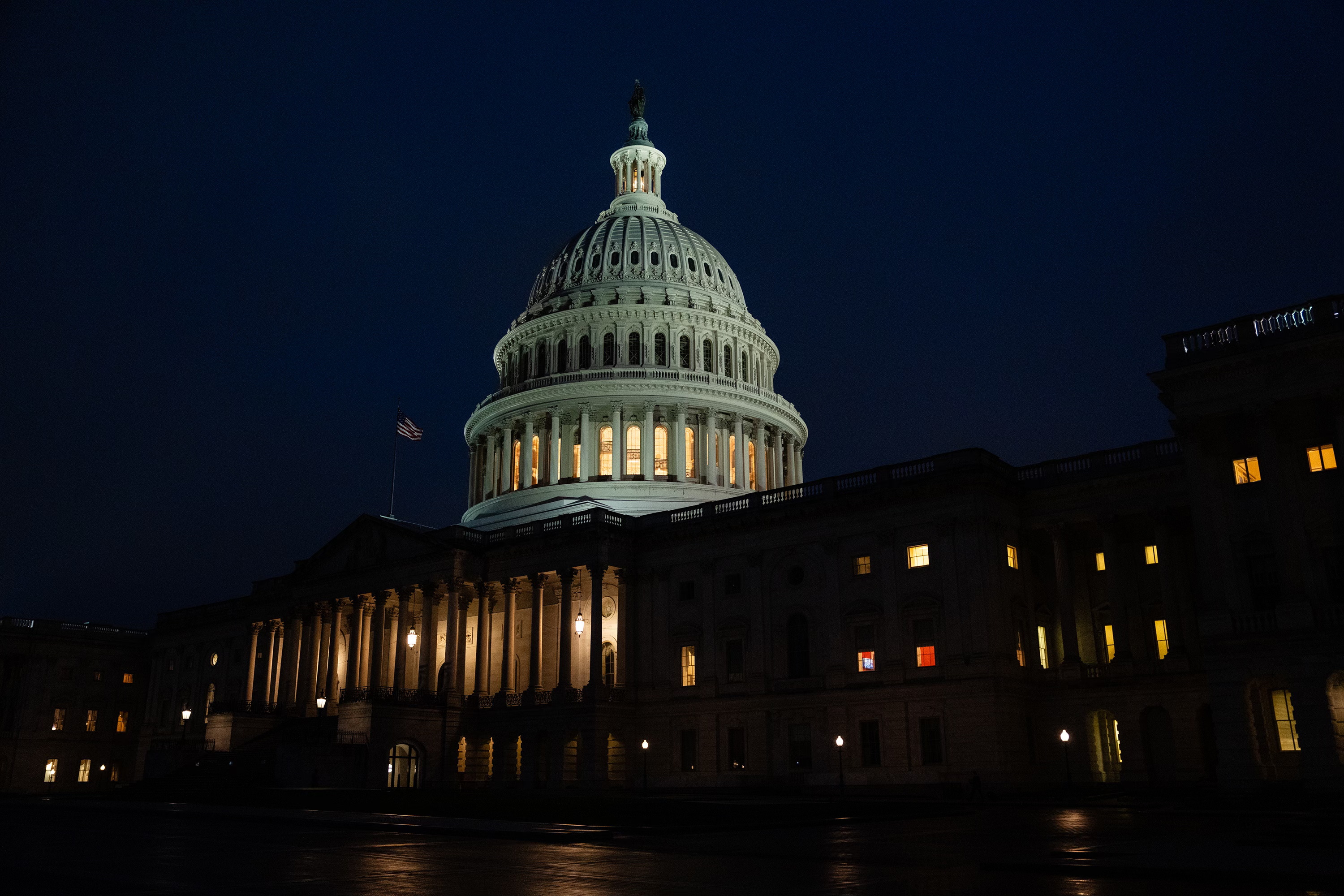
Up Next: Democracy
Next week, we start our next three-part Solving For series and turn to the health of American democracy itself — and a quiet crisis hiding in plain sight.
Over the past generation, competition in U.S. House races has nearly vanished. In 2024, fewer than one in ten were truly contested. For the 2026 U.S. House races, The Cook Political Report rates just 18 contests out of 435 as toss-ups. Most Americans now live in districts where the outcome is predetermined long before Election Day. The consequences show up everywhere: rising polarization, fewer moderates, and a Congress that no longer rewards problem-solving.
Our new series, The Democracy Deficit: Solving For America’s Vanishing Competition, explores what’s gone wrong, how the system locked itself in, and the reforms that could bring genuine choice — and accountability — back to the ballot box.
The Framers designed the House of Representatives — the “People’s House” — to be the most representative and responsive body in the federal government. But with so few contested seats, that founding ideal is increasingly in doubt.
After all, a nation built on innovation can’t afford a democracy that stops competing.
Updates: Audio and Format
We added audio last month, so you can listen or read. Now we’ve tweaked audio so there are two places to listen to the narrated version of each weekly post: one, in the Article Voiceover at the top of the each post or, two, you can find all narrated editions in the Listen tab at solvingfor.io.
Two other updates:
We’ve gotten feedback to include a “Key Takeaways” or “what we’re learning” bullet points at the top of each post to highlight the key topics. We’ll start doing that.
We currently cite sources by hyperlinking in the text. We’re going to start doing “Series Notes” at the end of each post to share with you the books, key articles, podcasts and videos behind each story.
As always, Solving For tackles one pressing problem at a time — unpacking what’s broken, examining the forces driving it, and spotlighting credible solutions. Each series unfolds weekly, with new posts every Thursday.
Thanks for being here — for reading, listening, subscribing, sharing and shaping this venture. Solving For is just getting started — and your energy, feedback, and ideas make all the difference.
Our Deep Dives
The 21st Century’s Oil: Solving For China’s Rare Earth Dominance
Part I - Rare Earths: The Invisible Backbone, Sept. 4
The Problem — What’s broken, and why it matters
Part II - Rare Earths: The Middle Kingdom’s Monopoly, Sept. 11
The Context — How we got here, and what’s been tried
Part III - Rare Earths: The Race to Rebuild, Sept. 18
The Solutions — What’s possible, and who’s leading the way
The Control Problem: Solving For AI Safety
Part I - AI: The Race and the Reckoning, Oct. 2
The Problem — What’s broken, and why it matters
Part II - AI: The Prisoner’s Dilemma, Oct. 9
The Context — How we got here, and what’s been tried
Part III - AI: The New Nuclear Moment, Oct. 16
The Solutions — What’s possible, and who’s leading the way
Next Week:
The Democracy Deficit: Solving For America’s Vanishing Competition
Couldn't agree more; this analysis of the rare earths situation truly highlight the strategic foresight needed in today's global economy. What if similar frameworks, involving robust European participation, were established to diversify not just rare earth sources but also other critical raw materials essential for advancing AI and sustainable technologies, thereby creating a truly resilient global supply chain?