



For Part Three in our series on the collapse of local news, the focus turns to solutions — what's been tried, what's been learned, and what a path forward demands. If you missed them, Part One unpacks the problem and Part Two examines the forces that got us here.
In March 2020, Knight Foundation CEO Alberto Ibargüen and trustees gathered for the foundation's quarterly board meeting to consider a radical proposal: buy the second-biggest newspaper chain in America — and rebuild local news from the ground up.
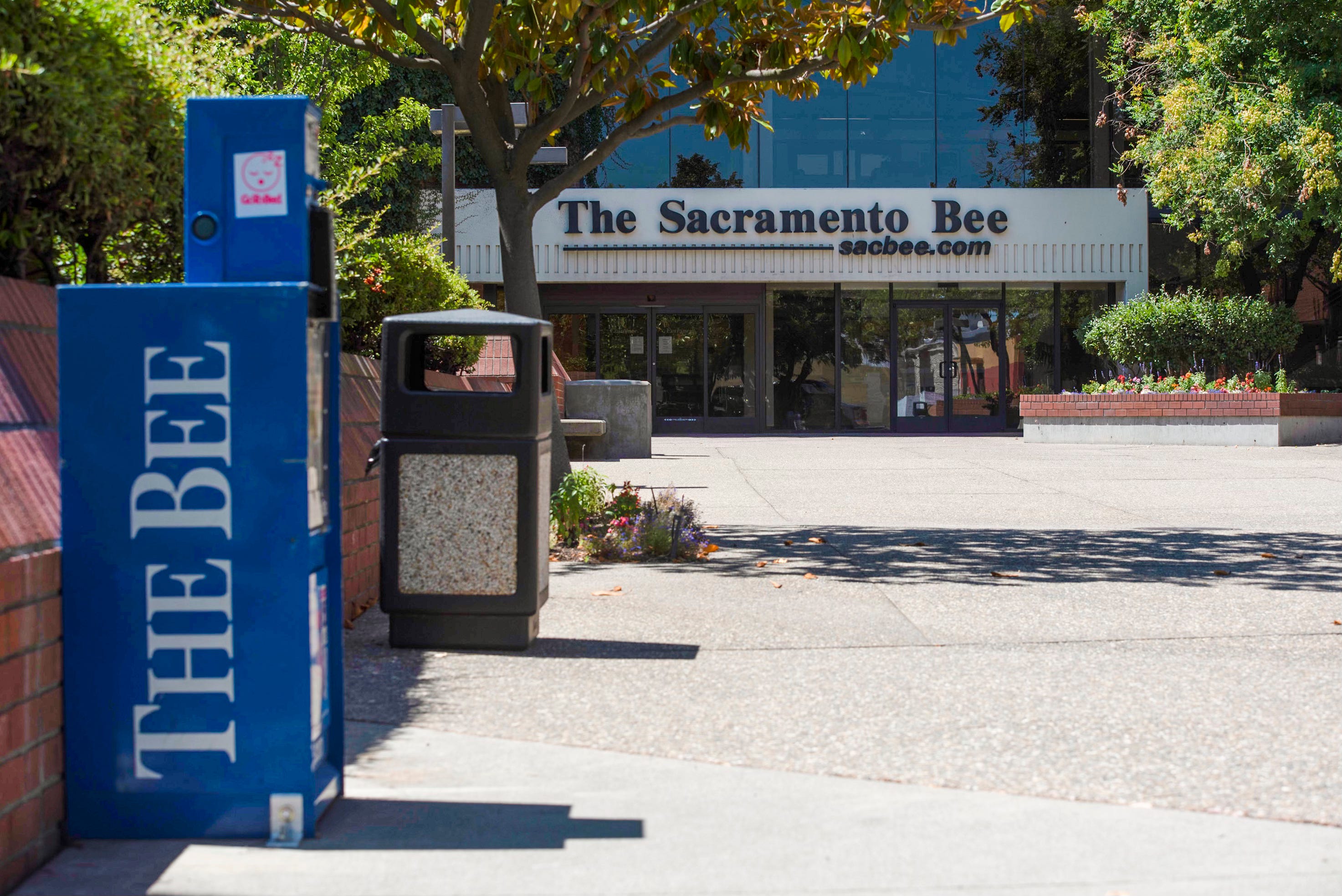
McClatchy, owner of 30 news organizations including The Miami Herald, San Jose Mercury News, Kansas City Star and Charlotte Observer, had filed for bankruptcy the previous month. It was the latest marker in a two-decade unraveling that had hollowed out local coverage across the country and helped fuel rising distrust and polarization.
A handful of national publications had navigated the shift. The New York Times leveraged its scale and global audience to move from an advertiser-driven revenue model to a subscriber-driven one. Local publications — without that advantage — continued to spiral.
This was an opportunity to change that — not paper by paper, but at scale.
Knight Foundation was the largest philanthropic funder of journalism in the United States. After 15 years funding experiments in search of solutions for local news in the digital age, the decline had not been reversed. But something important had been learned: local, digital, nonprofit news wasn’t a pipe dream. It could work.
Ibargüen understood the terrain from the inside. Before leading Knight, he had spent years in local news — at the Hartford Courant, at Newsday, and ultimately as publisher of The Miami Herald. At Newsday, he had once been shown an early tablet prototype displaying a newspaper. He knew then: this was the future.
So the foundation contemplated a fundamental shift: from funder to operator.
Knight’s endowment stood at roughly $2 billion, supporting journalism, arts, and community initiatives. The proposal called for consolidating its journalism funding — and drawing a major slice from the endowment — on a single bet: buy McClatchy’s portfolio and convert it into a locally rooted, nationally scaled, digital-only nonprofit news organization.
The plan addressed three structural problems that had undermined local news. Scale: in a subscriber-driven world, a national network could aggregate audience and compete for both subscription and national advertising revenue. Digital: fully embracing a future that legacy papers had resisted by ending print and going digital-only. Nonprofit: a mission-driven model could attract philanthropy while reinvesting back into journalism.
Ibargüen, who outlined the plan, said each publication would remain intensely local. “Something a local would read and say, ‘this is written for people like me.’”
That day in March 2020 — as COVID was sweeping the world — the foundation’s trustees approved hiring consultants to assess the move: Greenberg Traurig to navigate the bankruptcy; Houlihan Lokey for investment banking; Alvarez & Marsal for financial advisory; McKinsey to assess the market; and Caplin & Drysdale, the law firm that had led The Salt Lake Tribune’s conversion to nonprofit status the year before.
The spending outline: $320 million to acquire McClatchy, $40 million to hire digital talent, $40 million to improve the user experience, and $40 million to manage the transition to a fully digital operation.
Knight would effectively become a holding company of two entities: Knight News Network, operating news organizations across the country, and Knight Foundation, continuing its grant-making in journalism, arts and community development.
There was a historical symmetry to the idea. Many of the papers had once belonged to the newspaper empire that brothers Jack and Jim Knight built before it merged to become Knight-Ridder — the largest newspaper chain in the country at its peak — and eventually sold to McClatchy. Knight Foundation was itself created from the brothers’ personal wealth.
Now, the foundation bearing their name was contemplating buying those papers back.
In the internet era, it remains the most ambitious plan proposed to rebuild local journalism at scale.
And one of the greatest what-ifs in 21st-century American news.
As the COVID shutdown deepened and uncertainty rippled through markets, the move became increasingly daunting. Buying a newspaper company already in bankruptcy — with advertising markets in freefall and no clear bottom — put the board in direct tension with its fiduciary duty to preserve the foundation’s assets.
And there was another factor: Ibargüen’s wife, Susana, had been diagnosed with ALS. There was no guarantee the CEO who had conceived the plan would be around to execute it.
Knight had already been designated as a qualified bidder in the bankruptcy process. But the trustees ultimately decided the risk was too great. No bid was submitted.
On August 4, 2020, McClatchy was sold in U.S. Bankruptcy Court to Chatham Asset Management — a hedge fund whose primary purpose was extracting profit, not reimagining local news in the digital age.
The decline of local news remains one of the most stubborn — and consequential — problems in American life.
Now the rebuilding effort faces a second disruption before the first is finished: artificial intelligence.
Part Three examines the solutions tried, the AI disruption, and what a way forward demands.
“When the internet happened, we were basically in fear and denial,” Tom Rosenstiel, University of Maryland’s Eleanor Merrill Scholar on the Future of Journalism, said in a Medill Local News Initiative report. “Now we have another chance, because this is as big as the internet.”
For Ibargüen, nothing less than democracy is at stake.
“An informed citizenry is necessary for a well-functioning democracy,” he said. “And you can’t do it without verification journalism.”
What’s Been Tried
The solutions to rebuild local news have come in four waves. Each made progress. None solved the problem.
Nonprofit
The first — and largest — was the nonprofit response. Voice of San Diego in 2005, ProPublica in 2008, the Texas Tribune in 2009 — each demonstrated a piece of the model.
Underlying it was the premise that local news is a vital civic good — like a museum, community hospital or public library — and should be supported accordingly.
Nonprofit news organizations began to sprout up across the country. By 2019 the American Journalism Project brought venture capital logic to journalism philanthropy, raising more than $240 million and investing in 50 newsrooms across 36 states. In 2023 Press Forward organized the funders themselves — more than 100 donors committing more than $400 million across the U.S.
Along the way, The Salt Lake Tribune became the first legacy newspaper to convert directly from for-profit to nonprofit status, in 2019. In 2025 it reported revenues of $13.57 million against expenses of $12.4 million — a proof of concept that Knight Foundation had considered replicating at scale.
Meanwhile, as local news organizations struggled, hedge funds discovered that shrinking news organizations could be a path to profit — effectively strip-mining them by extracting profits, selling off assets and downsizing. To counter that, National Trust for Local News launched in 2021, borrowing from the land conservation playbook: acquire papers before hedge funds could, then convert them to nonprofit ownership. By 2026 it owned more than 70 brands, though in 2025 it sold 21 papers back to a for-profit company.
Reflecting the sector’s rise: the Institute for Nonprofit News grew from 27 members in 2009, when it was founded, to 520 today. Nearly 400 digital-first nonprofit newsrooms generate an estimated $650–700 million in combined annual revenue.
But against the collapse, the math is humbling.
The country has lost nearly 3,500 newspapers since 2005. One in four Americans now lives in a county with zero or one newspaper, according to Northwestern University’s Medill Local News Initiative. The entire nonprofit sector’s annual revenue today is roughly equivalent to two major metro papers at their peak — for instance, in 2000, The Miami Herald and San Jose Mercury News reported combined revenues of $651.6 million, roughly the scale of today’s nonprofit news industry.
The sector proved the concept. It hasn’t come close to filling the void.
Wealthy buyer
Private wealth has long played a role in building civic institutions — industrialist Andrew Carnegie, for instance, funded more than 2,500 libraries — prompting hopes that a similar mix of capital, business acumen, and civic mission could help rebuild local news.
In 2013, Jeff Bezos paid $250 million for The Washington Post, and John Henry, owner of the Boston Red Sox and Liverpool Football Club, bought The Boston Globe for $70 million. Glen Taylor, owner of the NBA’s Minnesota Timberwolves, acquired the Minnesota Star Tribune for $100 million in 2014. Surgeon and entrepreneur Patrick Soon-Shiong bought the Los Angeles Times for $500 million in 2018.
Results have been mixed — the most visible disappointment at Bezos’ Washington Post, which in February 2026 cut a third of its staff.
For-profit startups
The nonprofit wave emerged from the belief that the internet had permanently broken local news' revenue model. But in the past decade, others have made a different bet: local news can still work as a business — just not the one it used to be.
The general approach: small teams, low costs, service journalism — delivered through pithy, engaging newsletters.
In 2015, Ted Williams left The Charlotte Observer to launch Charlotte Agenda. The bet: useful, conversational content — where to eat, what schools are best — delivered through a newsletter, website, and Instagram would find an audience. By 2020, Axios, known for its “smart brevity” format, bought it for nearly $5 million — folding it into a local newsletter network that now spans nearly three dozen cities.
Village Media, founded in 2013, built a profitable network across smaller Canadian communities by clustering markets to share infrastructure and costs. It’s now planning a U.S. expansion.
Lookout Local, founded in Santa Cruz in 2020, built depth in a single market. It won a Pulitzer Prize in 2024, reached profitability in 2025, and has expanded to Eugene-Springfield, Oregon.
These models proved local news can be a viable business again — but viability came with a tradeoff. The journalism that survived is typically useful, everyday coverage. What largely didn’t is watchdog journalism that holds power accountable.
Policy
The fourth wave is policy and infrastructure — and it has the oldest roots. The founders understood an informed public required public support: President George Washington signed the Postal Act in 1792, making it cheaper to send newspapers through the mail than private correspondence.
Modern efforts follow that logic. In 2017, reporters Charlie Sennott and Steve Waldman launched Report for America to place early-career reporters in local newsrooms covering beats that had gone dark. In 2023, Waldman launched Rebuild Local News as a stand-alone policy effort.
The mechanisms vary: tax credits for newsroom hiring; proposals requiring platforms to pay publishers; and state-level funding pools. Some have advanced, others have stalled — including a widely heralded $175 million agreement between Google and California to fund local news that ultimately collapsed.
But a tension remains: a press dependent on government is a press government can influence. The most durable protection for communities has always been journalism that’s independent and sustainable.

New Disruption, New Chance
The two-decade rebuilding effort was designed to address one disruption. Then a second arrived before the first was finished.
On Nov. 30, 2022, ChatGPT was released. Anthropic’s Claude followed in March 2023, Google’s Gemini in December 2023.
The threats AI present are already emerging. Search traffic for local news organizations has been eroding for years — but AI chatbots are accelerating that decline in a new way. Unlike a Google search, they don’t return links. They return full, synthesized answers. The local news site isn’t cited. It isn’t even visited. Traffic from traditional search engines has declined 60 percent for small publishers over the past two years, according to Chartbeat.
Another threat is so-called “pink slime” — AI-generated sites that mimic the look and name of local outlets without employing a single journalist. In one case reported by GBH News, a pink slime site published an AI-hallucinated murder in New Jersey — a killing that never happened, reported as fact. NewsGuard, which tracks the credibility of news websites, now estimates that there are as many pink slime sites as websites for actual daily newspapers in the U.S.
“It is as pernicious as any of the other contributing causes to this local news crisis because it undermines the legitimate hand-woven truths of local news organizations struggling to survive,” Charlie Sennott, publisher of the Martha’s Vineyard Times and Report for America co-founder, told GBH News.
But the opportunity is equally real.
The Sahan Journal in Minnesota used AI to unlock audience data and sharpen advertising pitches. CalMatters is using it to track and transcribe every word and vote in California legislative hearings. Axios built a tool — the Axiomizer — that sharpens headlines and context without replacing reporting.
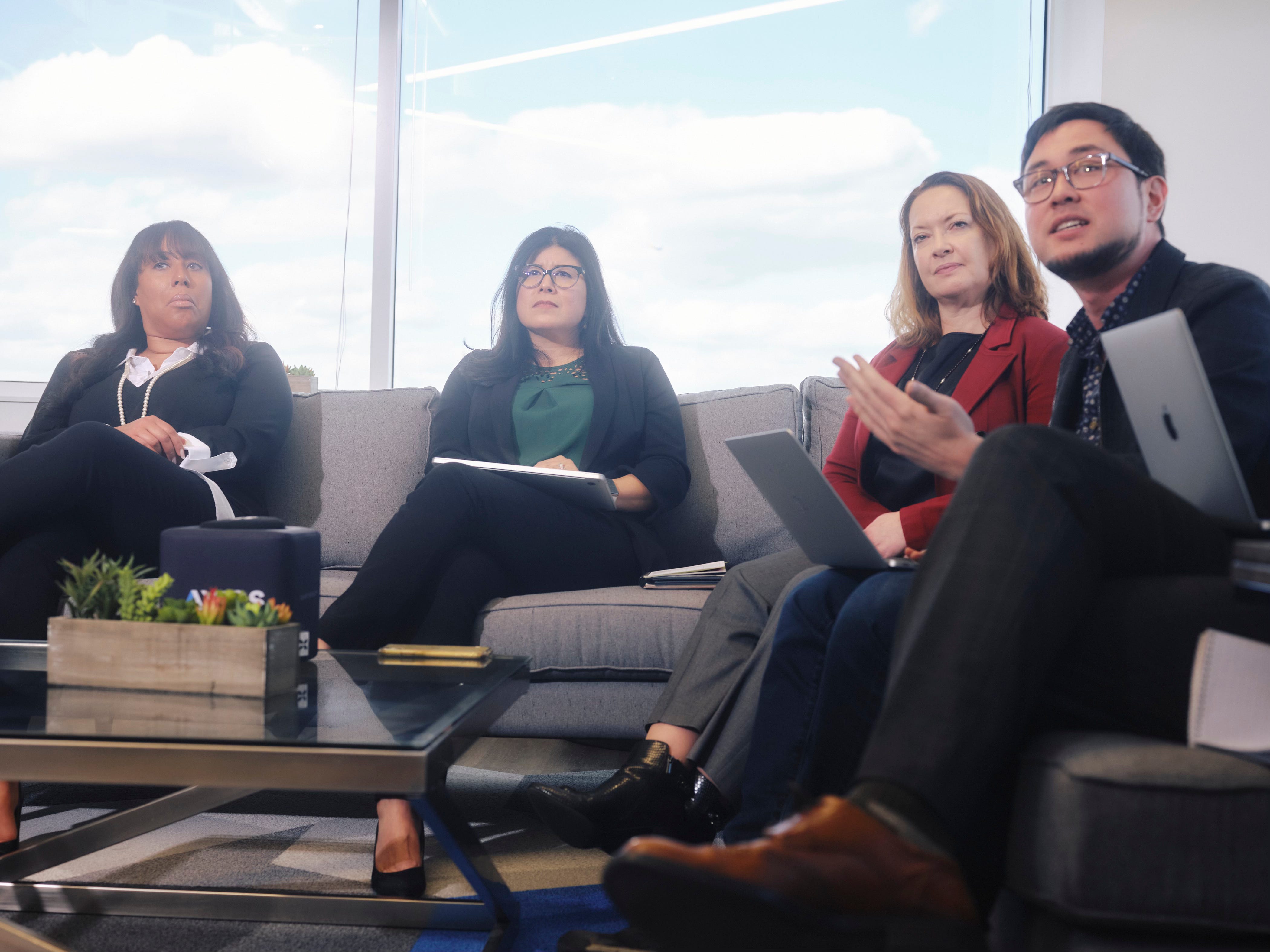
“There is not going to be a part of a news organization that isn’t touched by AI in some form,” said Liam Andrew, technology lead at the American Journalism Project’s Product & AI Studio, which supports local news organizations as they experiment with and adopt AI.
But when asked how nonprofit newsrooms are responding to the change, Andrew said he's always concerned that not enough time is spent thinking about the future. "It's so hard with the news cycle every day."
A Way Forward
The work on all four fronts continues — and it should. Nonprofits are still growing. Philanthropy is still needed. For-profit discipline and entrepreneurship is critical. Policy efforts are still advancing. The question isn’t whether any of these efforts matter. The question is whether they add up.
So far, they haven't — not at the speed or scale the problem demands. But the work has produced lessons that matter as we enter the AI era.
The central one: success is built on a direct relationship with readers. Not through platforms. Not via social media algorithms that can vanish without warning. The most durable local news organizations own their audience — through email lists, apps, membership and subscription programs that don't depend on any platform's goodwill.
But technology is only part of it. People trust people before institutions. A reader who knows a reporter's name, follows their work, or shows up to hear them speak is not just a subscriber — they are harder to lose, and harder to replace.
Alongside that: lead with service. Accountability journalism remains essential. But trust precedes impact. People subscribe because something improves their lives. The outlets building durable relationships lead with what's happening in your neighborhood, what decisions mean for your family, what to do this weekend. That earns the trust to do accountability journalism. Service first. Accountability follows.
And deliver it well — create journalism products people love. Local news has often fallen short. Slow websites, cluttered mobile experiences, clumsy newsletters, too little investment in design, audio, and video. The journalism has to be excellent, and the product has to be excellent too. One without the other doesn't hold.
On AI: it's not an option, it's the opportunity. Newsrooms already embracing it — using it to translate, to monitor public records, to extend reporting capacity — are expanding what they can cover, not shrinking who covers it.
In-person connection is the moat. The Texas Tribune built a business around “live journalism” — events that turn audiences into communities, and communities into paying supporters. That logic holds at any scale. As AI becomes more embedded in daily life, the value of human connection will only grow. Local news organizations are uniquely positioned to deliver it.
But here is the harder truth: applied well, these principles can build a sustainable local newsroom — and we’ve seen it happen. They cannot, on their own, rebuild local journalism.
The economics of a single newsroom — even a well-run one — impose a ceiling. There is only so large a subscriber base one market can support. Local advertising has structural limits. The talent that drives great journalism and great products gravitates toward organizations that can pay for it. And the investments required to build excellent digital products — the technology, the design, the audio and video infrastructure — are difficult to justify at the scale of one outlet.
Scale — built on the lessons of the past two decades — changes the math. A network of locally rooted newsrooms, operating under shared infrastructure, can aggregate a subscriber base large enough to drive meaningful revenue. It can sell national advertising — something no single local outlet can offer. It can invest in journalism products and technology that individual newsrooms could never afford. And it can recruit the kind of talent — editors, engineers, product thinkers — who build institutions, not just cover them.
Which brings us back to where we started.
Knight Foundation explored what that combination might look like: a locally rooted national network, dozens of newsrooms, shared infrastructure, a subscription base and a national advertising proposition large enough to compete.
Amid the work and investment of the past two decades, no one has yet made the focused, strategic bet that matches the size of what’s been lost. No one has been willing to risk failing at that scale.
“The basic idea remains,” said Ibargüen, who stepped down as Knight’s CEO in 2023. “A digital, national news operation built from local outlets — large enough to attract national advertisers, not unlike Google or Facebook — and committed to telling Americans what they need to know to function in a democracy. You have to respect reader preferences, and you have to respect the nature of the technology available today. But it could still be tried.”
Note: Prefer to listen? Use the Article Voiceover at the top of the page, or find all narrated editions in the Listen tab at solvingfor.io.
Solving For is a deep-dive series that takes on one pressing problem at a time — what’s broken, what’s driving it, and what a path forward might look like. Learn more here.
This is the sixth series. Previous series examined rare earth dominance, AI safety, shrinking competition in Congress, the end of amateurism in college sports, and a world rearming as the global system weakens.
DISCLOSURE: I served as Miami Director at Knight Foundation from 2011 to 2017, and as a staff writer at The Miami Herald from 2004 to 2011 — during which time the Herald was owned first by Knight-Ridder, then by McClatchy. The events described in this piece occurred after my tenure at Knight Foundation ended.