



In Part Two of our series on the decline of local news, we examine the forces that dismantled local journalism. The collapse. How it happened, the decisions that allowed it to happen, and what one organization did differently. It matters because twenty-five years after the internet upended journalism, the industry is about to face a version of this again — this time, with AI.
Missed Part One? Start with why the collapse of local journalism is a community breakdown story, not just a media industry story. Subsequent installments explore solutions.
What we’ll examine in Part Two:
How the collapse of two revenue pillars left local journalism structurally uncompetitive.
How hedge funds turned struggling newsrooms into extraction machines.
How the industry's own strategic failures accelerated the collapse.
And what one organization chose to do instead.
On a winter day in December 2000, Knight Ridder CEO Tony Ridder stood before Wall Street analysts at New York’s Plaza Hotel. He controlled one of the country’s biggest and most powerful newspaper chains — and he was confident.
“We are poised to report an operating margin of 20 percent — the highest we’ve ever had,” Ridder proclaimed. His company owned The Miami Herald, San Jose Mercury News, Philadelphia Inquirer, and dozens of other papers across the country.
But he didn’t stop there.
“Today I’d like to set another goal: We will be in the mid-20s in the next three years.” He added: “We deliver. We tell you what we’re going to do, and we do it.”
Tony Ridder did not deliver.
Knight Ridder was sold off in 2006. Its acquirer, McClatchy, declared bankruptcy in 2020. But the central mistake wasn't the boast. It was the goal.
In 2000, the internet wasn’t a curiosity. Craigslist was siphoning classified ads. Monster.com was capturing job listings. Google was organizing the web. Amazon was rewriting retail.
The future wasn’t hidden. It was arriving in plain sight.
Newspaper owners faced a choice: reinvest their extraordinary margins into building a reimagined digital future — or extract profits while they still could.
Most chose extraction.
Shareholders received their returns. Newsrooms shrank. And the civic infrastructure local journalism had long supported began to erode.
Part Two examines the forces that got us here — not as an autopsy, but as preparation. The reason is we’re at another fork in the road. Even as local journalism continues to absorb the shock of the internet era, it now confronts another seismic — perhaps even greater — technological rupture: artificial intelligence.
AI is reordering search, advertising, distribution, and the creation of content itself. Understanding how newspapers failed the first disruption is the prerequisite for navigating the second.
This time, the industry doesn’t arrive with 20 percent margins and decades of institutional infrastructure. It arrives diminished — fewer reporters, smaller budgets, eroded trust.
But it arrives with something it didn’t have in 2000: the memory of what went wrong.
Whether that’s enough will determine not just the future of journalism, but the civic health of communities across America.
The First Revenue Earthquake
For most of the 20th century, newspapers didn't just sell news. They sold access to a marketplace.
Want to sell your car? Rent your apartment? Find a job? The local newspaper was where you went. Classified advertising generated roughly 40 percent of newspaper revenue at its peak — unglamorous, transactional, and enormously profitable. It quietly subsidized everything else: the investigative unit, the city hall reporter, the foreign correspondent, the sports section. Classifieds were the hidden economic engine of American journalism.
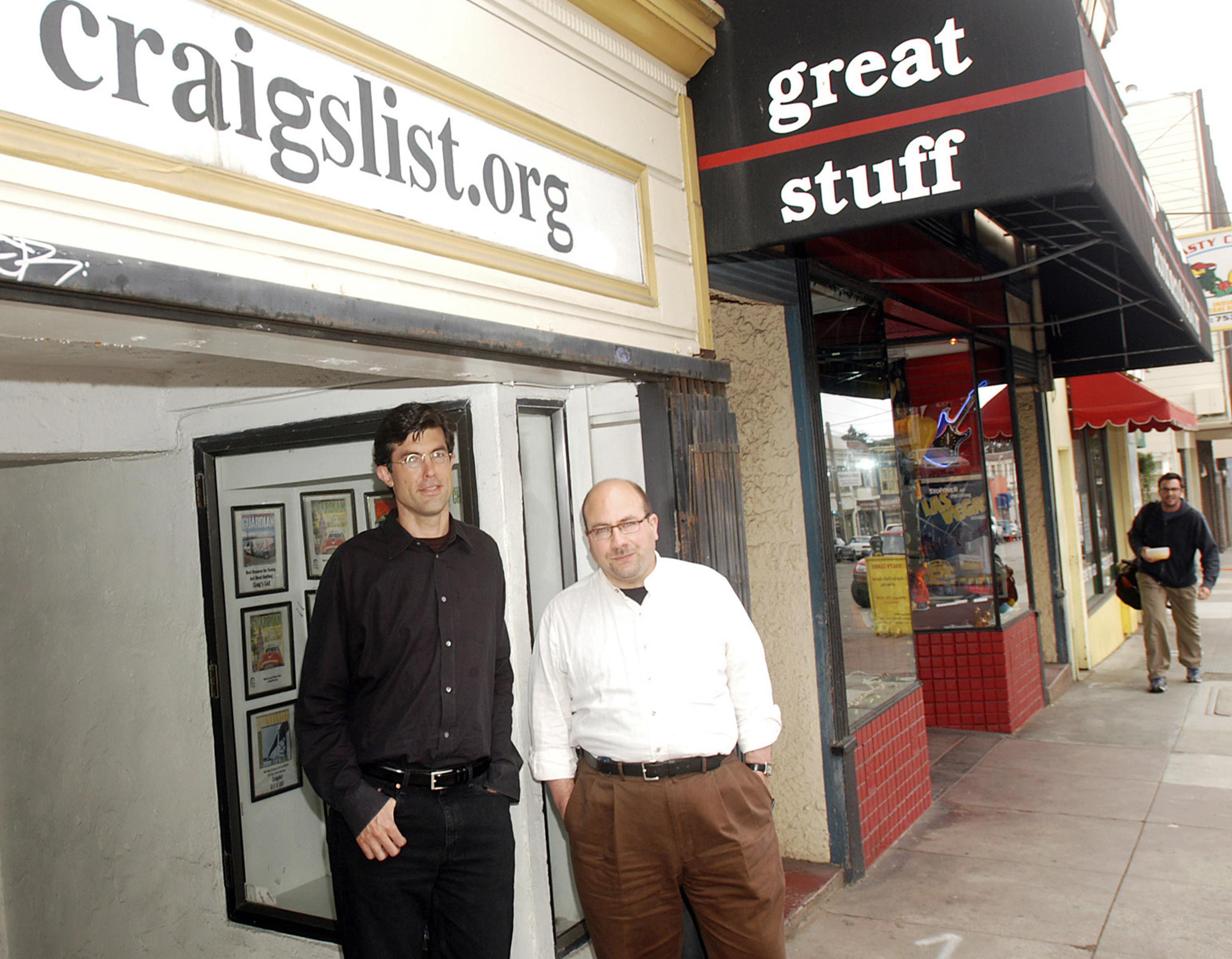
Then Craigslist arrived.
Craig Newmark's email list — and later website — exposed how artificial the newspaper's monopoly had always been: the moment a free alternative existed, the economics collapsed. Monster.com did the same to job listings, and the erosion accelerated.
By the mid-2000s, classified revenue was in freefall. Between 2000 and 2012, newspapers lost some $15 billion in classified advertising revenue — a drop of about 77 percent.
Classified advertising was the first pillar to fall. Display advertising would follow — only this time, the competition wouldn't come from a scrappy email list. It would come from the most powerful advertising platforms ever built.
The Platform Takeover
As classified revenue collapsed, digital advertising was supposed to be a replacement. Many publishers told themselves a coherent story: readers were moving online, advertisers would follow, and newspapers would make the transition with them.
Digital advertising did grow — explosively. But its economics were built on principles that made local journalism structurally uncompetitive. Digital ads don't reward quality. They reward scale. And scale was the one thing local newspapers, by definition, could never have.
Instead, Google built a targeting machine that knew what you wanted before you typed it. Facebook built one that knew who you were better than your neighbors did.
Geography, once a newspaper's greatest competitive advantage, became its greatest liability. A local advertiser no longer needed to buy ads in, say, the Des Moines Register to reach Des Moines. Google could reach Des Moines — and Dallas, and Denver, and Detroit — for less money and with more precision. The local monopoly that had protected local newspapers for a century evaporated in less than a decade.
By 2020, Google and Facebook together captured more than half of all digital advertising revenue in the United States. Local news organizations received a fraction of what remained.
The platforms didn't just take the advertising. They rewired how people experienced news. Google trained readers to find individual stories rather than visit publications. Facebook trained them to consume journalism inside a social feed, detached from the institution producing it. A study by the Reuters Institute for the Study of Journalism at the University of Oxford found that many readers arriving from social platforms couldn't name the publication they'd just read. The front page — once the organizing force of civic life — stopped mattering.

Corporate Strip-Miners
Private equity didn't cause the collapse of local journalism. It fed on it.
By the time financial buyers arrived, the preconditions were already in place. Classified revenue had evaporated. Digital advertising had consolidated around tech platforms local publishers couldn't compete with. Margins that had once touched 20 percent had collapsed. Newsrooms that had once employed hundreds had shrunk to skeleton crews.
The hedge funds saw not civic institutions in crisis, but balance sheets with extractable assets. Buildings could be sold. Presses could be liquidated. Reporters could be let go in waves. What couldn't be monetized could be cut. What couldn't be cut could be closed.
Today, hedge funds control half of U.S. daily newspapers, according to a 2025 study by Eastern New Mexico University’s Qian Yu. It’s a stark shift from an era when most papers were owned by newspaper companies or families with deep ties to the communities they served.
Alden Global Capital, a New York City-based hedge fund, is the most notorious practitioner of this model. At its peak, the hedge fund controlled more than 200 newspapers, including the Denver Post and Chicago Tribune, systematically stripping its properties to the bone.
“What Alden has figured out how to do is to make a profit by driving these newspapers into the ground,” The Atlantic’s McKay Coppins, who wrote about Alden Global, told NPR in 2021.
At The Denver Post, staff were cut by some 70 percent over a decade. In 2018, the Post’s editorial board took aim at their owners. “If Alden isn’t willing to do good journalism here, it should sell The Post to owners who will,” they wrote.
This was not mismanagement. It was the model — extract the remaining value, then let the lights go out.
The Mirror
The ownership failures were real — the extraction, the underinvestment, the margin obsession. But the industry also failed itself in quieter ways.
The original sin was giving it away. When newspapers moved online, many made a consequential choice: content would be free, advertising would pay for everything. It was the same bargain that had governed print — readers were never really the customer, they were the inventory, the audience assembled and sold to advertisers. But print had at least preserved a nominal transaction with readers, a subscription or a quarter at the newsstand, that created some accountability to them. Online, newspapers abandoned even that.
When The Wall Street Journal erected a paywall in 1996, a New York Times story marveled that it “is nearly alone in betting that Internet users will pay an annual subscription fee for access.” Most others waited, telling themselves that charging would drive readers away. By the time the industry reversed course, reader habits had calcified. News, for most people, had become something you didn’t pay for.
The product failures ran just as deep. Newspapers never really tried to build journalism products readers would love. Newsletters could have rebuilt direct daily relationships with readers. Instead, newspapers ceded that ground to independent writers and upstarts like Politico and Axios, who understood that email wasn’t obsolete, it was intimate. Video and audio offered the same opening. Local reporters knew the community, held the sources, owned the stories that mattered to specific people in specific places. Those advantages translated naturally to sound and screen. Most newsrooms did little with either.
Newspaper websites, meanwhile, were notoriously slow, cluttered, and choked with ads. For many local dailies, that remains true today. Navigation was an afterthought. Mobile was an afterthought.
Readers don’t experience journalism in the abstract. They experience a page that won’t load. An ad they can’t close. A mobile site never truly built for mobile. Newspapers treated these as technical irritations. Readers treated them as reasons to leave.
The publications that understood this recognized that presentation is part of the journalism. Design and user experience isn’t decoration. It’s an editorial decision that shapes what readers see, how long they stay, and whether they return. Most local papers never grasped that. They assumed the audience would come for the news.
The audience didn’t.

The Exception That Proves the Rule
The New York Times is not a local newspaper. It has advantages most local publishers could never claim — a global brand, a national audience, capital to absorb years of expensive experimentation. Any comparison requires that caveat.
But the Times matters for one reason: it proves reinvention was possible.
By 2014, the most distinguished newspaper in the world was in trouble. Readership was declining. Website traffic was slipping. Mobile growth lagged. Since 2000, the Times had struggled to navigate the internet age. Its revenues at the turn of the century stood at $3.48 billion. Knight Ridder’s was $3.2 billion. Unlike Tony Ridder, the Ochs-Sulzberger family — which had owned The New York Times since 1896 — didn’t sell when confronted with the internet. But between 2000 and 2014, the company lost more than half its revenue, dropping to $1.58 billion annually.
Radical change was required.
Eight staffers — led by A.G. Sulzberger, the son of then-Times publisher, Arthur O. Sulzberger, Jr. — were pulled off daily duties for six months and tasked with producing a deep-dive report on the future of the institution. A.G. Sulzberger would become publisher in 2018.
What came back was a 96-page strategy document written with unusual candor. The Times was winning Pulitzer Prizes, it warned, but it was losing the digital future.
Competitors it had long dismissed were outmaneuvering it on social media, search, and mobile. The newsroom still thought in terms of the homepage. Distribution was treated as marketing’s job. Print and digital operated in silos. Great journalism would land — and then disappear into the archive. The work remained world-class. Its reach was quietly eroding.
The problem wasn’t just technology. It was culture. The Times had to think like a product company, not only a newsroom.
The report, intended to be internal, leaked to BuzzFeed. Harvard’s Nieman Journalism Lab called it “one of the key documents of this media age.” Others were skeptical. A Politico column warned that Arthur O. Sulzberger Jr. “would be a fool to follow his son’s advice.”
What followed was structural transformation. The Times reorganized around digital subscriptions, not advertising. It invested heavily in product and engineering — Cooking, Games, Wirecutter, The Athletic, newsletters like The Morning, podcasts like The Daily. It embraced audience data without surrendering editorial standards.
By December 2025, the Times was approaching 13 million subscribers, more than 12 million digital-only, with revenue of $2.82 billion — within striking distance of the $3.48 billion peak it reached in 2000.
In a little more than a decade, the Times had made the digital leap. Advertising is no longer the engine. Subscribers are. The math tells the story. In the print era, the industry rule of thumb was four dollars of advertising for every dollar of subscription revenue — an 80/20 split that made readers the product, not the customer. The Times today is the reverse. Subscriptions account for roughly 70 percent of its $2.82 billion in revenue. Advertising, once the engine, is now the supplement.
The print paper that once anchored everything is now a legacy product inside a consumer technology company that produces journalism — one that now makes the reader the customer.
The Times had advantages local newspapers never did. But the core choices that saved it — subscriber focus, product investment, ruthless self-assessment — were available to the industry.
Most chose not to make them.
The Fork in the Road
The past 25 years left a mark that goes deeper than balance sheets. More than 3,500 newspapers have closed since 2005. City halls go unwatched. School boards make decisions no one reports. Corruption that once would have been exposed festers in the dark. The collapse of local journalism isn’t an industry story. It’s a civic one.
Which brings us back to that scene at the Plaza Hotel in 2000. The same industry is once again at a fork in the road. Except the disruption arriving now isn’t Craigslist or Google. It’s artificial intelligence, already reordering how people find information, how advertising is bought and sold, how content is created and distributed.
The newspaper industry moved slowly. The lessons from that choice are now available.
Waiting for the threat to become existential is waiting too long. Create structural separation between what you are and what you need to become. Reimagine where revenue comes from, and don’t assume the model working today will survive tomorrow. Keep direct relationships with readers, because any audience that arrives through an algorithm can be taken away by one.
None of this is abstract. The last 25 years were not just a collapse — they were an instruction manual written in closed newsrooms and unwatched city halls.
The fork is here again. The question the series continues to explore is whether anyone is choosing differently — and what it may look like when they do.
Next: The series continues with how people are trying to rebuild local journalism — and the new challenge AI presents.
Note: Prefer to listen? Use the Article Voiceover at the top of the page, or find all narrated editions in the Listen tab at solvingfor.io.
Solving For is a deep-dive series into one pressing problem — what’s broken, what’s driving it, and what paths forward exist. Learn more here.
Local news is our sixth series. Previous series examined rare earth dominance, AI safety, shrinking competition in Congress, the end of amateurism in college sports, and a world rearming as the global system weakens.
Matt, such a summary of the last 25 years. The Times recovery is a lesson for us all. I can remember talking to the music critics during the rescue you describe. They reported that games and food coverage were saving their jobs. Not sure of the current Times strategy for music critics. There are fewer and fewer that’s for sure.
More on all this when we talk. I will give you a call this week.
Howard.