



This week, we conclude our series on the American Dream.
(If you’re new here, Solving For is a newsletter exploring one pressing problem at a time — the stakes, the forces driving it, and what credible solutions might look like.)
In part one, we unpacked the problem: Upward mobility has weakened dramatically over the past half-century, and it’s weighing heavily on Americans. A poll last year found that nearly 7 in 10 believe the American Dream no longer holds true — or never did.
In part two, we examined how we got here: automation and trade eliminating middle-income jobs that once served as rungs on the ladder to the middle class; the soaring cost of college and the student debt that followed; tax policy favoring investment over work; and declining trust in the very institutions needed to build things back.
Now, as America searches for the shape of its next political era, it must find a way to make broad upward mobility—the heart of the American Dream—its defining purpose.
So this week, we turn to solutions: five pillars for renewing the American Dream in a new era, as artificial intelligence promises extraordinary abundance while threatening to widen the divides already holding people back.
You can listen to this Solving For story—narrated by me—by selecting the voiceover at the top of this page. You can also visit solvingfor.io, where all narrated stories and previous series are organized under the Listen tab.
(Was this forwarded to you? Sign up.)
“I was born, I have lived, and I have been made over.”
That is how Mary Antin began The Promised Land, her 1912 memoir of coming to America. Born into a Jewish family in the Russian Empire, in what is now Belarus, she arrived in Boston at thirteen speaking little English. Public schools and the Boston Public Library changed the course of her life.
By the end of her memoir, Antin believed America had given her something greater than economic opportunity: the freedom to imagine a future unconstrained by her past.
She put it in a single sentence: “Mine is the whole majestic past, and mine is the shining future.”
Nearly twenty years later, historian James Truslow Adams quoted that line in The Epic of America, the Depression-era book that introduced the phrase “the American Dream.”
To Adams, Antin’s declaration captured the nation’s defining promise: not that success was guaranteed or measured by vast wealth, but that in America, your future did not have to be determined by your past.
It’s a measurable promise. Roughly nine in ten children born in 1940 grew up to earn more than their parents. Today, that figure is about 50 percent — little better than a coin flip. From 9 in 10, to 1 in 2.
As America begins its next 250 years, the challenge is becoming more urgent.
In his 2026 letter to investors, BlackRock CEO Larry Fink named three forces shaping the economy. One was shifting global trade. The other two strike directly at the American Dream: “the inequality that’s risen over the past generation,” and “how AI threatens to widen the gap.”
The question, then, is not how to restore the American Dream. It’s how to renew it for a new era.
Toward a New Political Order
America’s enduring strength has always been twofold: innovating and growing, while spreading opportunity so each generation can climb higher than the last. It continues to excel at the former, but struggles at the latter.
That rupture has reshaped American politics. We’re now in what Ezra Klein and Derek Thompson call in their book, Abundance, “a messy interregnum between political orders.”
Historian Gary Gerstle defines a political order as a governing consensus both parties largely accept. The New Deal order, born in the 1930s, held that capitalism required government oversight and basic economic security. Franklin Roosevelt built it, but Republicans largely accepted its foundations. Eisenhower preserved Social Security. Nixon proposed versions of guaranteed income and universal health insurance.
Beginning in the late 1970s, that consensus gave way to the neoliberal order: markets allocate resources better than government, regulation lighter, trade and globalization expanded, taxes lowered. Ronald Reagan became its defining figure, but Bill Clinton entrenched the order, embracing free trade, welfare reform, financial deregulation, and declaring “the era of big government is over.”
That order fractured in the 2010s in the wake of Iraq War, 2008 financial crisis, globalization, and deepening inequality. Too many communities and workers felt left behind. The American Dream — that each generation should do better than the last — became less certain, fueling populist revolts across the political spectrum.
Today we’re living through the collapse of one political order before another has fully emerged.
If the American Dream is to endure, the next political order must once again make broad upward mobility—not simply economic growth—its defining purpose. That search doesn’t divide neatly along partisan lines. It points toward five enduring pillars: ownership; building, not blocking; connections to opportunity; fairness; and trust.
None of these ideas is new. Some call for more government, others for less. What unites them is not ideology, but evidence.
Each is, in its own way, an opportunity—as Mary Antin wrote—to be “made over.”
Ownership
If the next American Dream is about broadening opportunity, it must also broaden ownership. One way to do that: give every American child a stake in the country’s future.
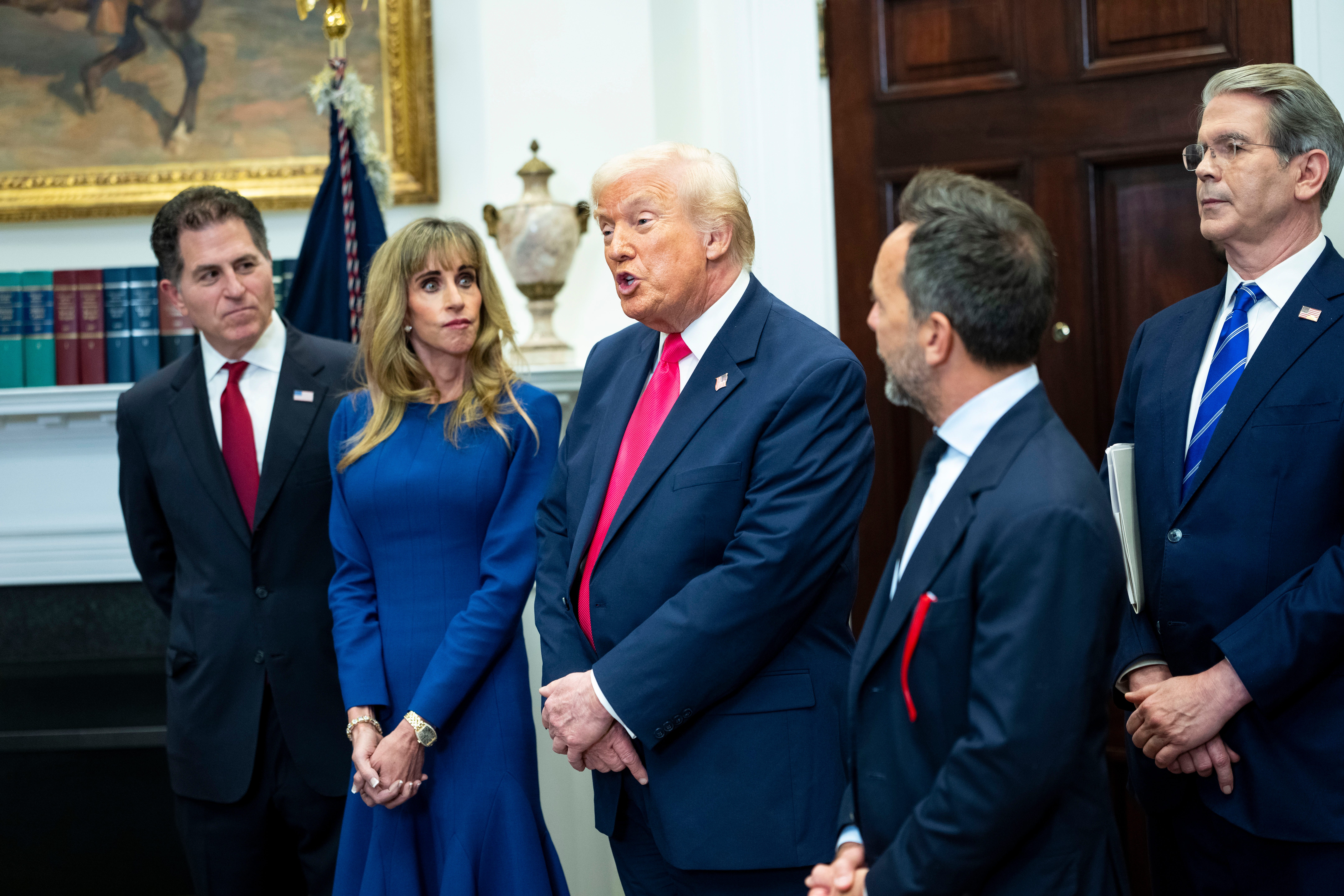
On July 4, the federal government began seeding an investment account for every newborn. Invest America accounts — so-called “Trump Accounts” — provide a one-time $1,000 contribution invested in a stock index, with families, employers, and others able to contribute up to $5,000 a year. Philanthropists and businesses have pledged more, including Michael and Susan Dell, who committed $6.25 billion for children in lower-income communities.
The premise is simple: assets shape lives differently than income. A nest egg can help pay for college, buy a first home, start a business, fund retirement. It also gives young people something they know is theirs and can build on.
The idea stretches back centuries. In 1797, Thomas Paine proposed a birthright endowment for every young adult, funded by inherited wealth. Nearly two hundred years later, sociologist Michael Sherraden argued in his 1991 book Assets and the Poor that owning assets changes how people think about the future. In 2010 economists Darrick Hamilton and William Darity Jr. developed the modern idea of “baby bonds” as a way to narrow wealth inequality. In 2023 Connecticut became the first state to try it, seeding $3,200 for each Medicaid-covered baby.
The strongest evidence comes from Oklahoma. In 2007, researchers randomly assigned newborns to either receive a seeded college savings account, or no account. The study, SEED for Oklahoma Kids, was designed by Sherraden’s Center for Social Development at Washington University in St. Louis. It found that children with investment accounts didn’t just accumulate more savings — they also showed greater hope, stronger educational expectations, and fewer behavioral problems, while their parents were more likely to prepare for college.
The evidence suggests these programs work best when they are universal, automatic, and progressive. Invest America accounts are universal and moving toward automatic enrollment. What’s missing is progressivity. Every child receives the same $1,000 regardless of family wealth, allowing those with the greatest means to build much larger balances over time.
To endure over the long term, the program will likely need a name that isn’t polarizing. But, in many ways, the idea is a twenty-first century complement to Social Security. Roosevelt’s landmark program, signed into law in 1935, provided income at the end of life. Baby bonds seek to provide capital at the beginning.
Building, Not Blocking
Opportunity expands when it’s easier to build. It generates more jobs and investment, while greater supply can lower prices.
In June 2025, California Gov. Gavin Newsom signed sweeping legislation exempting many housing projects from the state’s landmark environmental review law while streamlining approval of infrastructure projects, calling it part of “a budget that builds.” He credited the shift to Abundance, the 2025 book by Klein and Thompson, which argues that decades of well-intentioned regulation have made it unnecessarily difficult to build the homes, energy projects, and infrastructure people need.
The result: fewer homes, higher prices, and diminished opportunity.
Since the 1970s, local land-use rules have made housing slower and more expensive to build, contributing to a shortage of roughly six million homes, according to the American Enterprise Institute. The conservative AEI’s prescription—smaller lots, by-right approval for duplexes and townhomes, streamlined permitting—is similar to the Abundance movement’s, despite arriving from the opposite side of the political spectrum.
A similar principle applies to people’s ability to move into new work.
Occupational licensing serves an important purpose: protecting the public by ensuring professionals meet minimum standards. But licensing has expanded well beyond health and safety. In some states an aspiring manicurist must complete hundreds of hours of training before legally earning a paycheck. Today, occupational licensing covers nearly one-quarter of the U.S. workforce, up from about 5 percent in the 1950s.
Economists Morris Kleiner and Ming Xu found that workers in licensed occupations are 24 percent less likely to switch careers than comparable workers, suggesting licensing can become a barrier to new opportunities. The Obama administration reached much the same conclusion in a 2015 review, finding that excessive licensing requirements can raise prices and restrict employment opportunities.
Taken together, these examples suggest an emerging consensus across the political spectrum: expanding opportunity often begins by reducing unnecessary barriers — to building homes and infrastructure, and to building a career.
Connections to Opportunity
Mobility depends on more than economic growth. It requires connecting people to opportunity.
Economist Raj Chetty, who directs Harvard’s Opportunity Insights lab, has shown that upward mobility varies enormously from one neighborhood to the next, even within the same city. Much of that difference is social isolation: children, growing up just a few miles apart, have access to very different networks and opportunities.
But the right interventions, Chetty’s research shows, can break that isolation.
A recent example comes from HOPE VI, the federal program that spent $17 billion replacing 262 distressed public housing projects across the U.S. with mixed-income developments. In a January 2026 paper, Opportunity Insights found that the redevelopment itself did little for adults who already lived there. But their children did dramatically better: kids who spent their entire childhood in a revitalized development earned roughly 50 percent more as adults than children who stayed in unreformed public housing.
The mechanism wasn’t the buildings, it was who lived near them. Before revitalization, researchers described these sites as islands of disadvantage, where kids in public housing interacted almost exclusively with other kids in public housing. HOPE VI drew higher-income residents into the same neighborhood, and that proximity broke the isolation. Children began forming friendships across income lines, and those cross-class connections are what the data ties to their later success.
“Place matters for mobility,” Chetty said. “But to a large extent this is because some places are more connected than others.”
Fairness
A thriving economy should reward work as much as wealth. Yet income from work is taxed more heavily than investment.
A worker’s wages are taxed at a top federal rate of 37 percent. Long-term capital gains—the profits from selling stocks, real estate, or a business—are taxed at 20 percent. That gap has become much more consequential as more fortunes are built by stock holdings than paychecks.
Journalist David Leonhardt, in his book Ours Was the Shining Future, argues that this is one of the defining fault lines in modern American capitalism. Over the past half-century, the economy has increasingly rewarded ownership over work. The tax code is hardly the only reason, but it is one of the clearest expressions of that choice.
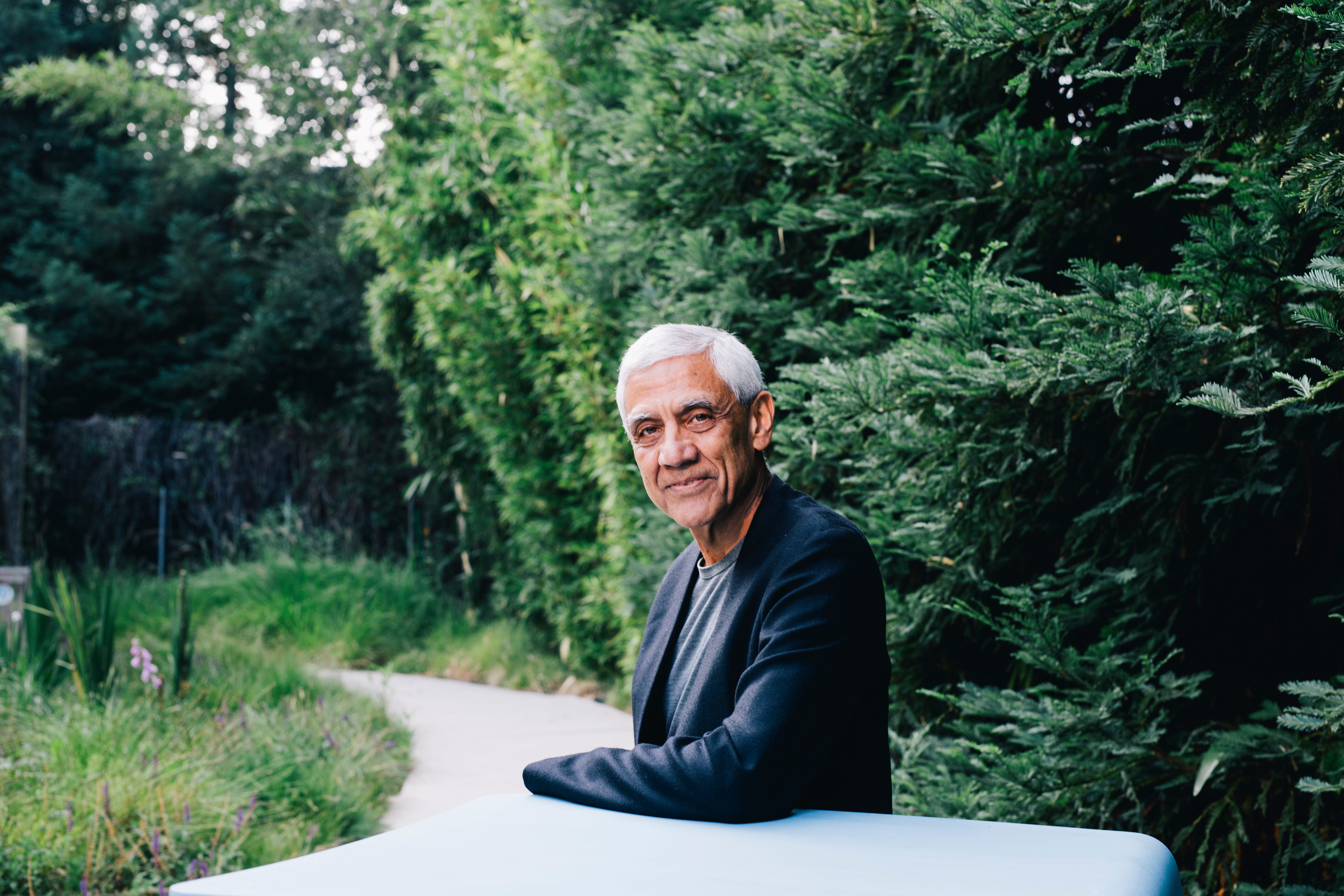
Vinod Khosla — one of Silicon Valley’s most successful investors, who recently agreed to purchase the NFL’s Seattle Seahawks — argued in a recent interview with The Wall Street Journal that preferential tax treatment for capital made sense when investment was scarce. That world is disappearing. And it’s particularly the case as AI increases the returns to capital while reducing the relative value of labor, he argues. As a result, he said, capital gains and ordinary income should be “taxed the same.”
“We need to tilt the seesaw toward labor,” he added.
OpenAI made a similar case in an April white paper, Industrial Policy for the Intelligence Age: Ideas to Keep People First, warning that AI could expand corporate profits and capital gains while shrinking wage income and the payroll taxes that fund programs such as Social Security and Medicare.
But the deeper issue isn’t just economic. It’s about fairness too.
Every political order ultimately depends on people believing the rules are fair. So does the American Dream. Upward mobility is built not only on opportunity, but on the conviction that hard work still gives ordinary people a fair shot at getting ahead.
Trust
Trust is what makes the four pillars possible. Unlike tax rates or investment accounts, trust cannot be created by legislation. It is earned slowly—through governments that keep their promises, institutions that work, and communities where people experience competence and fairness in everyday life.
One way to catalyze it is through an idea championed by the late Senator John McCain. In 2020, two years after his death, the McCain-Reed Commission published the Inspired to Serve report, which found that the desire to serve — whether military, national, or public service — outpaces the opportunity to do so. Its central recommendation: expand access so 5 million Americans begin some form of service each year by 2031, including a nearly tenfold increase in national service slots.
The case isn't sentimental. Chetty's research shows that economic connectedness — friendships that cross class lines — drives upward mobility. National service creates exactly that kind of contact by design: people who would otherwise never meet, working side by side. Over time, it builds trust itself, reinforcing that we’re all part of the American enterprise.
Larry Fink’s warning is worth returning to. Artificial intelligence promises extraordinary abundance. It also threatens to concentrate wealth and opportunity on an even greater scale. Whether AI expands the American Dream or deepens its decline will depend less on the technology itself than on the choices we make about the society that surrounds it.
Every idea here — broadening ownership, making it easier to build, creating more pathways to opportunity, ensuring fair rules, building trust — ultimately depends on people believing those systems can work for them. Without that confidence, even the best reforms will struggle to take root.
Mary Antin believed “the whole majestic past” belonged to her, and so did “the shining future.” James Truslow Adams recognized she was describing something larger than one immigrant’s experience. She was describing America’s promise.
The American Dream isn’t something we preserve. It’s something we build, together, every generation.
Put another way: Ours is the whole majestic past. And ours can still be the shining future.
Prefer to listen? I narrate each edition myself. Find the audio at the top of this page or under the Listen tab at solvingfor.io.
Solving For takes on one pressing problem at a time: what’s broken, what’s driving it, and what a path forward might look like. Each series unfolds in weekly installments.
Previous series have examined China’s rare earth dominance, the decline of local news, the end of amateurism in college sports, shrinking competition in Congress, social media and teen mental health, a world rearming as the global rules-based order weakens, and — most recently — America’s national debt crisis. Each series is available for reading or listening (and I narrate them all) at solvingfor.io.