


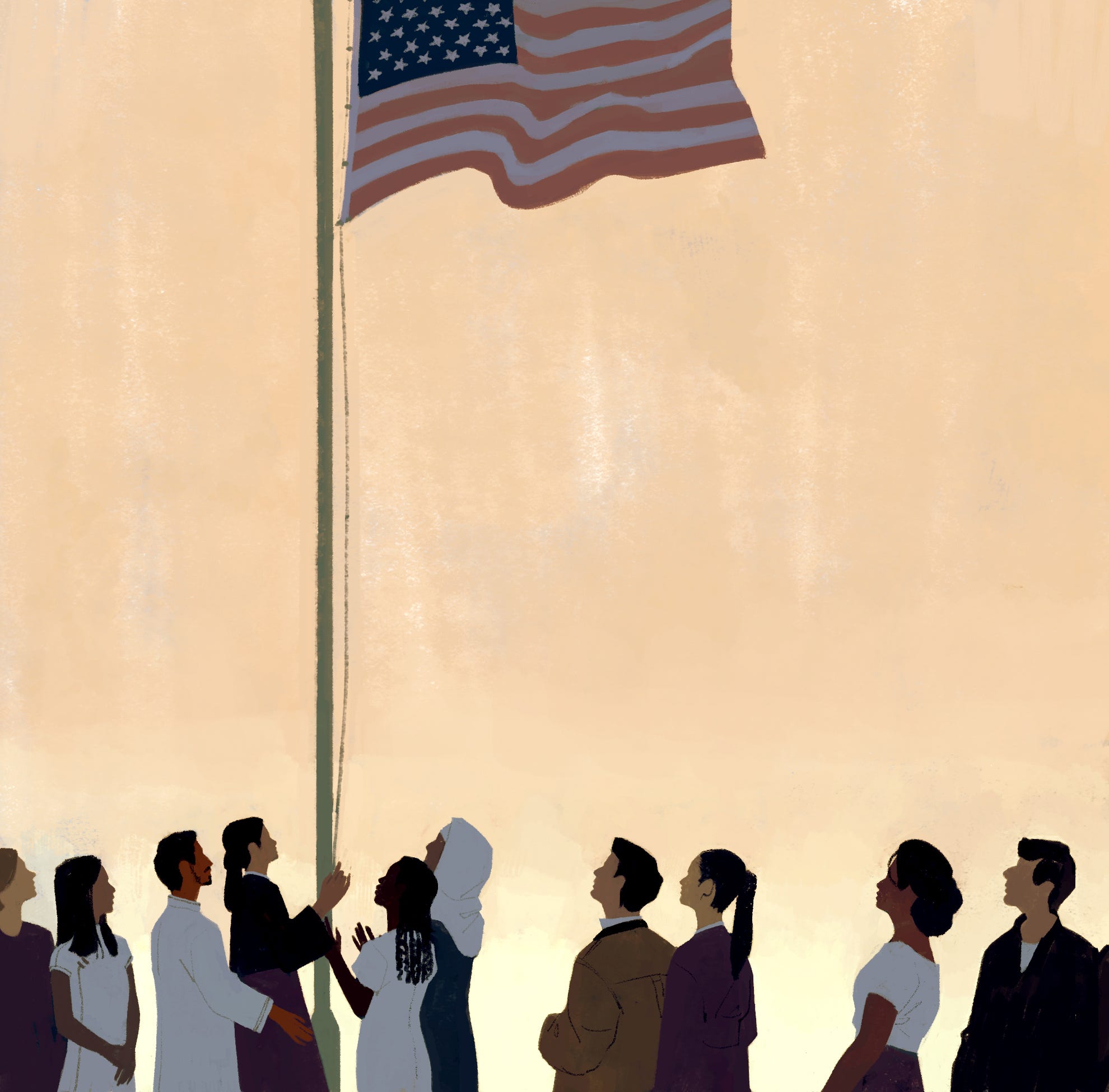
On Dec. 19, 1966, my wife’s mother, father, and two sisters walked through the doors of the Freedom Tower in downtown Miami. They had fled Cuba and the Castro dictatorship with three changes of clothing — and a dream.
America gave them the chance to realize it. They settled in New York City, became U.S. citizens, worked multiple jobs, and built a good middle-class life. My wife, Danet, was later born in Queens. Their story is one example of an idea that has propelled this country from its earliest days: the American Dream.
Yet that dream is now under pressure unlike any time in decades. As America readies to celebrate its 250th birthday, the data tells a sobering story — about upward mobility stalled, opportunity narrowed, and a promise that fewer and fewer Americans believe still holds.
This series is about that gap. Today, we examine the problem. Next week: the forces driving it. The week after: what solutions might actually look like.
If you prefer to listen, find the audio narrated by me at the top of this page. Every Solving For series is available to read or listen to — I narrate each one myself — at solvingfor.io. (Was this forwarded to you? Sign up here.)
The most invoked phrase in American political life was born not in triumph, but in crisis.
In the spring of 1931, the country was gripped by the Great Depression. Millions were out of work. Unemployment would surge to a quarter of the workforce. Breadlines stretched around city blocks. Banks collapsed at a record clip, prompting bank runs as desperate account holders withdrew deposits.
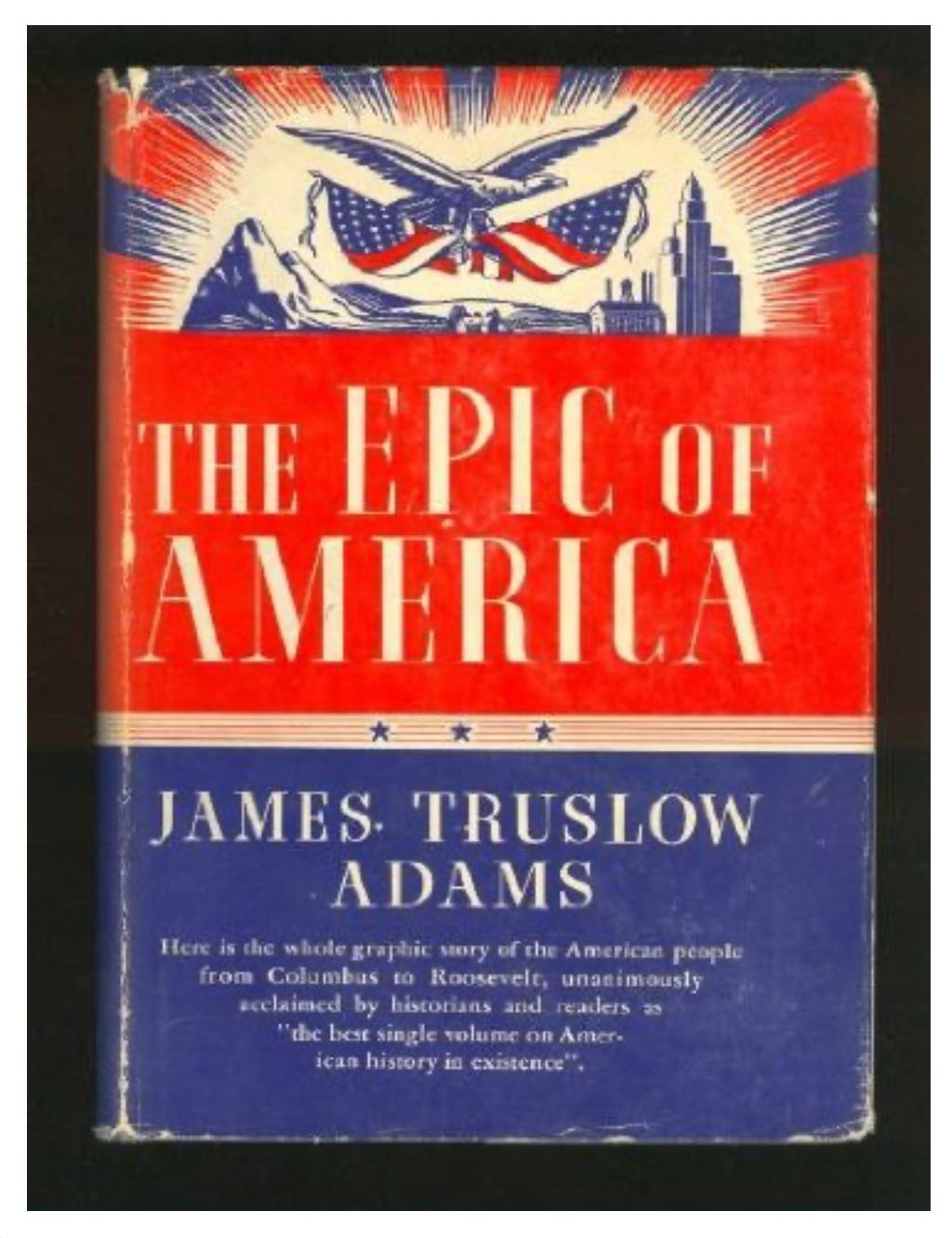
Into that moment, a historian named James Truslow Adams sat down to finish a book about his country. One that traced the arc of American history and arrived at a conclusion: the nation's greatest contribution to the world was not its wealth or its military power, but an idea.
He called it the American Dream.
Not a dream of material abundance or outsized wealth, but a dream in which every man and every woman could attain the fullest measure of their potential, regardless of the circumstances of their birth. This, he wrote, is “the greatest contribution we have as yet made to the thought and welfare of the world.”
Adams wanted to call his book the American Dream. But his publisher didn't think the phrase would sell. The book was instead called The Epic of America. It was a national bestseller. The title was largely forgotten. The idea inside it was not.
Yet it’s now invoked so often — in presidential speeches, immigration ceremonies, commencement addresses, mortgage company ads — that few know its origin.
The idea that has fueled this country — that where you start shouldn't determine where you finish — is failing by its own terms. And the data is unambiguous.
A survey last year found that nearly 7 in 10 Americans say the Dream — that if you work hard, you will get ahead — no longer holds true, or never did. That is the highest share in nearly 15 years of Wall Street Journal-NORC polling. Only 25% say they have a good chance of improving their standard of living, a record low in surveys dating to 1987.
The sentiment runs deeper than economics. In a March 2026 NBC News poll, 59% of registered voters agreed that the economic and political systems are stacked against people like them — tying a record high over roughly 40 years since NBC News started polling the question. For context: that’s higher than in the immediate aftermath of the Great Recession.
The pessimism cuts across party lines, generations, and income levels. But it is not evenly distributed. An AP-NORC poll conducted this spring found that nearly half of Americans 60 and older still believe the Dream holds true. Among adults ages 18 to 29, that number falls to one in five.
In 2024, Open Research published findings from a three-year economic study. One participant, a woman identified in the study as Tara, put it plainly: “If I work hard, I’m gonna be successful, I’m going to make it.”
Then she added, “I think it’s a bit delusional actually, now that I said it out loud.”
The Dream Wasn’t for All
The Dream that Adams named was always a specific promise. It was never universally applied.
The country that produced it also produced slavery, which lasted until 1865. Women couldn’t vote until 1920. Legal racial segregation persisted until 1964. The postwar economic boom that many Americans remember as the Dream’s fullest expression — the suburbs, the union jobs, the upward mobility — was built on federal policies that systematically excluded Black Americans from its benefits.
The Dream, in other words, was never as advertised. But the promise embedded in it was real, and worth fighting for. Generations did exactly that.
They include people like Irving Berlin, whose family fled Russia when he was five to escape anti-Jewish pogroms. Speaking no English when he arrived, he grew up to write the songs that became the soundtrack of American optimism, including “God Bless America.” And people like Madam C.J. Walker, born to sharecroppers in Louisiana in 1867, two years after emancipation, who built a hair care business into a fortune that made her — a Black woman from the segregated South — one of the first self-made female millionaires in American history. Their climbs required beating odds that shouldn’t have existed. For every Berlin or Walker, millions more never got the chance.
Langston Hughes saw it clearly. In his 1951 poem Harlem he asked: What happens to a dream deferred? A society that promises the Dream to everyone and delivers it to some is not keeping its promise — it is deferring it, indefinitely, for the rest.
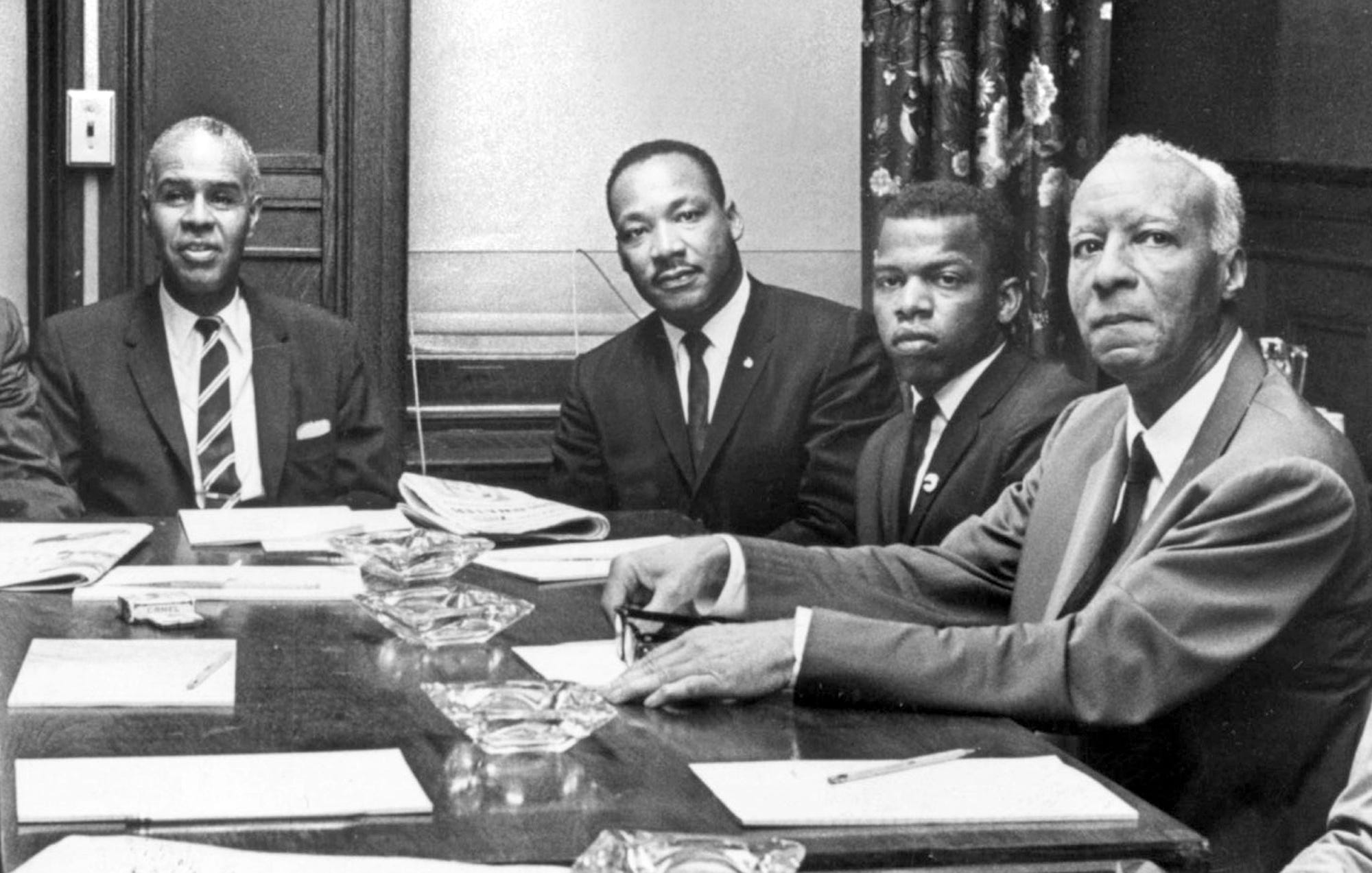
Martin Luther King Jr. called it a broken contract. At the Lincoln Memorial in 1963, in his “I Have a Dream” speech, he told the crowd that the country’s founders had signed a check — one that guaranteed every American the unalienable rights of life, liberty, and the pursuit of happiness. Black Americans, he said, had been handed a check marked insufficient funds.
In a July 4, 1965 speech on the American Dream, King said that “ever since the Founding Fathers of our nation dreamed this dream, America has been something of a schizophrenic personality.” He added: “Slavery and segregation have been strange paradoxes in a nation founded on the principle that all men are created equal.”
The promise, across generations and across the battles fought to redeem it, was the same: birth shouldn’t determine destination. Not a guarantee of wealth, but a guarantee of access to the ladder, and a fair shot at climbing it.
Yet even as more Americans gained access to the ladder, the climb has gotten harder.

The Math Behind the Dream
The data Raj Chetty, a Harvard professor, and his colleagues at Opportunity Insights have assembled over the last decade is the most comprehensive picture we have of what the Dream actually delivers.
It is not encouraging.
A child born in the bottom fifth of the income distribution has roughly a 7.5% chance of reaching the top fifth. In Denmark, that number is 11.7%. In Canada, 13.4% — approaching twice the American rate. The numbers support what seems like an absurd claim: a child born poor in America has a worse shot at achieving the American Dream than a child born poor in Denmark — or Canada.
Reinforcing the point: a 2020 World Economic Forum report on economic mobility ranked the U.S. 27th.
The generational picture is starker still. Among Americans born in 1940, more than 90% grew up to earn more than their parents. Among those born in 1984, that number had fallen to 50%. Chetty’s team called their paper The Fading American Dream. The title was not rhetorical.
Where you are born matters as much as who you are born to. A child growing up in San Jose has a 12.9% chance of rising from the bottom fifth to the top fifth of the income distribution. In Charlotte, that number is 4.4%. The Dream, it turns out, has a zip code.


Yet economic growth is not the problem. The U.S. economy has roughly tripled in real, inflation-adjusted terms since 1980. America built most of the great companies of the last half century — from Apple to Amazon, Google to Microsoft — and remains the entrepreneurial envy of the world. The problem is not that America stopped producing. The problem is what happened to what it produced.
Over that same period, the bottom half of earners saw their share of national income fall from 20% to 12% — while the top 1% saw their share rise from 12% to 20%. The economy has grown. The growth has not been shared.
Wealth tells the starkest version of the story. According to Federal Reserve data, the top 1% of American households now holds roughly as much of the nation’s total wealth as the entire bottom 90% combined — a level of concentration not seen since 1928, a year before the Great Depression and three years before Adams named the Dream.
F. Scott Fitzgerald was writing about that same era in The Great Gatsby, published in 1925. Gatsby had reinvented himself, accumulated wealth, reached the top. And yet the novel is not a celebration. Fitzgerald dramatized what Adams was about to name: that a society organizing itself around the pursuit of wealth, rather than the expansion of opportunity, produces a different kind of country entirely.
That country is more visible now than at any point since the 1920s.
This is the full shape of the problem. At the bottom, mobility has stalled and the odds of climbing from poverty to prosperity are lower than in many peer democracies. At the top, wealth has concentrated at a rate not seen since the years before the Depression. The ladder still exists. But it is harder to reach, and harder to climb, than at any point in living memory.
“It’s basically a coin flip,” Chetty said, “as to whether you’ll do better than your parents.”
Born in Crisis, Tested Again
Adams coined the term in the depths of the worst economic crisis the country had ever seen.
He also knew it would need defending again.
“Ever since we became an independent nation,” Adams wrote, “each generation has seen an uprising of the ordinary Americans to save that dream from the forces which appeared to be overwhelming and dispelling it. Possibly the greatest of these struggles lies ahead of us.”
He wrote that in 1931.
Each time the Dream has come under pressure — from the Depression, to the long fight for civil rights, to the movements that demanded the promise be extended to everyone it had excluded — Americans have contested it, challenged it, and pushed it closer to what it claimed to be.
The question is not whether that’s possible again. The question is whether we understand what actually broke — and what it would take to rebuild it.
That’s next.
Prefer to listen? I narrate each edition myself. Find the audio at the top of this page or under the Listen tab at solvingfor.io.
Solving For takes on one pressing problem at a time: what’s broken, what’s driving it, and what a path forward might look like. Each series unfolds in weekly installments.
Previous series have examined China's rare earth dominance, the decline of local news, the end of amateurism in college sports, shrinking competition in Congress, social media and teen mental health, a world rearming as the global rules-based order weakens, and — most recently — America's national debt crisis. Each series is available for reading or listening (and I narrate them all) at solvingfor.io.