



This week, we continue our series on the American Dream. It feels like the right conversation to have as America marks its 250th birthday — a moment to celebrate our country's extraordinary achievements and reflect on one of its defining ideals. (If you’re new here, Solving For is a weekly newsletter examining one pressing problem at a time — what it is, why it happened, and what credible solutions might look like.)
Last week, we looked at the problem. The data showed that upward mobility has weakened dramatically over the past half century.
This week, we turn to how we got here — the context and forces at work. Next week, we'll explore ways forward.
You can read or listen to every Solving For series — narrated by me — at solvingfor.io. Click the article voiceover at the top of this page to listen to this story.
Learn more, and find previous series. (Was this forwarded to you? Sign up.)
David Leonhardt had a question.
The New York Times writer wanted to know: did American children still end up better off than their parents?
He put it to Raj Chetty, then a young economist. Chetty was one of a handful of researchers given access to a massive database of anonymized IRS records that had long been off-limits. But the records only went back to the early 1990s. Nowhere near enough to compare one generation against the next.
Chetty said he and his colleagues would see what they could do.
Their answer: pair decades-old census records with the newer tax data. Track what a child’s household earned while they were growing up. Then find that same child’s income as an adult. Adjust for inflation. Repeat it for millions of families.
It was detective work in the social sciences. He had two sets of records nobody had cross-referenced at this scale, and a hunch that combining them could reveal something new.
The method worked.
What it uncovered laid bare one of the defining challenges facing America today.
For children born in 1940, roughly nine in 10 grew up to earn more than their parents. For children born in 1984, only about half did.
Put differently, what was once a near certainty had become little better than a coin flip.
The findings were published in Science in 2017. Leonhardt would later tell the story in his 2023 book, “Ours Was the Shining Future.”
The numbers are worth sitting with, especially this week.
America was founded on the radical idea that opportunity — not birth — should determine a person’s future. Yet as the nation celebrates its 250th birthday, the evidence is that birth circumstances have become more predictive of where Americans end up.
Progress has been America’s “lingua franca,” Leonhardt wrote in his book. The U.S. origin story is about throwing off a great power, then eclipsing every other one that came after. Defeating fascism and communism. Putting a man on the moon. Creating the internet. Perhaps most impressive of all, building a massive middle class.
That spirit hasn’t disappeared. America remains the world’s leading engine of entrepreneurship, attracting 64 percent of global startup funding in 2025, up from 56 percent the year before. The country continues to invent, build, and generate enormous wealth. What it no longer does as reliably is spread opportunity broadly enough to ensure that the next generation does better than the last.
Chetty's longitudinal study quantified that shift. It showed that one of America’s defining promises had been interrupted.
The question was why?
Rungs on the Ladder Disappeared
The American Dream has not disappeared. We all know people who represent it, or are on their way to achieving it. But over decades, the Dream has been weakened by powerful forces. Five stand out.
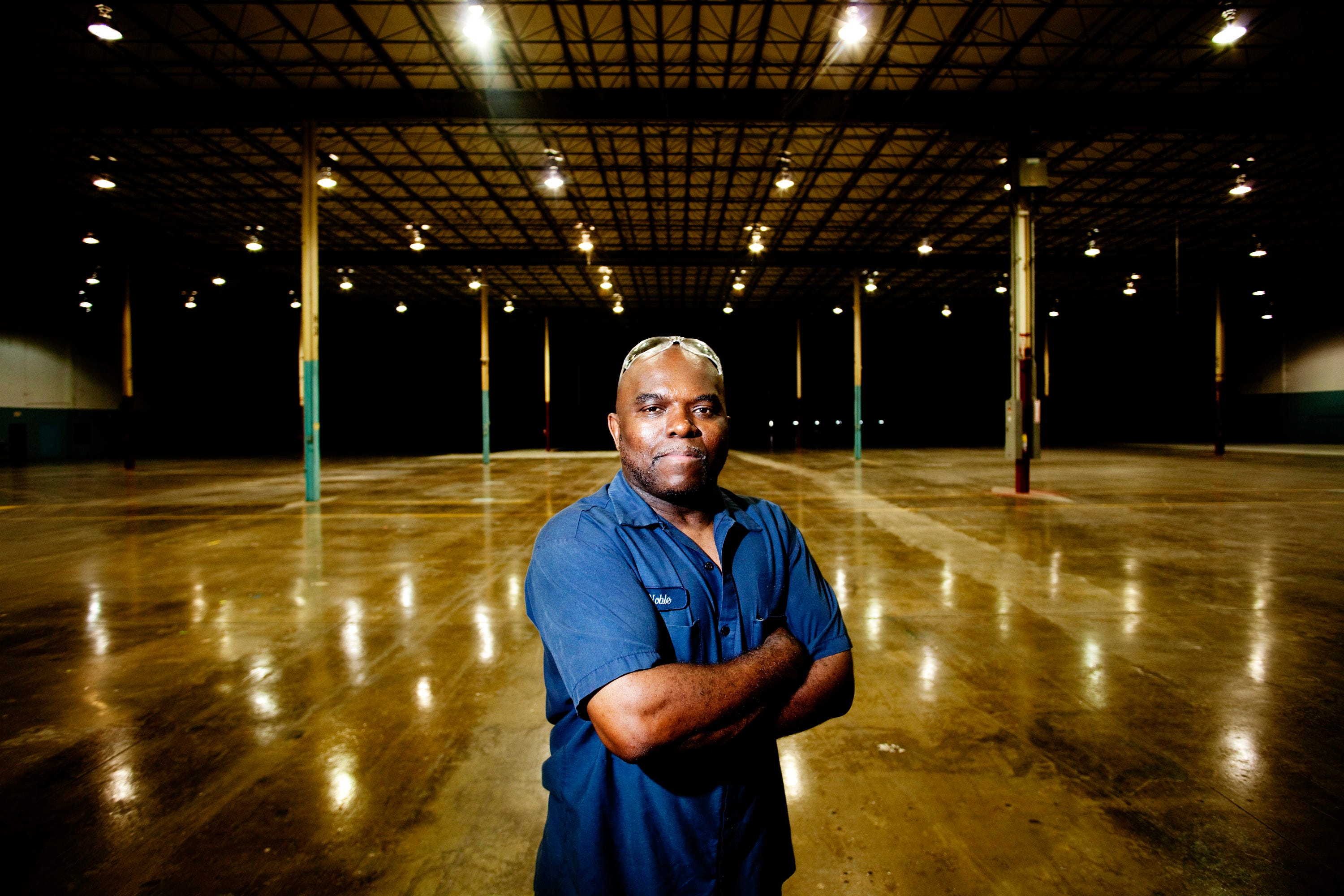
After World War II, the American economy produced something unusual in human history: millions of workers without college degrees could still climb into the middle class. Manufacturing, construction, clerical work and skilled trades provided stable, middle-income jobs that allowed Americans to buy a home, raise a family, and expect their children to do even better. They were the rungs on the ladder.
Starting in the 1980s and accelerating through the 2000s, many of those rungs disappeared.
Two forces removed them. The first was technology. Computers and automation didn’t simply replace workers — they replaced specific kinds of work. Routine tasks, whether performed on assembly lines or in back offices, were the most vulnerable. What grew instead were jobs at the top and bottom of the labor market: high-skill work requiring education, and low-paying service work that could not easily be automated. The middle hollowed out. Labor economists call this phenomenon job polarization: the rungs didn’t just get harder to climb — they stopped existing.
The second force was trade. In 2001, China joined the World Trade Organization. Economists David Autor, David Dorn, and Gordon Hanson tracked what happened in communities most exposed to Chinese manufacturing competition. Local labor markets adjusted remarkably slowly. Wages stayed depressed and employment stayed low at least a decade after the shock arrived, or never recovered.
Most research agrees automation did more national damage than trade. A Ball State University analysis attributes 85 percent of manufacturing job losses to productivity gains, not trade. But trade had outsized, life-altering impacts in specific towns and regions, shuttering plants and wiping out jobs. Autor, Dorn, and Hanson found that Chinese import competition, while responsible for a smaller slice of manufacturing losses nationally — roughly a quarter, by their count — hit specific communities all at once, and many of those places are still recovering.
For decades, America had relied on millions of middle-skill jobs to turn economic growth into upward mobility. As those jobs disappeared — whether through automation, trade, or both — so did one of the country’s most reliable pathways to the American Dream.
The Credential Bottleneck
When the rungs disappeared, something had to replace them. College filled the gap, becoming the default pathway to the middle class — the most reliable route to upward mobility.
The problem was that the ticket got more expensive at the same time everyone decided they needed one — and the most valuable seats barely expanded to meet the demand.
In 1980, attending a four-year college cost roughly $10,000 a year, including tuition, fees, room and board, adjusted for inflation. By the 2025–26 academic year, that same combination — tuition, fees, room and board — had risen to nearly $26,000 at in-state public four-year institutions, and to about $61,000 at the average private nonprofit college. At the most selective schools, such as the Ivy League, the same core costs now run $83,000 to $94,000, according to each institution's own published pricing. Even using the public in-state figure, the price of the credential had risen roughly two and a half times in real terms.
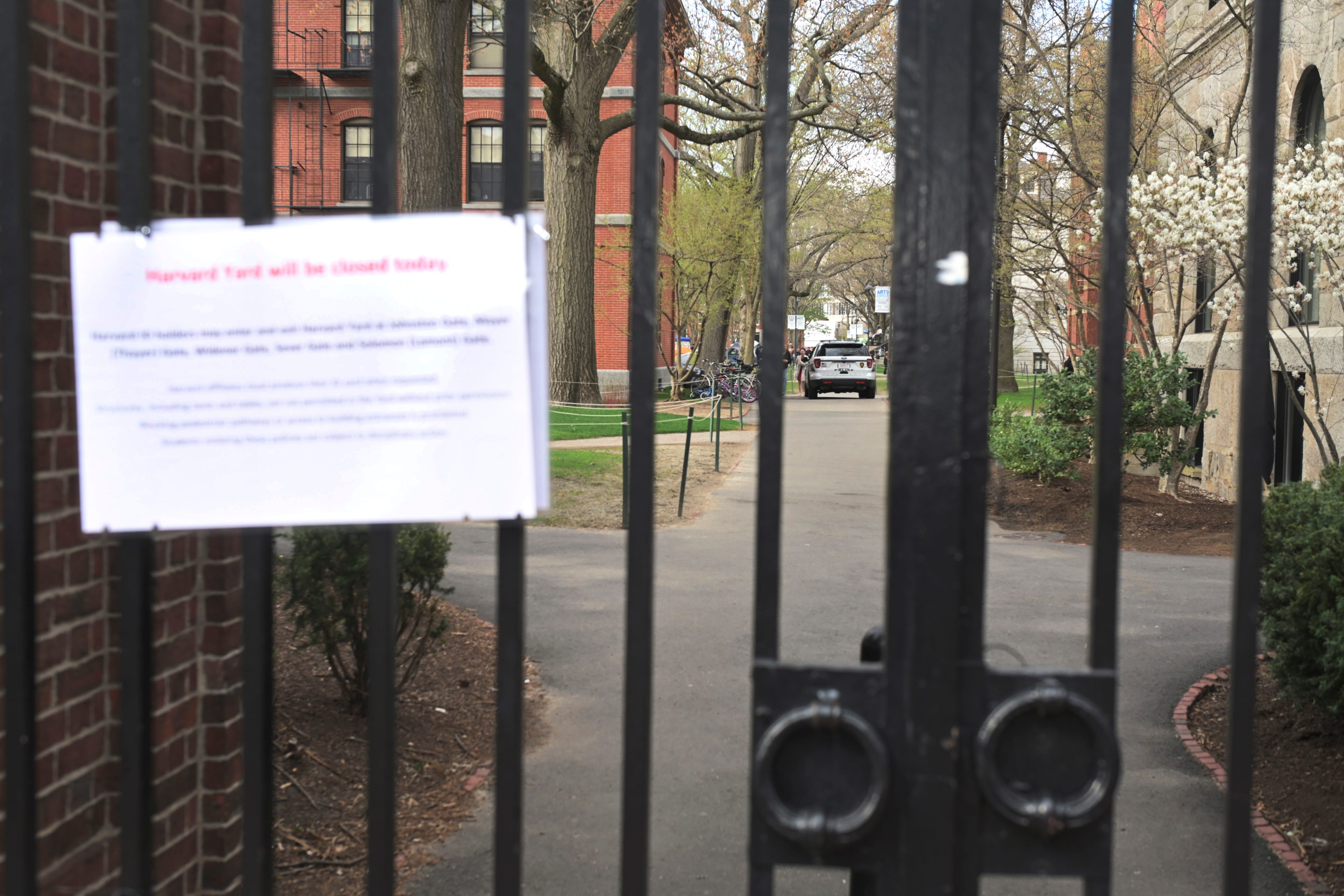
At the same time, many elite institutions chose not to expand enrollment, preserving the scarcity that reinforced their prestige. Harvard's freshman class has stood at roughly 1,600 students for more than four decades — while applications grew substantially over the same period. Before U.S. News began ranking colleges in 1983, schools like Harvard, Yale, and Stanford were expanding enrollment. The rankings changed the incentive: selectivity became a part of the product. Low acceptance rates drove prestige, and prestige drove applications, donations, and pricing power. Scarcity became an asset. Between 2002 and 2019, Ivy League acceptance rates were cut roughly in half.
In response, families spent more to gain an edge — tutors, test prep, curated extracurriculars — widening the advantage of those who could afford the race. The so-called “Varsity Blues” federal prosecutions in 2019 illustrated the lengths — and lies — wealthy parents and admission consultants would go.
Meanwhile, colleges across the board continued raising tuition, pushing students to borrow ever larger sums. By 2010, student loan debt in the United States had surpassed credit card debt for the first time.
The debt burden has grown so large that millions of Americans now carry student loans well into middle age, with growing numbers still repaying them into retirement.
At precisely the moment America needed more rungs on the ladder, its most prestigious universities chose to preserve the scarcity central to their prestige rather than expand access to meet the need. One of the country's most powerful pathways to upward mobility became narrower just as it became more essential.

Geography Became Destiny
The collapse didn’t happen everywhere at once. It happened in places — in specific towns and regions, along the rivers and rail lines where the mills and factories had once stood.
As manufacturing declined, the new economy concentrated elsewhere. Technology, finance, health care, and professional services clustered in a relatively small number of metropolitan areas — San Francisco, New York, Boston, Seattle, Austin, among them. Workers with the education and skills those industries demanded followed the jobs. Those without them often stayed behind.
The dynamic became self-reinforcing. Places with talent and capital drew more of both — economists call it agglomeration. Places that lost their anchor employers lost the tax base and demand that might have replaced them. One rose. The other declined. The pattern earned its own name: “winner-take-most.”
America didn't just grow more unequal. It grew unequal by ZIP code.
Chetty’s Opportunity Atlas — built from the anonymized tax and Census records covering nearly the entire U.S. population — showed just how much place itself matters. Researchers traced children’s economic outcomes back to the neighborhoods where they grew up. Children from families with similar incomes, living only a few miles apart, often had dramatically different chances of reaching the middle class or beyond. Where you grew up increasingly shaped where you ended up.
Communities that lost employers often lost tax revenue, social capital, and opportunity alongside them. Chetty’s research found that neighborhoods with strong schools, high employment, and robust social networks consistently produced better outcomes for children. Upward mobility had become deeply tied to geography.

Policy Locked It In
None of these changes made the American Dream’s decline inevitable. Labor markets change. Institutions adapt. Governments intervene. Communities reinvent themselves. What happened instead was that the rules of the economy were rewritten — gradually, across both parties and several decades, to increasingly favor those who already had the greatest advantages.
The clearest example is the tax code. The top federal income tax rate stood at 70 percent in 1979. By 2007, the top rate had been cut in half, to 35 percent. The income share of the top 1 percent more than doubled, from about 10 percent in 1979 to more than 20 percent in 2007, according to the Congressional Budget Office.
Money made from investments has long been taxed more lightly than money made from a paycheck — that preference dates to the 1920s. But as the wealthy increasingly made their money from investments and business ownership instead of salaries, that old preference came to shelter a much bigger share of their income. Today the top rate on a paycheck is 37 percent. The top rate on long-term investment gains is 20 percent — roughly half.
Workers lost bargaining power just as capital gained it. Union membership fell by more than half in the four decades after 1980 — from 22.2 percent of workers in 1980 to 9.4 percent by 2022. The gains increasingly flowed to owners and shareholders instead.
Then came the financial crisis of 2008.
Workers entering adulthood inherited an economy that had already lost its traditional pathways upward. The Great Recession narrowed them further. Millions graduated into the weakest labor market since the Great Depression.
Why None of It Got Fixed
Each of the forces above was visible. Documented. Named. The study by Chetty and his colleagues is nearly a decade old. It hasn’t been fixed.
A big part of the explanation is trust — or, more precisely, its erosion.
In 1958, 73 percent of Americans said they trusted the federal government to do the right thing most or almost all of the time. By 2025, that number was 17 percent, according to Pew.
Some of that collapse was earned. The Vietnam War and the Watergate scandal gave real reasons for people to stop believing what their government told them.
But the erosion didn’t stop where earned distrust left off. Ronald Reagan made a more explicit push in 1981, declaring: “Government is not the solution to our problem; government is the problem.”
Donald Trump has gone further, actively sowing distrust. He hasn’t just cast the government as inefficient or overreaching — the traditional conservative critique. He has cast the mechanisms of democracy itself as illegitimate, calling elections “rigged” — unless he, or candidates he supported, won.
Together, these forces created a vicious cycle. The economy stopped delivering for many people, giving them reason to distrust the institutions charged with governing it, making it harder to build the coalitions required to fix what broke, giving people still more reason to distrust.
The ladder got shorter. So did trust in the institutions that could rebuild it.
Up Next: Examining the solutions.
Prefer to listen? I narrate each edition myself. Find the audio at the top of this page or under the Listen tab at solvingfor.io.
Solving For takes on one pressing problem at a time: what’s broken, what’s driving it, and what a path forward might look like. Each series unfolds in weekly installments.
Previous series have examined China’s rare earth dominance, the decline of local news, the end of amateurism in college sports, shrinking competition in Congress, social media and teen mental health, a world rearming as the global rules-based order weakens, and — most recently — America’s national debt crisis. Each series is available for reading or listening (and I narrate them all) at solvingfor.io.