


We conclude our series on space this week. The more I got into reporting it, the more I realized the biggest challenge may not be getting there. It may be figuring out what happens once we do. In Part Three, we look at how countries and companies are pushing into orbit, to the Moon and beyond — with rules largely written for another era. If you missed them, here are Part One and Part Two.
Solving For takes on one hard problem at a time — unpacking the stakes, exploring the forces behind it, and surfacing real paths forward. Each series unfolds in three parts. You can read or listen to each series — narrated by me — at solvingfor.io, or click the article voiceover at the top of this page. Learn more.
In May 2020, the head of Russia’s space agency, Dmitry Rogozin, wrote on Twitter in a now-deleted post: “Only Iraq or Afghanistan will come out of this.”
He wasn’t talking about a war. He was talking about the Moon.
Reuters’ space reporter Joey Roulette had just broken the news that the Trump administration was drafting a new framework governing how countries operate on the Moon.
It was called the Artemis Accords.
The framework would allow countries and companies to extract lunar resources. It would also allow operations on the Moon to be surrounded by “safety zones” designed to prevent “harmful interference.”
To critics like Rogozin, it looked like the U.S. writing the rules for the next frontier.
But, even as Rogozin saw a land grab, the problem the Artemis Accords set out to solve was real.
For the first half-century of the space age, governments dominated spaceflight. Then, in 2008, SpaceX — a startup on the brink of bankruptcy — became the first company to put a privately developed rocket into orbit. It was a turning point. More companies followed. Costs fell. The pace quickened. Possibilities widened.
Now, a highway to the heavens is being built. Reusable rockets. Communication networks. Lunar landers. Space stations. Together, they could enable a permanent human presence in space, create new industries, and improve life on Earth.
But building the infrastructure is only half the challenge. The rules need to be built too.
Who can extract resources from the Moon? What happens when two countries want the same piece of lunar terrain? How do thousands of satellites share increasingly crowded orbits? How do we keep competition between the U.S. and China from turning into conflict? And what happens when private companies become powerful actors on a frontier governments are struggling to keep up with?
These questions are becoming more urgent as the new space age accelerates. As the possibilities grow, so do the stakes.
When the Artemis Accords were announced, NASA’s Mike Gold captured both the promise and the peril of the moment, saying: “We hope the future will look a lot more like ‘Star Trek,’ and a lot less like ‘Star Wars.’”
Highway to the Heavens
NASA’s Apollo program in the 1960s and early 1970s was organized around single missions.
But today is different.
The goal now is to build the roads, bridges, airports and power grids of space; infrastructure that makes it possible to build everything else on top of it.
In SpaceX’s S-1 filing before going public this year, the company put it plainly: “We are truly building the infrastructure of the future.” Jeff Bezos, founder of Blue Origin, described the assignment this way: “It’s this generation’s job to build a road to space, so that future generations can unleash their creativity.”
Businesses are already being built on top of this road: connectivity, Earth observation, microgravity manufacturing, orbital data centers.
It’s happening globally, too. Nearly 20 African countries have satellites in orbit, and the continent is set to double its space spending this year, according to the Financial Times. The benefits range from monitoring crops and water levels to quickly spotting wildfires.
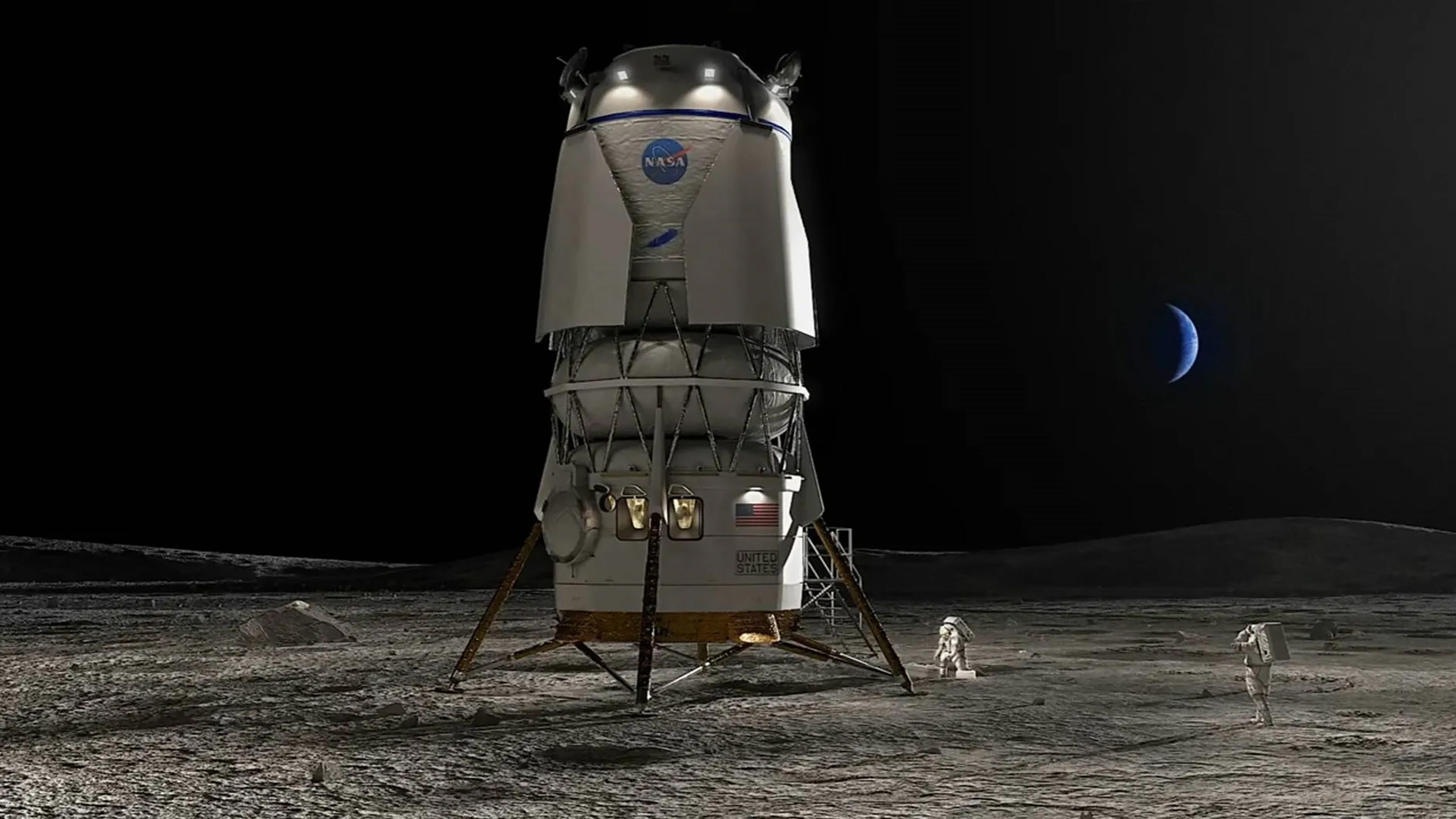
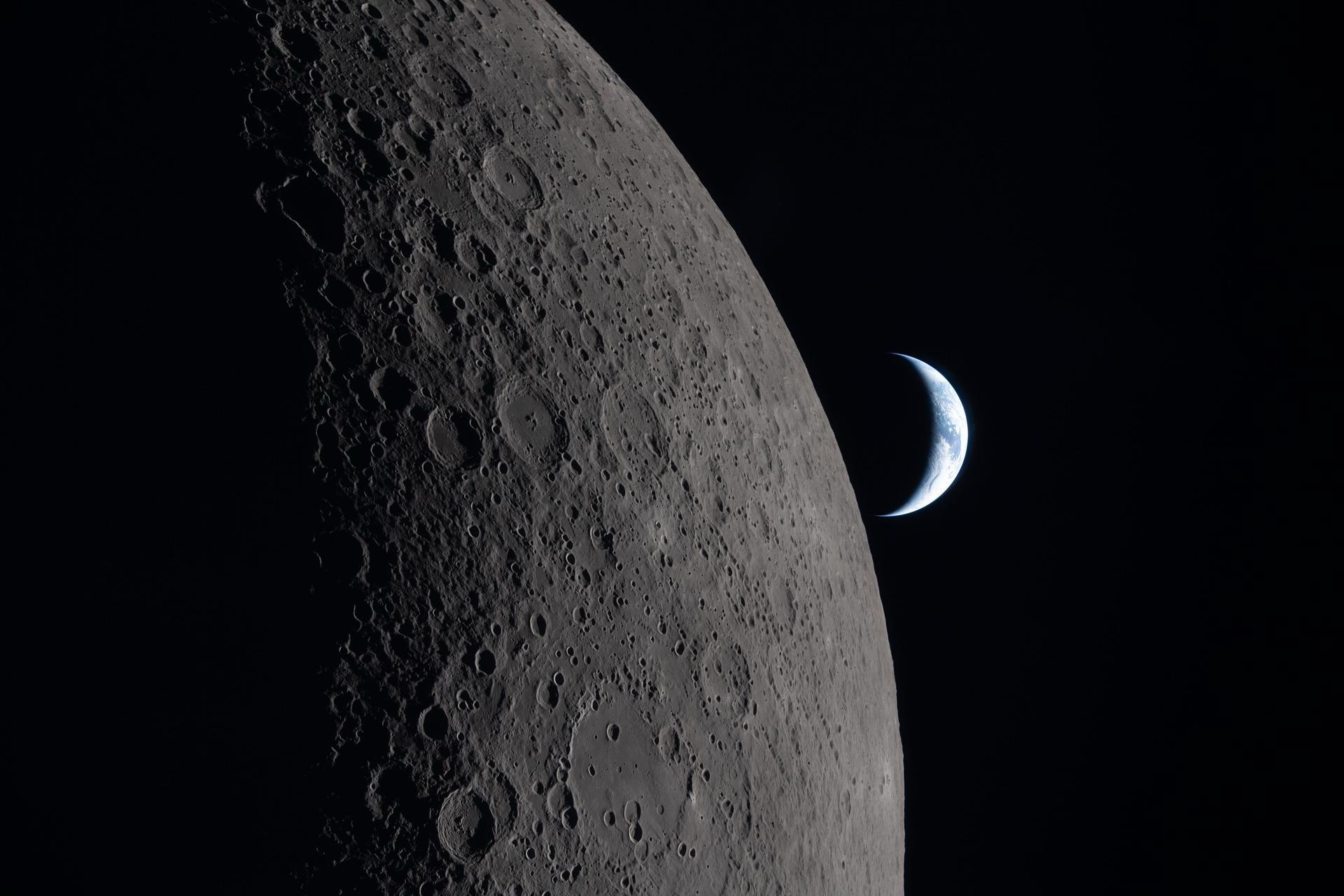
As low-Earth orbit becomes the first commercial layer of this infrastructure, the Moon is next. Increasingly, attention is converging on one place: the lunar South Pole.
The reason is its rare combination of sunlight and ice. Mountain ridges there are in near-continuous sunlight, while nearby craters — deep and frigid — have remained in shadow for billions of years. The darkened basins, like the two-and-a-half-mile deep Shackleton Crater, are believed to hold water ice, which can become drinking water, oxygen, and rocket fuel. The sunlit ridges offer solar power.
Together, sunlight and ice could make the region a proving ground for humans to live, work, and build beyond Earth.
NASA’s Artemis IV mission plans to land two astronauts near the Moon’s South Pole in 2028, beginning a new phase of sustained lunar exploration. It would mark humanity’s return to the lunar surface for the first time since 1972.
Companies are developing hardware to mine the Moon’s minerals — including helium-3, a rare isotope envisioned to one day power clean fusion energy. Others see the Moon as a launch pad for destinations beyond, like Mars. But as the highways and bridges to space are being built to enable this future, they’re operating under rules written for a vastly different era.
At the international level, Harvard Kennedy School’s Ely Sandler observed this year, space is “essentially not governed.”
Decades-old Rulebook
The basic rules of the road were written nearly sixty years ago.
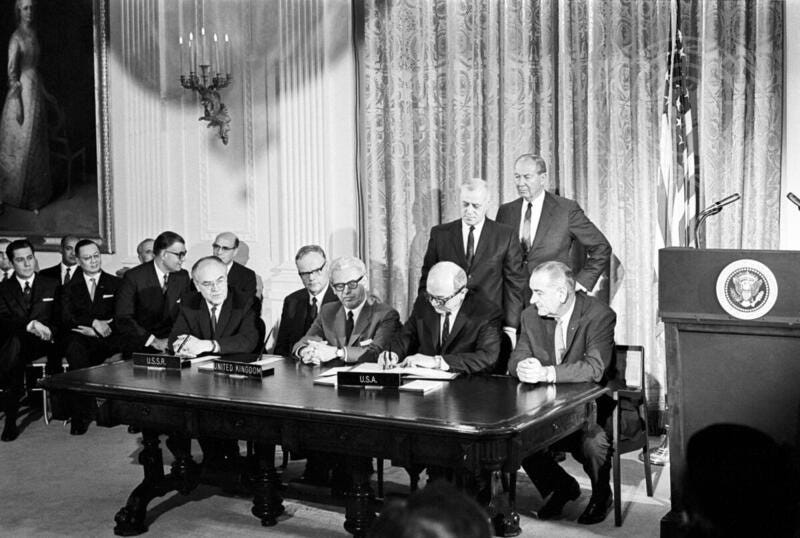
The 1967 Outer Space Treaty remains the foundation of international space law, ratified by 118 countries, including every major space power.
It and companion treaties established that no country can claim the Moon. It forbade military bases and weapons of mass destruction in space. It created principles like a duty to rescue astronauts in distress.
In word and spirit, it made space open to all, owned by none, used only for peaceful purposes.
But the treaty didn’t contemplate private companies or today’s commercial ambitions. The result, Sandler wrote in a December 2025 paper, is a new space era with huge opportunities — but challenges that the current rulebook “is ill-equipped to meet.”
Yet Earth has faced versions of this problem before.
Use Without Ownership
Antarctica offers one lesson. The 1959 Antarctic Treaty reserved the continent for peaceful, scientific use and froze territorial claims. The 1991 Madrid Protocol went further, banning commercial mining outright.
Oceans offer another. No country owns the high seas, yet enormous economic activity takes place there — fishing fleets, cargo ships, undersea cables. International maritime law sets rules for navigation and ships operating in close proximity and what can be taken from shared waters — though disputes remain over deep-sea mining.
The Artemis Accords tried to strike a balance: reaffirming a commitment to the Outer Space Treaty while declaring that countries and companies could extract and use lunar resources without claiming the land beneath them. And that “safety zones” around operations could be declared without becoming national territory.
But it’s a hard line to draw.
The lunar South Pole shows why. The proximity of water ice and continuous sunlight make the region a prime target. But if a company or country begins mining a valuable deposit and declares a safety zone around it, how large can that zone be? And what happens when someone else wants access to the same area?
It’s not a theoretical question.
On August 23 — this past weekend — China planned to launch its uncrewed Chang’e 7 mission destined for the Moon’s Shackleton Crater — the same South Pole region where Artemis IV plans to land astronauts in 2028. As it happened, the launch was scrapped amid poor weather conditions due to Typhoon Narra. China’s space agency pushed the mission to 2027, citing a need for further safety review.
While the delay buys the U.S. some time, it doesn’t change the shape of the contest. Both countries are aiming for the same valuable region of the Moon in the next few years, and eventually one will get there first.
As Scientific American put it, whatever Chang’e 7 finds “could radically reshape a race between China and the U.S. to build bases on the Moon.”
The challenge, then, is to preserve the Outer Space Treaty’s ban on territorial ownership while adding clearer rules for resource extraction — including the size, duration, and overlap of safety zones on the Moon.
“The international community stands at a crossroads,” wrote Adam Urwick and Jessie Osborn of RAND Europe in March 2026. “The technology enabling lunar resource extraction is arriving faster than most anticipated. Policymakers and legislators have a waning opportunity.”
Traffic Control
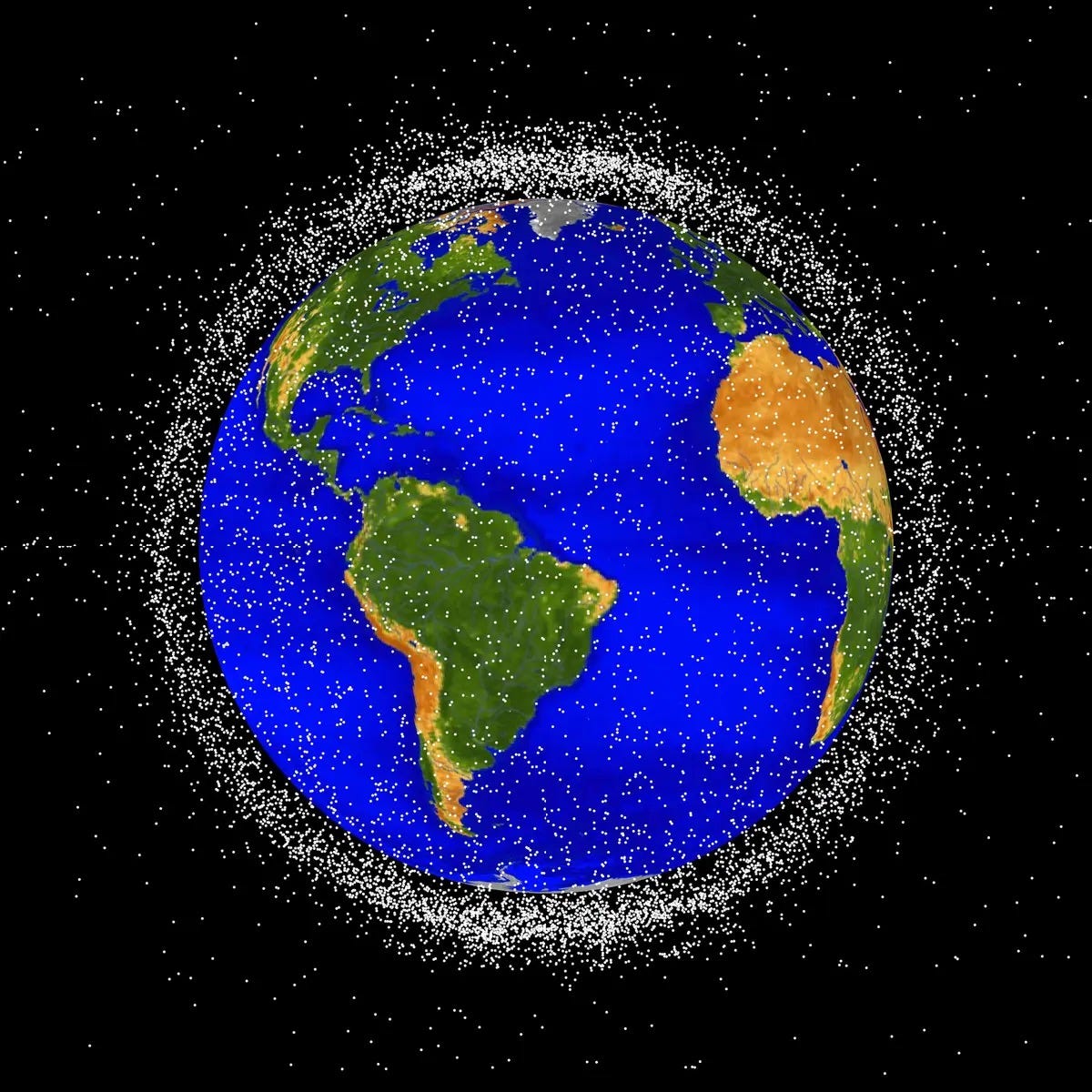
Low-Earth orbit presents another problem: collisions and debris.
When Sputnik was launched in 1957, low-Earth orbit was a lonely place. Now more than 16,000 satellites circle the planet, up from fewer than 1,000 two decades ago. The number could climb dramatically higher — some estimates project 100,000 by 2030.
The complexity is increasing too: more than 60 nations have satellites in orbit, along with a growing number of commercial operators.
“If you don't have some kind of global governance framework, if you can't prevent satellites from running into each other, then it all becomes pretty pointless pretty quickly,” said Katie Feistel, an assistant policy researcher at RAND.
Some rules exist. The FCC requires U.S. satellites in low-Earth orbit to be removed within five years after the end of their mission. Europe is moving toward stricter debris standards too.
But there’s no universal system for orbit traffic rules, tracking objects, communicating, or when satellites must be removed from orbit. And there’s no overarching plan to clean up space debris.
Commercial aviation works because data is shared and common procedures are followed.
Space, and particularly low-Earth orbit, needs something similar.
Meanwhile, it’s a challenge that grows by the week. This coming week alone, on Sept. 2 and 5, SpaceX is putting another 54 Starlink satellites into low-Earth orbit. Earlier this year, SpaceX shared even more ambitious plans for as many as one million Starmind satellites — the proposed data centers in space.
The more crowded orbit gets, the less workable a voluntary system becomes.
Making the Rules
There’s also the question of how the rules get made.
The Outer Space Treaty was negotiated multilaterally, through the United Nations, and completed in 1967. It was remarkably quick work — just ten years after Sputnik became the first satellite in space.
And it happened amid Cold War rivalry: the same era in which the U.S. and Soviet Union also agreed to the Nuclear Non-Proliferation Treaty.
But today, sweeping multilateral treaties are harder to negotiate, and the U.S. under Trump is hardly trying.
The Artemis Accords are an example of this. Rather than negotiate a new binding global treaty, the U.S. created a non-binding set of principles for countries to join one by one. Seventy have signed on since 2020.
On the one hand, there’s a logic to this. Waiting for more than 100 countries to agree on a new space treaty could take years, even decades. A coalition can establish rules now, put them into practice, and potentially build broad acceptance over time.
But there’s a risk too: rules made by a coalition can become rules only for a coalition.
And that’s increasingly what’s happening.
The New Space Race
China and Russia haven’t joined the Artemis Accords.
Instead, in 2021 Russia joined a project China had already started — the International Lunar Research Station, a rival Moon base. Thirteen countries have joined this coalition.
In 2022, China completed its own space station, Tiangong, or “Heavenly Palace,” creating a second major outpost in low-Earth orbit alongside the International Space Station. That same year, China’s Xi Jinping called turning China into a space power an “eternal dream.”
China’s latest five-year plan, announced in March 2026, reaffirmed space as a key priority.
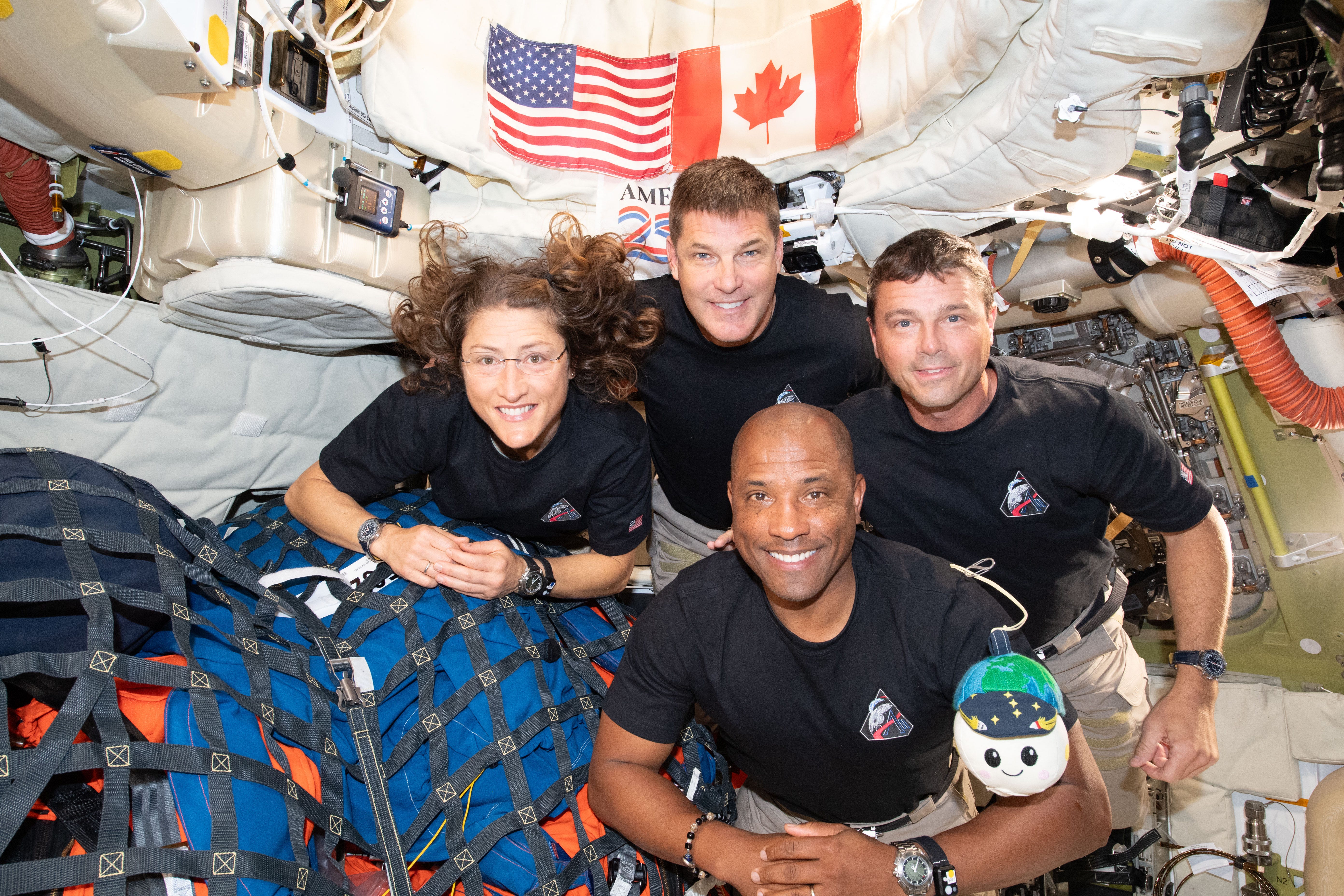
For decades, even as relations frayed on Earth, civil space preserved unusual pockets of international cooperation. The International Space Station has hosted 290 people from 26 countries since 1998, and American and Russian astronauts still work side by side aboard it. U.S. astronauts have flown on Russian Soyuz rockets for more than 30 years, the most recent in July 2026.
But the International Space Station is set to be retired in 2030, and the era of cooperation may be ending with it.
What’s emerging in its place, says Johns Hopkins professor Svetla Ben-Itzhak, are “space blocs.”
One centered on the United States. Another centered on China.
Building the infrastructure to venture deeper into space is one challenge; agreeing on how countries behave once they get there is another.
But there’s one more complication.
It brings us back to the first installment of this series, when SpaceX board member Antonio Gracias, in a CNBC interview, compared the company to the British East India Company.
Founded in 1600, the East India Company became one of the most powerful private enterprises ever created. It raised its own private army, collected taxes across India, minted its own currency, and amassed enormous wealth. It eventually became so powerful, violent, and corrupt that the British government, after decades of scandal, took control and finally dissolved it.
Gracias made the comparison to describe the scale of SpaceX’s ambition. Namely, to colonize space. But the analogy raises a different question: What happens when private companies become powerful enough to write their own rules?
Today, buried in the terms of service for SpaceX’s Starlink is a preview for a possible future beyond the Moon.
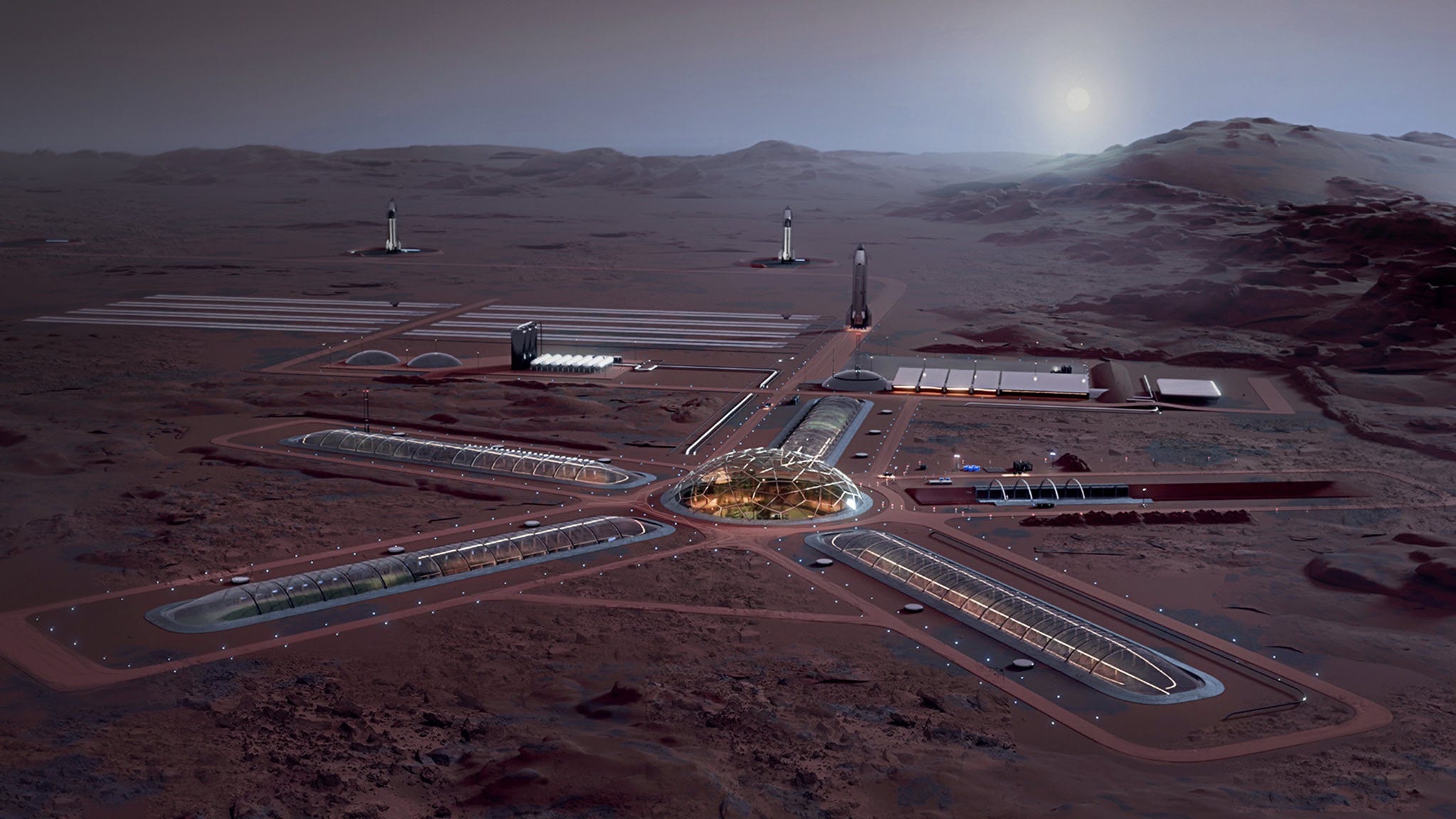
It states that users “recognize Mars as a free planet and that no Earth-based government has authority or sovereignty over Martian activities.” Disputes there will be settled by future “self-governing principles” — not by any government on Earth.
The challenge isn’t just about getting to low-Earth orbit, to the Moon’s South Pole, and eventually to Mars. The challenge is deciding who makes the rules once we’re there.
From Sputnik in 1957, to Neil Armstrong in 1969, to the International Space Station in 1998, to SpaceX putting its Falcon 1 rocket into orbit in 2008 and reusable orbital rockets in 2017, spaceflight has repeatedly pushed into territory existing rules weren’t built to handle. Yet, countries have managed to preserve space as a place of unusual cooperation.
This new space age will test whether we can do it again — this time with more countries, more companies, and even more money and power at stake.
Prefer to listen? I narrate each edition myself. Scroll up to find the audio version at the top of this page.
Previous Series —
China’s Rare Earth Dominance | AI Safety | Decline of Local News | End of Amateurism in College Sports | Shrinking Competition in Congress | Social Media and Teen Mental Health | A World Rearming as the Global Rules-Based Order Weakens | America’s National Debt Crisis | Reinventing the American Dream
Solving For takes on one hard problem at a time — unpacking the stakes, exploring the forces behind it, and surfacing real paths forward. Each series unfolds in three parts. Learn more.