


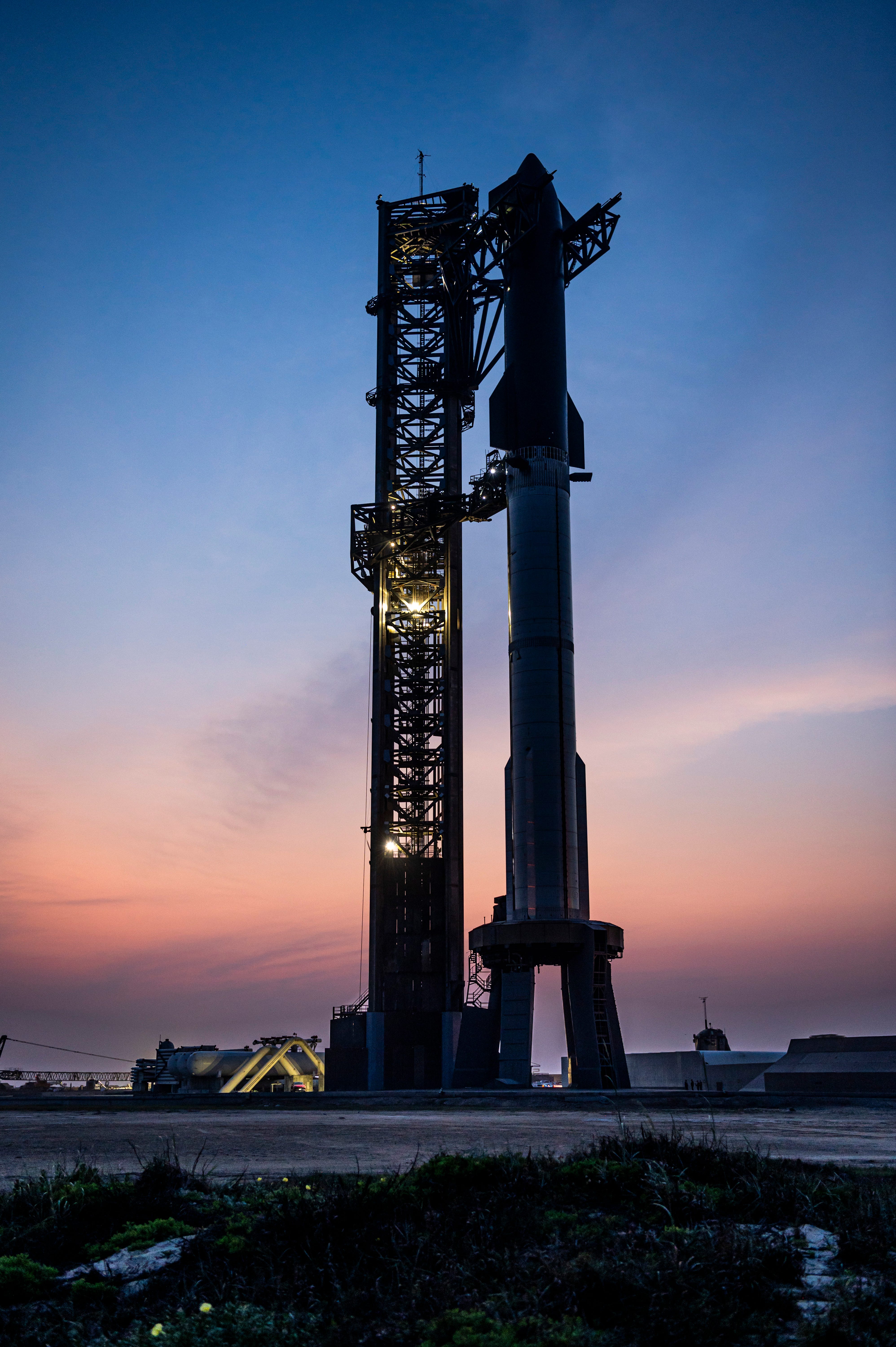
This week we launch a new series on space.
(If you’re new here, Solving For explores one pressing challenge at a time — the stakes, the forces driving it, and what a path forward might look like.)
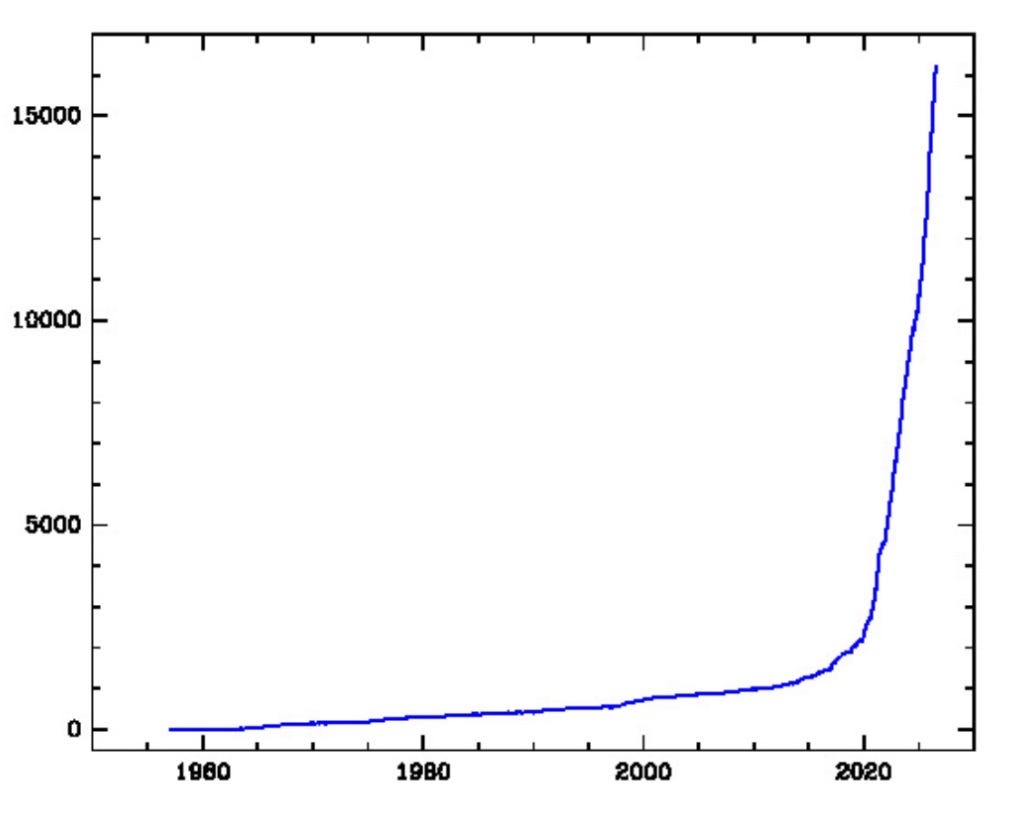
The modern space race is accelerating fast. Rocket launches used to be major events; now they happen twice a week. Two decades ago, fewer than 1,000 active satellites orbited Earth. Today, there are more than 16,000 — with SpaceX proposing a million more. Last year, a startup landed a commercial spacecraft on the Moon.
This mad dash for the heavens isn’t being led by governments, the way it was at the dawn of the space age. It’s being led by private companies — run by entrepreneurs and scientists, moving at their own pace, answering to their own boards.
For this series, we’re asking two questions. What are the ways going to space could benefit all of us here on Earth? And — the treaty meant to govern all of it hasn’t been meaningfully updated in nearly sixty years. So who, if anyone, is writing the new rules?
This is our tenth series. You can find previous series and learn more about Solving For at solvingfor.io. You can also listen to this story — narrated by me — by selecting the voiceover at the top of this page.
(Was this forwarded to you? Sign up.)
The British East India Company was one of the most powerful private enterprises ever created.
Founded in 1600 by roughly 200 investors, it received a monopoly from the British crown to trade east of the Cape of Good Hope. Over more than two and a half centuries, the largely unregulated company — run out of a small London office — expanded across the Indian subcontinent and beyond. It built a private army larger than Britain’s standing army, minted its own currency, collected its own taxes, waged wars and governed tens of millions of people. Along the way, it made shareholders fabulously rich, creating fortunes that reshaped Britain’s social order.
Edmund Burke called it “a state in the guise of a merchant.”
Eventually, it became too much: too powerful, too violent, too self-serving, too corrupt. After years of scandal and outrage, the British government stripped the company of its military and political powers in 1858. Parliament formally dissolved the company in 1874.
But before it became an instrument of conquest, the East India Company was something simpler: a platform. It moved goods, capital, and people across distances few could otherwise cross — and from that reach it created forms of commerce that had never existed before.
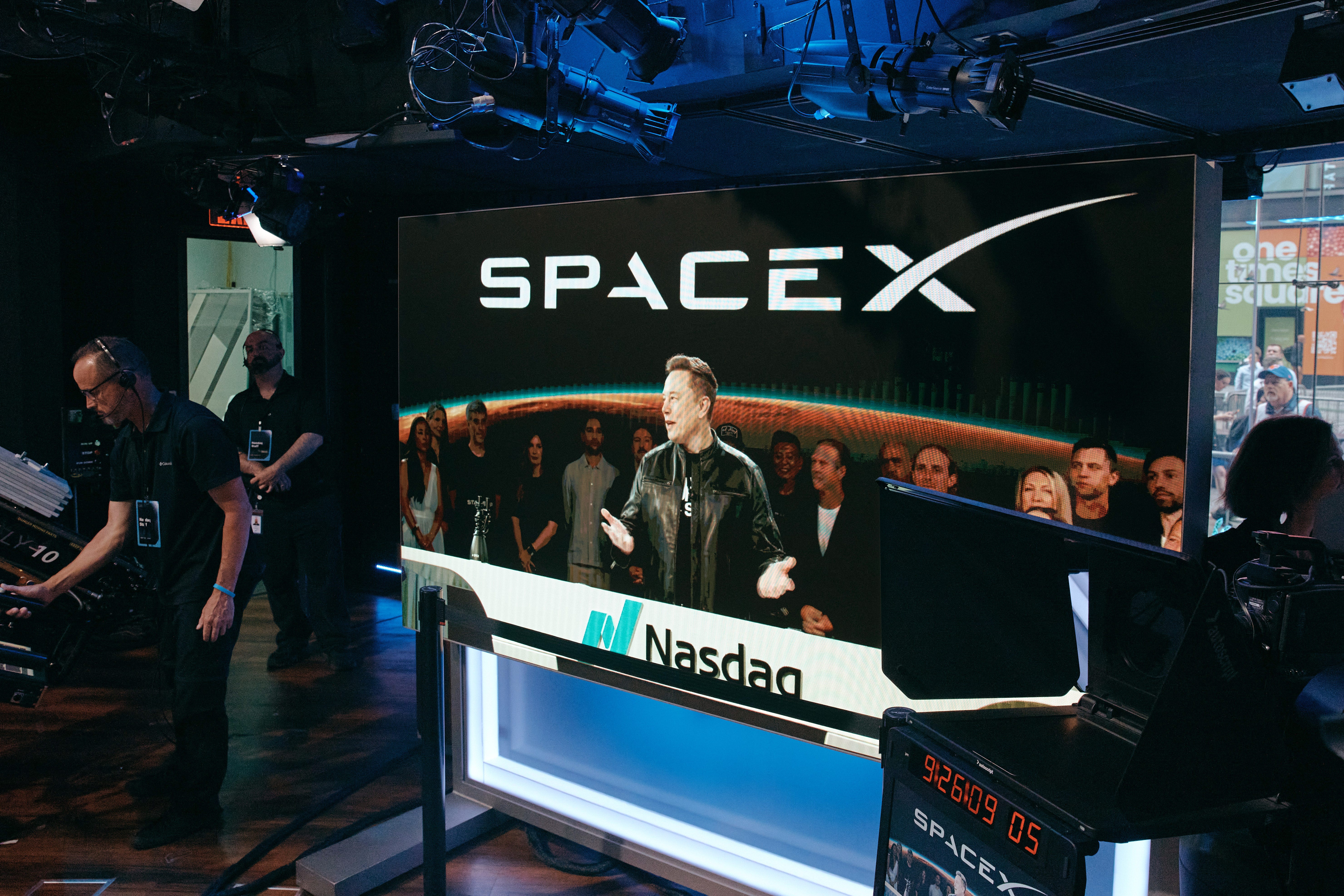
A century and a half after the company’s demise, on the day SpaceX went public in June — in the largest stock offering in history — one of the space company’s longest-serving board members went on CNBC and told viewers what investors were buying.
“Think about this as some combination of owning the British East India Company, as you colonize both the solar system and then beyond, and the Moon mission,” said Antonio Gracias, a SpaceX board member and early investor.
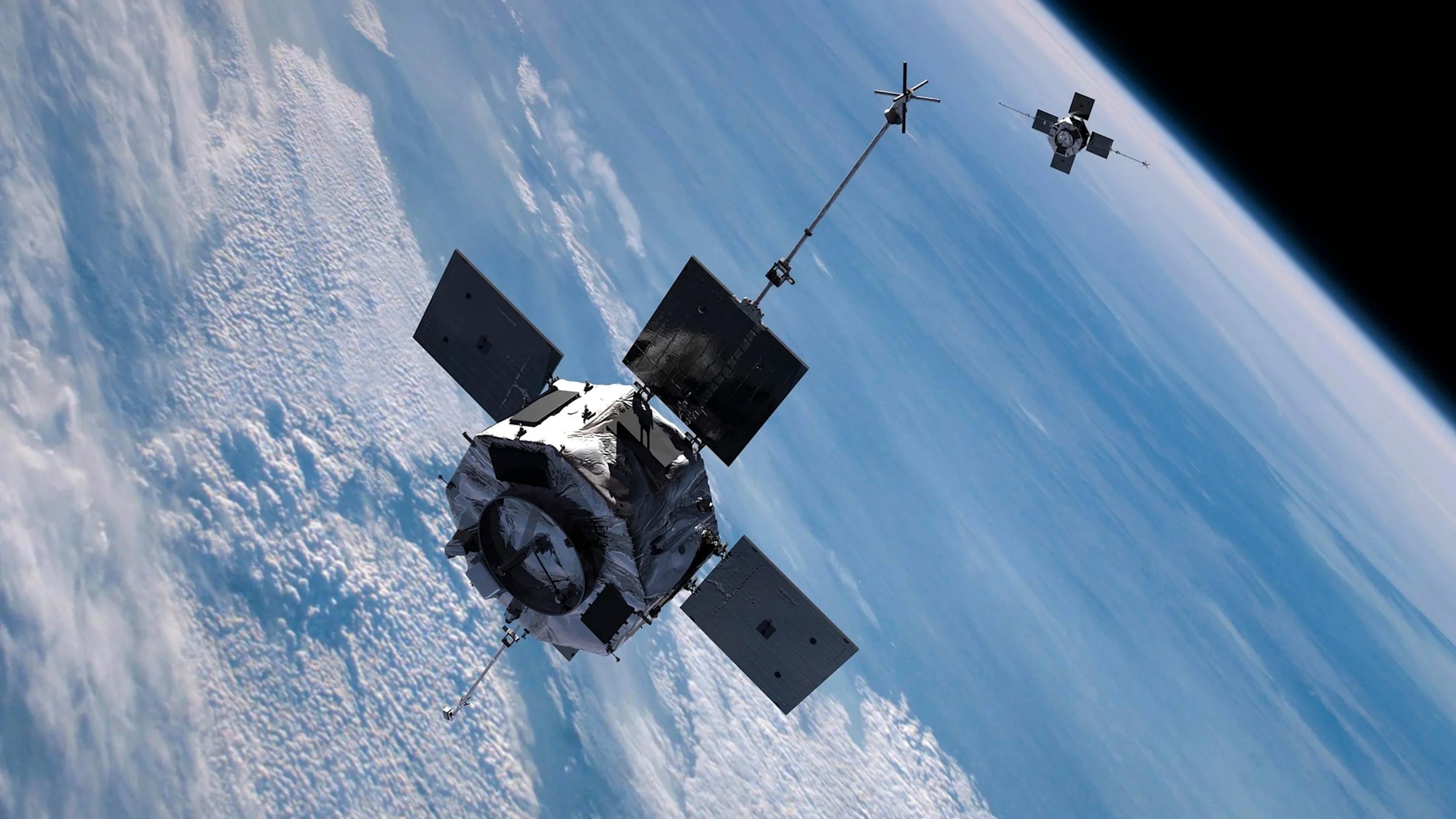
Where the East India Company built a platform for trade and settlement east of the Cape of Good Hope, SpaceX is building one for the far reaches above. Instead of ships sailing between London and the Indian Ocean, its reusable rockets make one trip after another to space.
In the first half of 2026 alone, SpaceX launched 78 rockets into space — what was once a momentous event now takes place about every two days. And while SpaceX is dominant, it isn’t alone. Dozens of companies - including Rocket Lab, Planet Labs, Blue Origin and Firefly Aerospace, which put a spacecraft on the moon last year, are racing toward the same goal: making access to space dramatically cheaper, faster and routine.
Yet spaceflight has reached escape velocity while the rules meant to govern it — scant treaties, thin law, limited oversight — remain on the launch pad. One example: more than a million fragments orbit earth, and no single authority is responsible for keeping spacecraft from colliding with them.
The East India Company traded tea, silk, and opium — and ultimately layered war and conquest onto the platform it had built. The question this series asks is what will be built on the new platform reaching toward the heavens. What problems will it solve, what products will it create, and how can it make life better back home on Earth? And, on a frontier with no real rulebook, how can it happen without something going seriously wrong?
For Earth’s Benefit
From the Soviet Union’s launch of the Sputnik satellite in 1957, space belonged almost entirely to governments. It was too costly and risky for any single entrepreneur or company to take on. That began to change on a remote atoll in the Marshall Islands in September 2008, when SpaceX became the first private company to launch a rocket — its Falcon 1 — into orbit.
That day — the fourth, and likely final, attempt by Elon Musk’s SpaceX to put Falcon 1 into orbit — proved to be “an inciting moment,” wrote Ashlee Vance in his book, When The Heavens Went on Sale.
Space shifted from an industry dominated by a handful of slow-moving government operators and contractors to one crowded with private companies eager to launch at an ever faster clip. In the nearly two decades since Falcon 1 reached orbit, dozens of businesses backed by billions of dollars in venture capital, have built rockets, satellites, lunar landers, orbital factories and space stations.
Consider the change in scale: fewer than 1,000 active satellites orbited Earth in 2008; today, there are more than 16,000. More are coming, as China ramps up and private companies multiply. And in January, SpaceX — the market leader by far — filed plans with the U.S. government for its most ambitious project yet: a constellation of one million solar-powered, orbital AI data centers.
From the beginning, in science fiction and in real life, people have had many reasons to go to space.
There is the pull of discovery epitomized by Gene Roddenbery’s Star Trek and its mission to “boldly go where no man has gone before.” There is national security and national supremacy. In May 1961, less than two months after Soviet cosmonaut Yuri Gagarin became the first human to orbit Earth, President John F. Kennedy — fearful that the U.S. was falling behind — called on the country to put a man on the moon “before this decade is out.” And there is the ambition to make humanity multi-planetary, a vision that runs from Isaac Asimov’s science fiction writings to Elon Musk’s plans today.
But for many companies in today’s space race — and the focus of this series — the animating force is more immediate: The best way to improve life here on Earth is to build something out there.
Rocket Lab, which reached orbit in 2018 and launched many missions since, expresses its vision in ten words: “We open access to space to improve life on Earth.” Planet Labs, operator of more than 200 satellites, says its mission is to “use space to help life on Earth.” Jeff Bezos’ Blue Origin, whose New Glenn rocket first reached orbit in 2025, uses the tag line: “For the benefit of Earth.”
Bezos himself has described a future in which mining, large-scale manufacturing, chemical production take place in space, with finished goods shipped back to earth.
“We need to take all heavy industry, all polluting industry, and move it into space,” Bezos said. “And keep Earth as this beautiful gem of a planet that it is.”
Problems to Solve
Space is already embedded in daily life. Satellites feed the forecasts that farmers plant crops around and insurers use to price policies. Shipping companies track vessels and cargo from orbit. Disaster agencies watch wildfires and hurricanes unfold in real time. GPS tracks Uber rides.
The modern space race could expand that role dramatically — in some cases, it already has.
The Digital Divide
Roughly a quarter of the world’s population still lacks reliable internet access. The gap is especially wide in rural and hard to reach places, where the economics of laying fiber and building cell towers often don’t work. That may be about to change.
Starlink, SpaceX’s broadband satellite network, first started putting satellites into space in 2019 and now has more than 10,200 circling the globe. It has passed 12 million subscribers and operates in 167 countries. Competitors are coming: Amazon is building its own broadband constellation, called Amazon Leo, though it remains far behind Starlink. AST SpaceMobile, meanwhile, is building a satellite network that connects directly to cell phones, with no dish or terminal required. It now has 13 satellites in orbit with a target of more than 40 by end of the 2026.
Space may be where that thirty-year connectivity gap finally closes.
Seeing the Earth
The same orbital vantage point that feeds weather forecasts lets us do something else: see the world as it is.
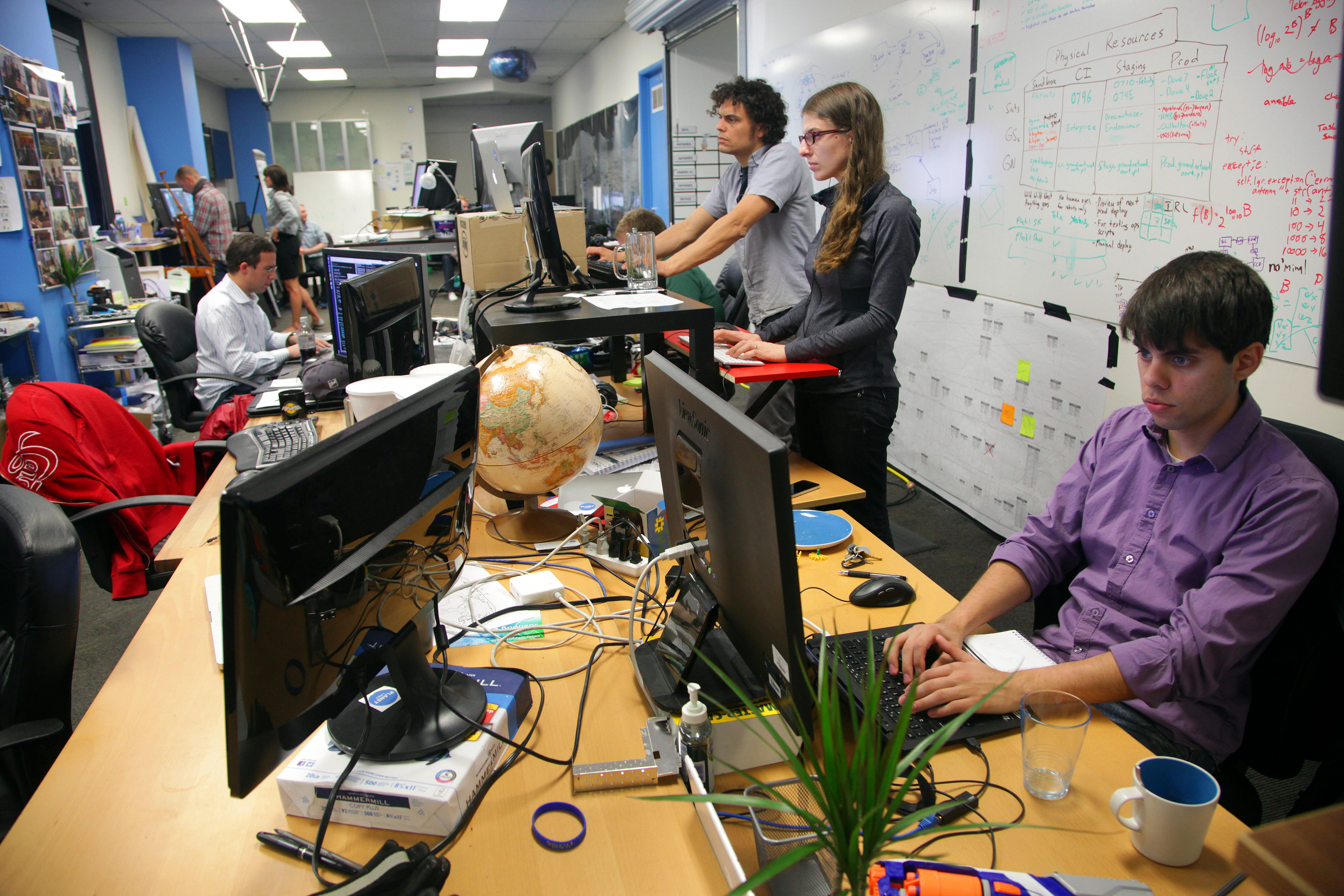
Planet Labs — now known simply as Planet — was founded in 2010 to put low-cost satellites, called Doves, into orbit and photograph every part of the Earth, every day. The theory was that seeing change as it happened could prompt people to act. The company declared its satellites could “monitor deforestation in Africa, track illegal fishing, and monitor ice caps melting.”
That kind of view had largely been limited to governments and intelligence organizations — and even they lacked a continuous, daily picture of the entire planet. Planet Labs made it widely available. The company now operates more than 200 satellites and images the whole Earth every day, influencing work from oil trading to human-rights advocacy.
The impact became especially vivid in February 2022. As Russian forces massed on Ukraine’s border, Planet’s satellites captured the buildup before the invasion and then documented the war day by day. The images helped investigative outlets like Bellingcat track troop movements, possible war crimes and smuggled shipments using a tool once reserved for spy agencies.
Manufacturing
Some materials crystallize differently in microgravity, forming structures that cannot be easily replicated on Earth. Why not manufacture pharmaceuticals in space?
That is what Varda Space Industries, founded in 2021, is trying to do. It has already demonstrated the basic process: launching a capsule aboard a SpaceX rocket, having it released into orbit, growing pharmaceutical crystals in microgravity, and returning them intact to Earth.
In May, Varda struck its first deal with a major pharmaceutical company, United Therapeutics, to study whether microgravity can improve a drug formulation for a rare lung disease. The first flight is scheduled for early 2027. Nothing has been approved, and no patient has taken a medicine manufactured this way. But for the first time, a pharmaceutical company is spending its own money to find out whether the idea works.
Data Centers
AI data centers are straining power grids and water supplies so severely that more than a dozen states are weighing restrictions on their construction. A solution: data centers in space.
In November 2025 Google unveiled Project Suncatcher, an effort to place satellites carrying the company’s AI processors in orbit, where they could draw on abundant solar power. A prototype may launch as early as 2027.
SpaceX is moving on an even faster timeline and at far greater scale. Up to a million of the space-based AI data centers, called Starmind, are planned. On SpaceX’s first investor call — on August 4 — since going public, Musk said he expects to “start launching these next year.”
Warning Signs
In the digital era, the speed of change has repeatedly outpaced government’s ability to keep up. Space is no exception. The rules governing the new platform being built were written largely for a different era. The 1967 Outer Space Treaty remains the cornerstone of international space law. It declares that the exploration and use of space should benefit all countries and bars nations from placing nuclear weapons or other weapons of mass destruction in space. It has been ratified by 118 countries, including every major country operating in space.
But the treaty was built for a two-superpower contest between governments, not a field crowded with commercial operators pursuing orbital resources, the Moon and beyond.
The last major space treaty, the Moon Agreement, was adopted in 1979. Only a small number of countries have ratified it. Since then, countries have relied largely on national laws and nonbinding international guidelines.
Nowhere is the gap more vivid than in space traffic. There is still no global mechanism for coordinating which spacecraft may be about to collide — nothing like an air-traffic-control system for orbit. Instead, warnings and responses can be entirely ad hoc.
Rosanna Hoffman, who leads space law and sustainability at the U.N. Office for Outer Space Affairs, described a case on the podcast Freakonomics Radio that shows just how thin the safety net can be. Returning from meetings with space officials in Ghana in June 2025, she was in the Brussels airport and her cell phone rang. On the other end was a frantic space official from Malaysia, who said one of the country’s few satellites was on a collision course with a North Korean satellite. But Malaysia had no diplomatic relations with North Korea — and therefore no diplomatic channel to its government. U.N. staff scrambled to reach North Korean officials.
“Luckily, really in the 11th hour,” Hoffman recalled, “they were able to move the satellite, and collision was avoided.”

Collisions have happened. In February 2009, Iridium 33, an active U.S. commercial satellite, accidentally struck Cosmos 2251, a defunct Russian satellite, over Siberia. It was the first collision between two intact satellites. The impact produced some 2,300 trackable fragments across low Earth orbit.
Then, in November 2021, Russia deliberately destroyed one of its own defunct satellites in a missile test. The blast created 1,500 pieces of trackable debris and forced astronauts aboard the International Space Station to climb into their docked spacecraft, ready for a quick departure if needed, as the debris cloud passed nearby.
Such events raise the specter of the Kessler syndrome. NASA scientist Donald Kessler described how one collision could lead to another and then another, each scattering debris that causes the next, until an entire band of orbit becomes unusable for generations. The possibility is no longer dismissed as merely theoretical. Starlink satellites alone performed more than 355,000 collision-avoidance maneuvers in the past year — more than three times their 2024 total.
The debris problem does not remain in orbit. Objects are falling back to earth at a rate of roughly one a week, according to The New York Times. Many burn up completely during reentry, but not all. In 2024, a discarded battery from the International Space Station crashed through the roof of a home in Naples, Florida. A large rocket component struck farmland in Kenya. SpaceX rocket fragments have landed in Poland.
The risk to any one person remains small, but it is rising. One FAA study projected that, if current trends hold, debris from reentering satellites could cause an injury or death roughly once every two years by 2035.
Which brings us back to the British East India Company — the company Antonio Gracias, a longtime SpaceX investor and board member, compared SpaceX to. It began as a platform, moving goods, capital, and people across distances nothing else could cross. In time, it became something else — something Parliament ultimately dismantled by force of law.
The modern space race could transform life on Earth. The question is whether we can realize that promise without allowing the platform — and the powers building it — to outrun the rules meant to govern them.
Next up: How we got here — how launching a rocket, once a national feat, became almost routine. None of it happened by accident.
Prefer to listen? I narrate each edition myself. Find the audio at the top of this page or under the Listen tab at solvingfor.io.
Solving For takes on one pressing problem at a time: the stakes, the forces driving it, and what a path forward might look like. Each series unfolds in weekly installments.
Previous series have examined China’s rare earth dominance, the decline of local news, the end of amateurism in college sports, shrinking competition in Congress, social media and teen mental health, a world rearming as the global rules-based order weakens, America’s national debt crisis and — most recently - renewing the American Dream. Each series is available for reading or listening (and I narrate them all) at solvingfor.io.