


Today we conclude our three-part series on America’s long and uneven effort to control the influence of money in politics.
Part One laid out the stakes. Part Two traced how we got here and, in particular, how the Supreme Court has limited how far reform can go. Part Three turns to the ways forward: what can be fixed now, and what it would take to rebuild the system.
Each Solving For series explores ways to solve one hard problem. This is our 11th. You can read or listen to every one (I narrate them myself) at solvingfor.io. Was this forwarded to you? Sign up.
In January 2013, a new class of members arrived in Washington for the start of the 113th Congress. Barack Obama had just won reelection.
For the freshmen, it was a chance to begin the work they had been elected to do: grapple with the nation’s most pressing problems.
But they were also introduced to another reality of serving in Congress.
The Democratic Congressional Campaign Committee handed freshman Democrats a PowerPoint deck. It included a slide with a model daily schedule: two hours for committee or floor work; one to two hours for constituent visits; one hour for “strategic outreach,” including breakfasts, meet-and-greets and press; one hour to recharge.
And four hours for “call time.”
In a 10-hour day, 40 percent was reserved for calling donors. Include “strategic outreach,” which could also involve fundraising, and half the model day revolved around raising money.
This was not new or unusual.
Former Republican Rep. David Jolly — now the Democratic nominee for Florida governor — told 60 Minutes in 2016 that after he won a special election to Congress, party leadership told him he needed to raise $2 million in six months.
“Your first responsibility is to make sure you hit $18,000 a day,” Jolly recalled being told.
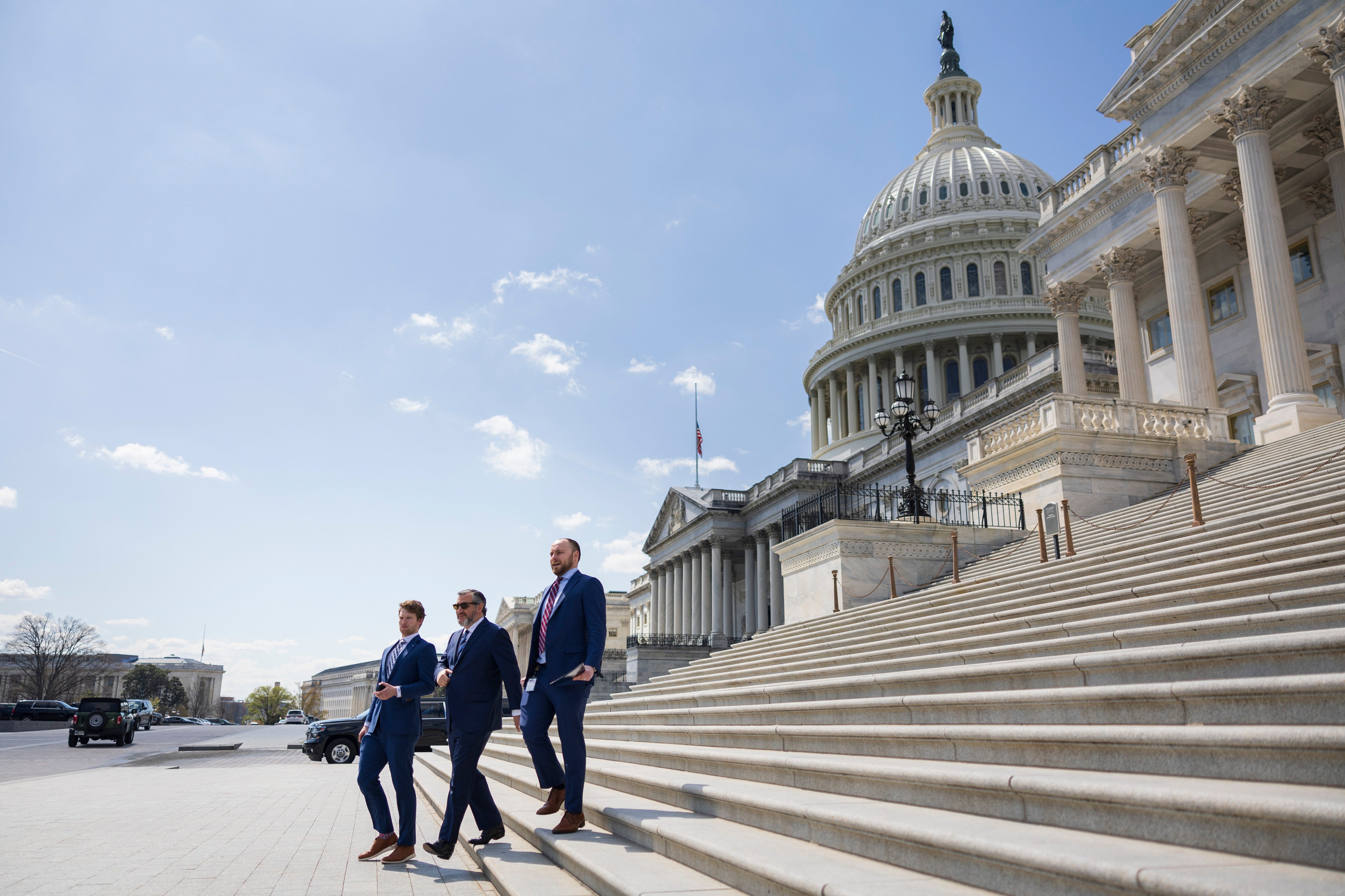
Federal law bars fundraising in congressional offices and other federal buildings. The result is a daily ritual: members leave the Capitol complex, walk to nearby offices, and spend hours in a cubicle dialing donors.
There is an irony in this.
In 1974, after Watergate, Congress rewrote the rules governing the role of money in American elections. The law limited both campaign contributions and campaign spending, created the Federal Election Commission and strengthened disclosure requirements.
Sen. Hubert Humphrey, a Minnesota Democrat who supported the reforms, called the private financing of elections a cesspool that, he said, “is a source of infection for the body politic.”
Half a century later, consider where things stand.
Members of Congress devote hours of their days to fundraising. Choice committee assignments and party leadership posts can hinge on it. And trust in government remains near historic lows. Just 17 percent of Americans told Pew in 2025 that they trusted the federal government to do what is right always or most of the time.
The reforms did not produce the political system their authors envisioned.
But the reason is not that Congress got it wrong. Its solution was never given a chance.
What the Court Left Behind
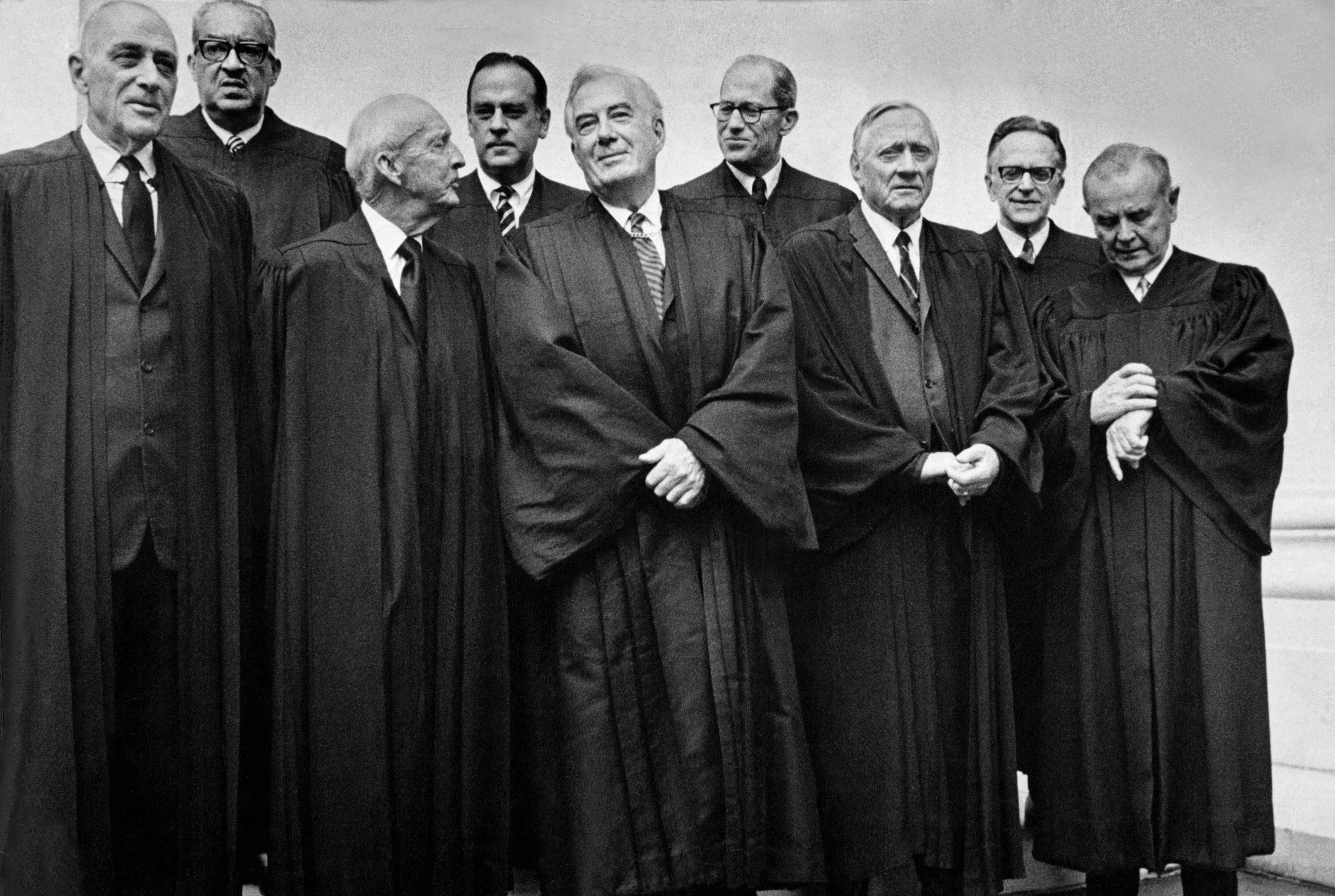
In 1976, less than two years after Congress acted, the U.S. Supreme Court dismantled part of what Congress had built.
The case was Buckley v. Valeo. It’s much less famous than Citizens United, but it established the architecture that has governed American campaign finance for the past 50 years.
On the one hand, the Court upheld limits on how much individuals could contribute directly to candidates, as a guard against corruption.
But, on the other, it struck down the limits on what campaigns could spend. Congress, for instance, had set spending caps for House, Senate and presidential races, similar to the NFL’s salary cap in pro football today. The Court also struck down limits on what individuals and groups could spend independently of campaigns.
The Court’s reasoning was that limits on spending are limits on speech, which is protected by the First Amendment.
That split is the foundation of the hybrid system we have today: one part (campaigns) highly regulated, the other (outside groups) largely without limits.
Two justices, approaching the case from opposite directions, warned that the Court had created problems.
Justice Byron White, a Kennedy appointee, wrote in dissent that by striking down spending limits the Court had sent candidates back to “the treadmill” of fundraising.
Chief Justice Warren Burger, a Nixon appointee, would have struck down both the spending and contribution limits. But he, too, doubted what the Court left behind.
“I question whether the residue leaves a workable program,” he wrote.
For 50 years, we have tried to make this hybrid work, and few have been satisfied with it.
The divide, meanwhile, has grown. Later rulings — most consequentially Citizens United and SpeechNow.org v. FEC — expanded the amount of money that could flow through the independent-spending side.
That raises the question: Do we repair the hybrid system once more? Or, after a half-century of trying, is it time to redo the whole thing?
Part Three explores three options: fixes within the existing system, public financing to change the incentives, and overhauling the system by ending the hybrid altogether.
What Can We Fix Now?
The first is disclosure. Namely, end dark money by naming everyone making large donations.
Both Buckley and Citizens United upheld disclosure requirements. But money still flows to super PACs through nonprofits that don’t name their donors. The DISCLOSE Act, introduced in the House and Senate, would require groups that spend more than $10,000 on elections to name the donors giving more than $10,000. It would also bar transfers between organizations that hide where the money came from.
The second is rebuilding the wall between candidates and super PACs.
Super PACs were permitted on the premise that they operate independent of campaigns. That barrier has become porous. “Redboxing” is the clearest example. Campaigns post messaging guidance for super PACs on their public websites, often inside a red-bordered box. A House bill, the Stop Super PAC-Candidate Coordination Act, would widen what counts as coordination and treat that spending as a contribution to the candidate.
The third is a cap on what donors can give to super PACs.
In 2024, 75 percent of Maine voters approved a $5,000 annual limit on super PAC contributions. A federal judge blocked it. The case is now before the 1st U.S. Circuit Court of Appeals in Boston.
Its target is not Citizens United but SpeechNow, the 2010 appeals court ruling that created the super PAC. It’s a ruling the Supreme Court has never reviewed. A win at the 1st Circuit would likely send the question to the Supreme Court, which could bring back limits on donations to super PACs nationwide. Or it could lock super PACs into constitutional law.
Yet, even if all three succeeded the imbalance would remain. A billionaire barred from writing a large check to a super PAC could still buy the ads himself; under Buckley, an individual’s own independent spending cannot be capped. And members of Congress would still be walking a few blocks from the Capitol to spend hours each day fundraising.
Can Public Financing Change the Incentives?
One reform that would put a dent in daily call time hours: public financing.
Today, candidates spend hours calling people who can write the largest checks, wherever they live.
But New York City campaign finance law changes that by matching the first $250 from a city resident eight to one in citywide races. The result: a $250 check becomes $2,250. A small donor in, say, Brooklyn is suddenly worth as much as a large donor from outside the city.
Generally, advocates for public funding say it does four things. It empowers small donors. It opens the door to candidates who don’t have a network of wealthy friends and supporters. It frees candidates from constant fundraising. And it levels the field against big money.
On the first two, the early evidence is strong. New York state followed New York City with its own match for legislative races in 2024. The number of small donors giving inside districts nearly doubled, from about 26,000 to nearly 51,000. In Seattle, which mails every registered voter $100 in “democracy vouchers” to give to candidates, one study found the number of donors rose 350 percent and the number of City Council candidates rose 86 percent.
But without spending caps, public funding has a weakness.
Public funding survived Supreme Court review in Buckley because the public money is offered in exchange for a voluntary spending limit. A candidate is not forced to do this, but can choose to participate. For three decades, that deal governed presidential elections. In 1976, Jimmy Carter and Gerald Ford each accepted $21.8 million in public funds and raised no private money for the general election. Every major-party nominee took the same deal through 2004.
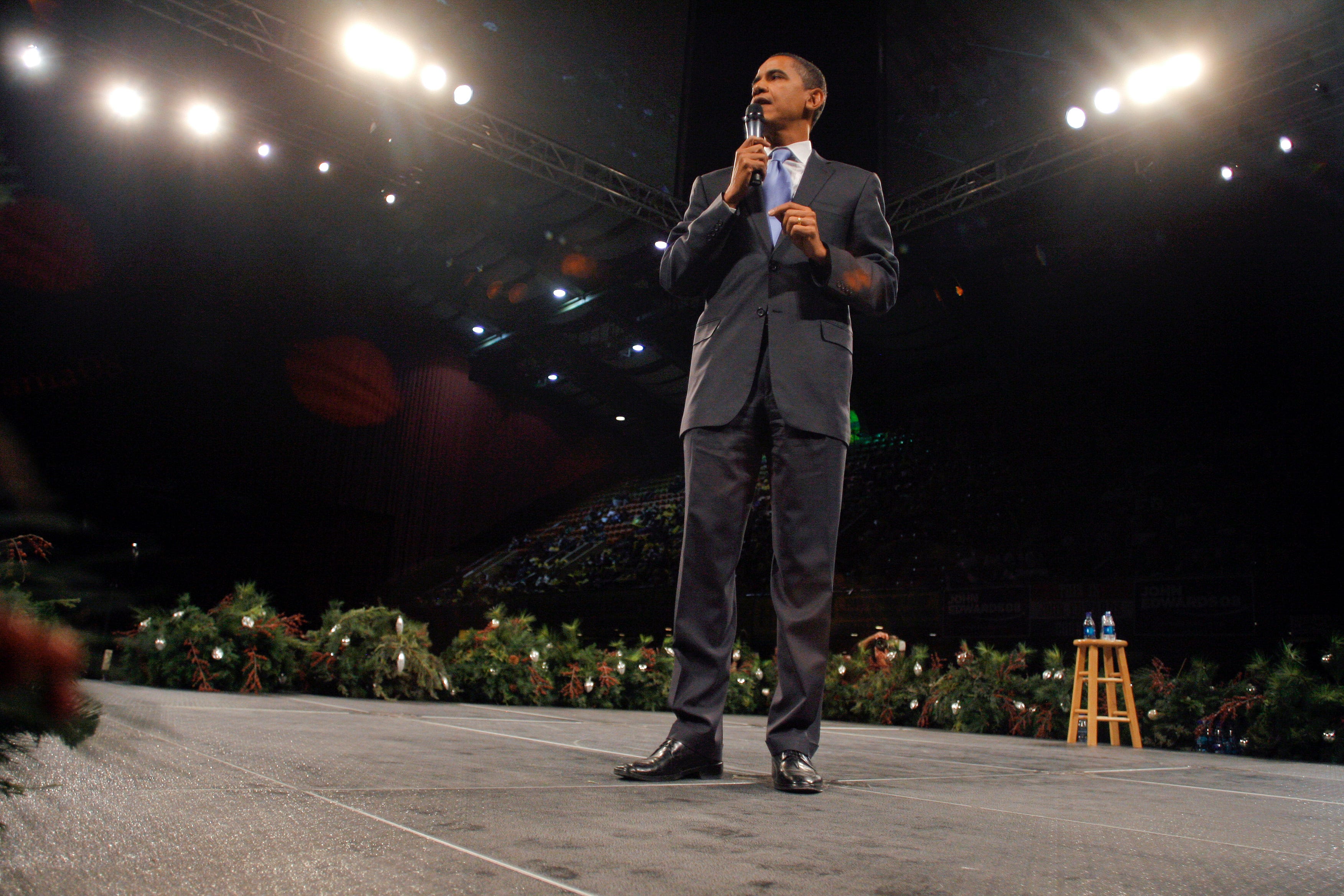
But in 2008, Barack Obama declined the public funding and raised far more from private donors. His Republican opponent, John McCain, was the last major-party nominee to take it. The program is still available.
A similar scenario is playing out in the next New York City mayoral race. In 2025, Zohran Mamdani ran for New York City mayor using the city’s candidate public funding program. He raised all he was allowed to spend in the primary, which was almost $8 million. A super PAC backing Andrew Cuomo raised more than three times that. Mamdani won the election. But in July, citing the outside money he expects to face, he said he would forgo public funding in 2029.
Public money can help. But with the Supreme Court forbidding mandatory spending caps, the risk is that private money can overwhelm it.
End the Hybrid
Every fix so far works inside the line Buckley drew. But the other option is to erase the line. This is the overhaul-the-system approach. Broadly, there are two ways to do it.
The first is to let Congress limit spending again. This is the approach that treats campaigns like an NFL team with a salary cap. The challenge is that Buckley is a constitutional ruling. Undoing it takes a constitutional amendment — or a Court willing to reverse itself.
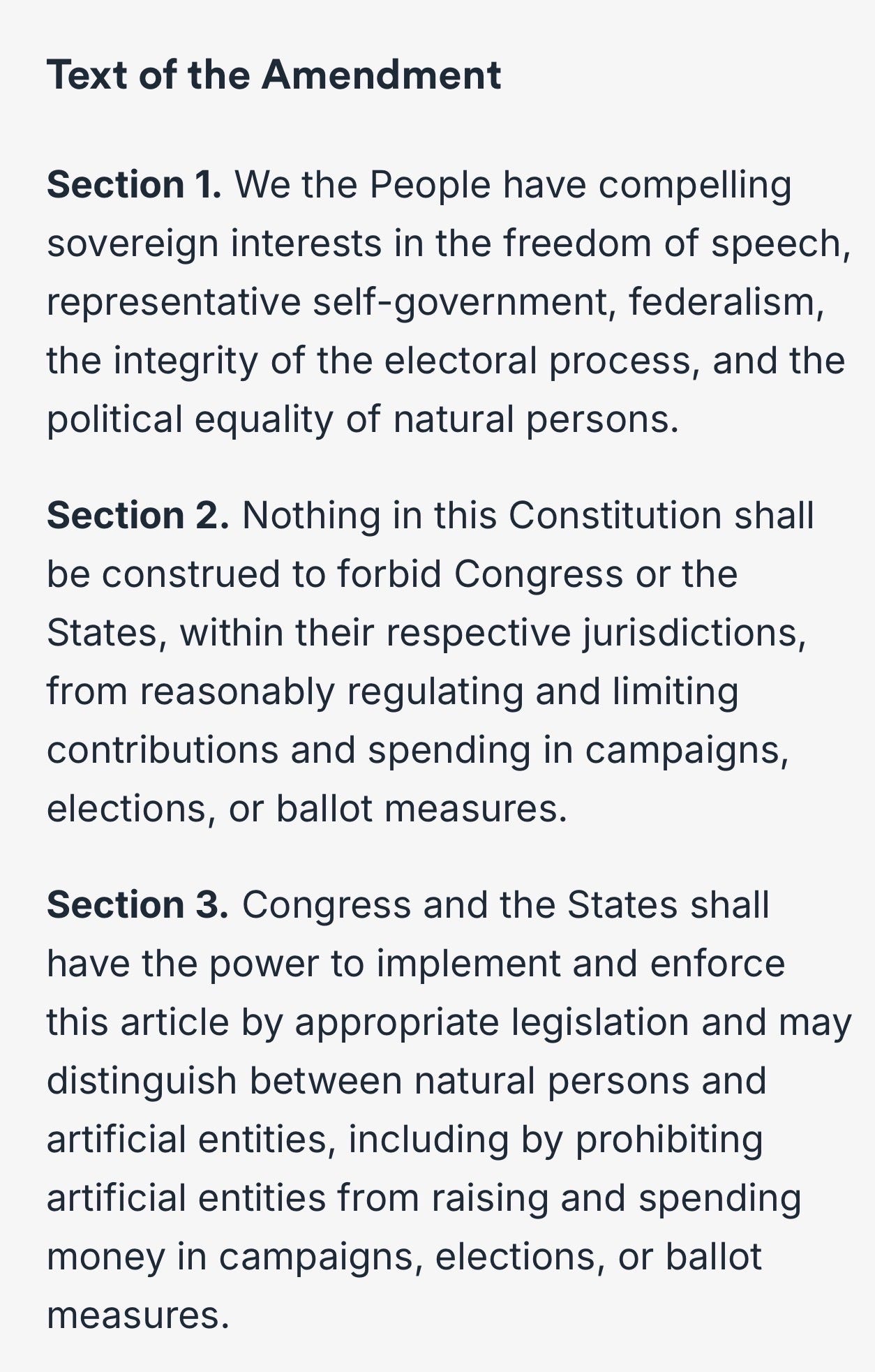
The leading proposal is the For Our Freedom Amendment, led by the nonprofit American Promise. It doesn’t set a limit. Instead, it would allow Congress and the states to limit campaign contributions and spending as they see fit.
Twenty-five states have formally called on Congress to propose such an amendment. Rep. Tom Barrett, a Michigan Republican, introduced it in the House in June.
The bar is high: a two-thirds vote in both the House and Senate, and then ratification by three-fourths of the states.
In 250 years, America has ratified 27 constitutional amendments, and the first 10, the Bill of Rights, came all at once in 1791. The most recent, the 27th Amendment, was ratified in 1992.
But as tough as the road is, there appears to be an appetite. In a 2023 Pew survey, 72 percent of Americans said there should be limits on campaign spending, including 71 percent of Republicans.
Montana is testing a shortcut. On Nov. 3, voters there will decide whether to bar corporations, unions, and other “artificial persons” from political spending by changing what state law empowers them to do. The measure would not reach a billionaire spending his or her own money.
The second way runs the other direction: lift the limits on contributions to candidates. That was Burger’s position in 1976. Let donors give candidates what they want, and make them disclose it. Money would flow to candidates, who answer to voters, instead of to outside groups, which do not. With this, the super PAC would lose its reason to exist. The cost is the one Congress saw in 1974: candidates who owe their campaigns to a handful of donors.
The first path requires the country to act. The Supreme Court has been edging toward the second. On June 30, in NRSC v. FEC, the Court struck down limits on what parties can spend in coordination with their candidates, 6-3, overruling its own 2001 decision. Contribution limits still stand, but the Court appears to be lifting spending limits one case at a time.
The Choice
At different points in American history, when money in politics grew too large to ignore, Congress answered with reform. After the Gilded Age, when corporations poured money into campaigns, Congress passed the Tillman Act in 1907 and barred them from giving to federal candidates. After Watergate exposed widespread illegal campaign contributions, it enacted the limits of 1974.
But that changed in 1976, when the Supreme Court stepped in.
Chief Justice Burger and Justice White warned about what the Court had left behind: a system that limits one side of the line (candidates and their campaigns) and not the other (outside groups). The 50 years since then, with cases like Citizens United and SpeechNow amplifying Buckley, have not proved them wrong.
So the choice is the one they framed: limit the money on both sides of the line, or on neither. Each has a cost.
But the question that comes first: Who chooses? Beginning with Buckley, the Supreme Court walled off specific reforms on First Amendment grounds. Doing the hard work of passing a constitutional amendment would move the decision about campaign spending limits back to Congress and the states.
In the meantime, the cubicles are still there, a short walk from the Capitol. A new class of members will be elected Nov. 3 and arrive in January. Unless something changes, they will learn what the class of 2013 learned: where the phones are.
Prefer to listen? I narrate each edition myself. Scroll up to find the audio version at the top of this page.
Check out previous series:
Solving For takes on one hard problem at a time — unpacking the stakes, exploring the forces behind it, and surfacing real paths forward. Each series unfolds in three parts. Learn more.