


We turn to Part Two in our trilogy on America’s longstanding — and very uneven — effort to control the influence of money in politics. For more than a century, there has been a rhythm to it: money finds its way into politics, public frustration grows, reform follows, then the cycle repeats.
Today we explore how we got here, looking at the recurring cycles of campaign finance reform. But we learn something else: the Supreme Court has made the task harder this time by placing constitutional limits on how far reform can go.
If you missed Part One, you can find it here. Part Three will dive into solutions.
Solving For takes on one hard problem at a time — unpacking the stakes, exploring the forces behind it, and surfacing real paths forward. Each series unfolds in three parts.
This is our 11th series. You can find each series — and they’re available for reading or listening (I narrate each one) — at solvingfor.io. (Was this forwarded to you? Sign up here.)
Today in America, if you’re a candidate for federal office, there are limits on how much anyone can give you, and your campaign must disclose its donors.
But a super PAC that wants to defeat you can raise and spend as much as it wants, taking millions from a single donor, and some of that money can arrive through nonprofits that never reveal their donors’ names.
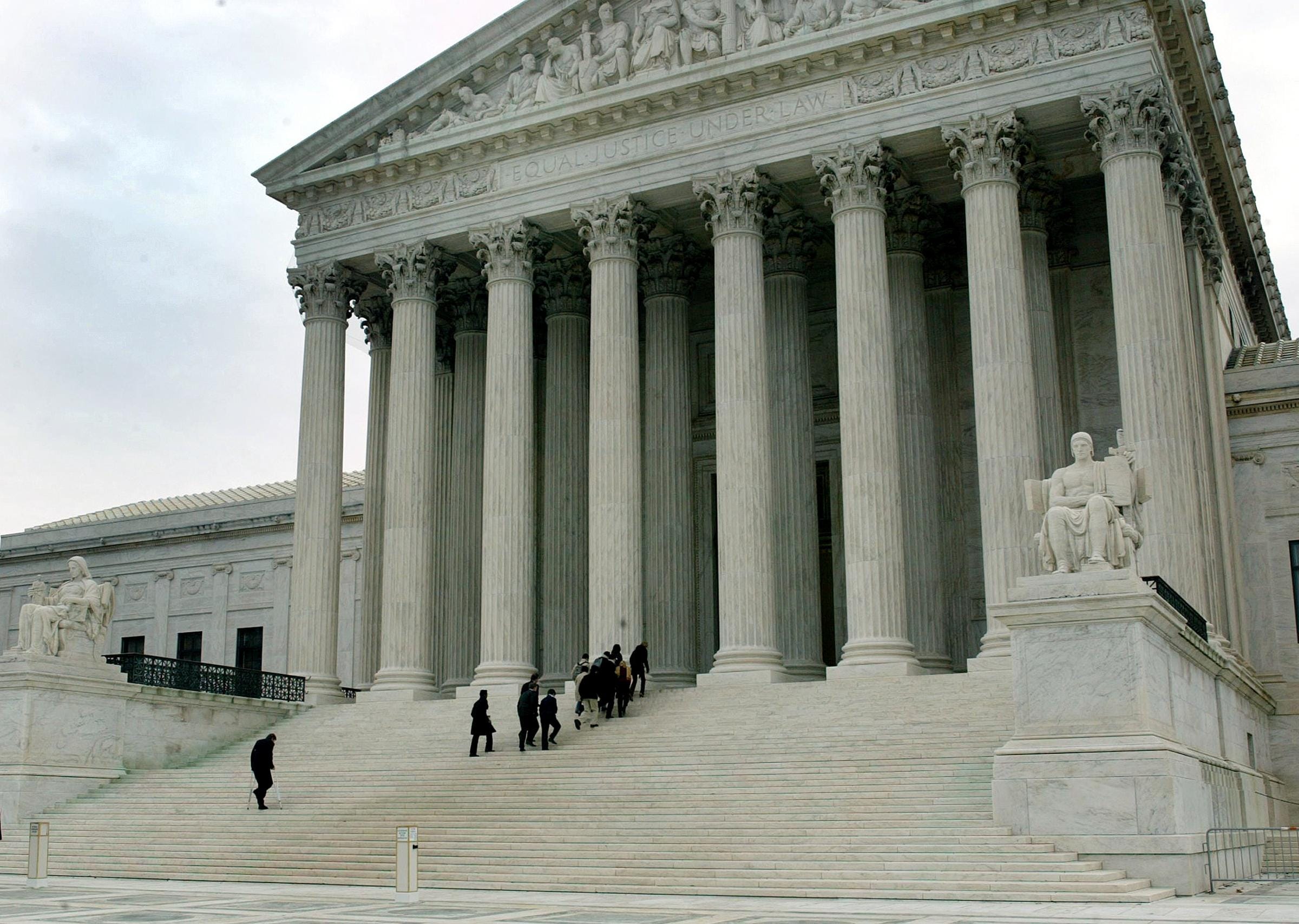
The U.S. Supreme Court set that system in motion in 2010 with Citizens United v. FEC. The ruling and cases that followed opened an era of unlimited, and sometimes secret, outside spending.
The logic: Giving money directly to a candidate risks a quid pro quo, so those donations can be limited. But money spent independently by an outside group like a super PAC can’t be similarly limited, because the group does not coordinate its spending with the candidate.
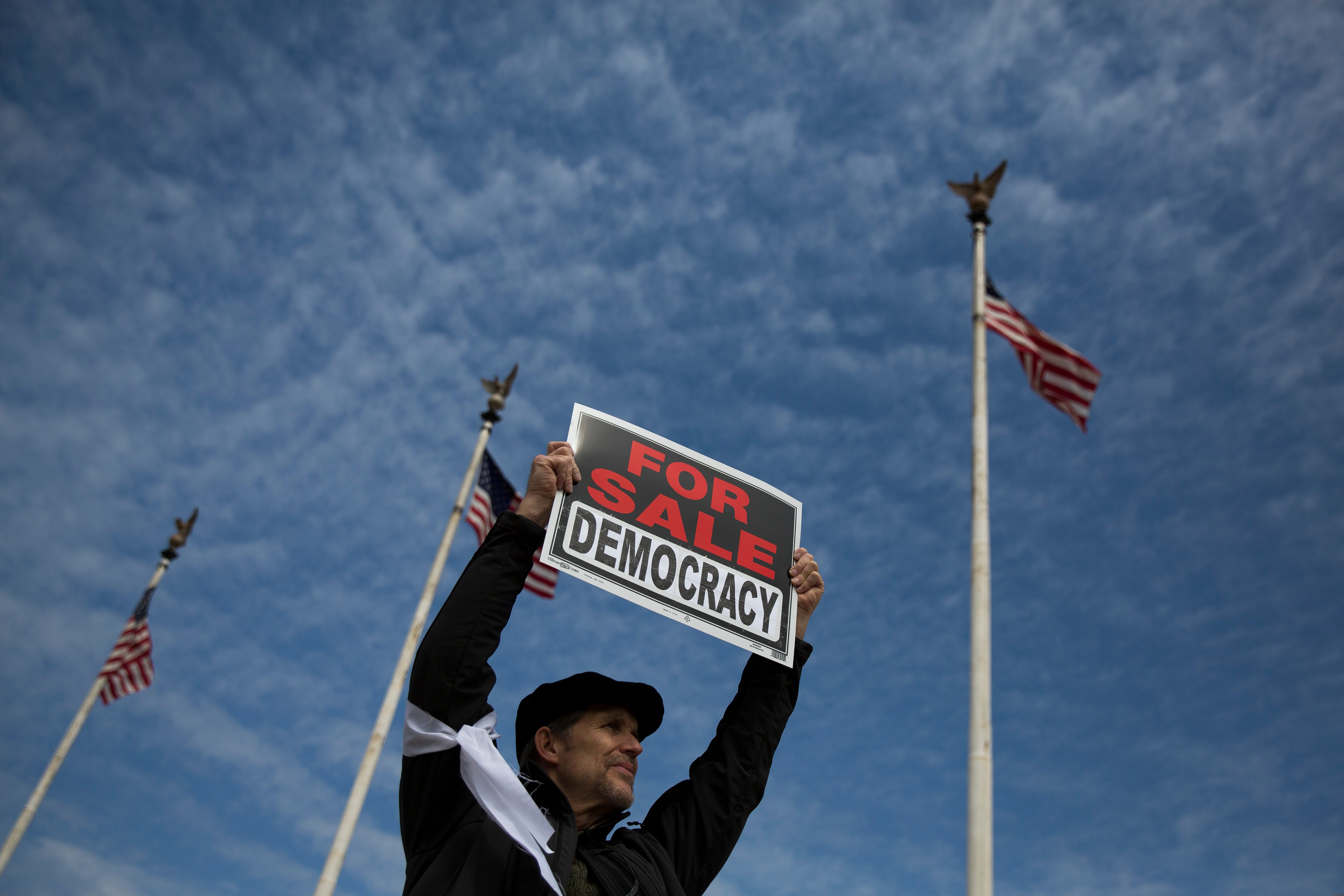
It’s a framework that has made Citizens United one of the Supreme Court’s most controversial and deeply unpopular decisions in the past quarter century. A Brennan Center poll released in June found 75% of Republicans and 84% of Democrats support a constitutional amendment allowing federal and state governments to limit campaign donations and spending.
And it’s a framework that can dramatically reshape elections.
In this year’s Texas Senate race, for instance, Democrat James Talarico raised more than $72 million through June, more than four times the $16.8 million raised by Republican Ken Paxton.
But then super PACs arrived. By late September, Senate Leadership Fund, the super PAC aligned with Senate Republican leaders, had committed $100 million in advertising to support Paxton. Trump’s MAGA Inc. and Elon Musk’s America PAC joined in. In September alone, pro-Paxton ad reservations topped $94 million, against roughly $20 million for Talarico. A candidate who had been outraised more than four to one suddenly had the advantage on the airwaves.
That’s one of the defining features of the modern system: Candidates must raise money contribution by contribution, under federal limits. An outside group can amass the same amount from a handful of wealthy donors or organizations.
Some of it’s hard to trace. Between February and May, Lone Star Liberty, a pro-Paxton super PAC, received more than $1 million from Preserve Texas, a Virginia nonprofit that has not disclosed its donors. It was incorporated by the treasurer of Paxton’s Senate campaign.
And the system rests on a premise that has grown increasingly tenuous: that unlimited outside money stays at arm’s length from the people in power.
In recent years, super PACs have run candidates’ field operations. Campaigns post messages online for outside groups to copy and act on, a practice known as “redboxing,” for the red box that often frames the messages on a website. And, in 2024, federal regulators said candidates could coordinate with outside groups on door-knocking.
Then, on Sept. 4, President Trump declared there is no distance at all.
“This is my money that I control,” Trump said in the Oval Office. He was talking about MAGA Inc., a super PAC that’s amassed some $400 million in unlimited donations and is supposed to operate independently of any candidate or officeholder.
Federal law bars federal officeholders from directing the spending of a group that raises unlimited money. The Campaign Legal Center, a campaign finance advocacy group, has filed a complaint arguing Trump crossed that line. MAGA Inc. calls the complaint frivolous and says it follows the law.
Meanwhile, the agency that enforces campaign finance law can’t act on it.
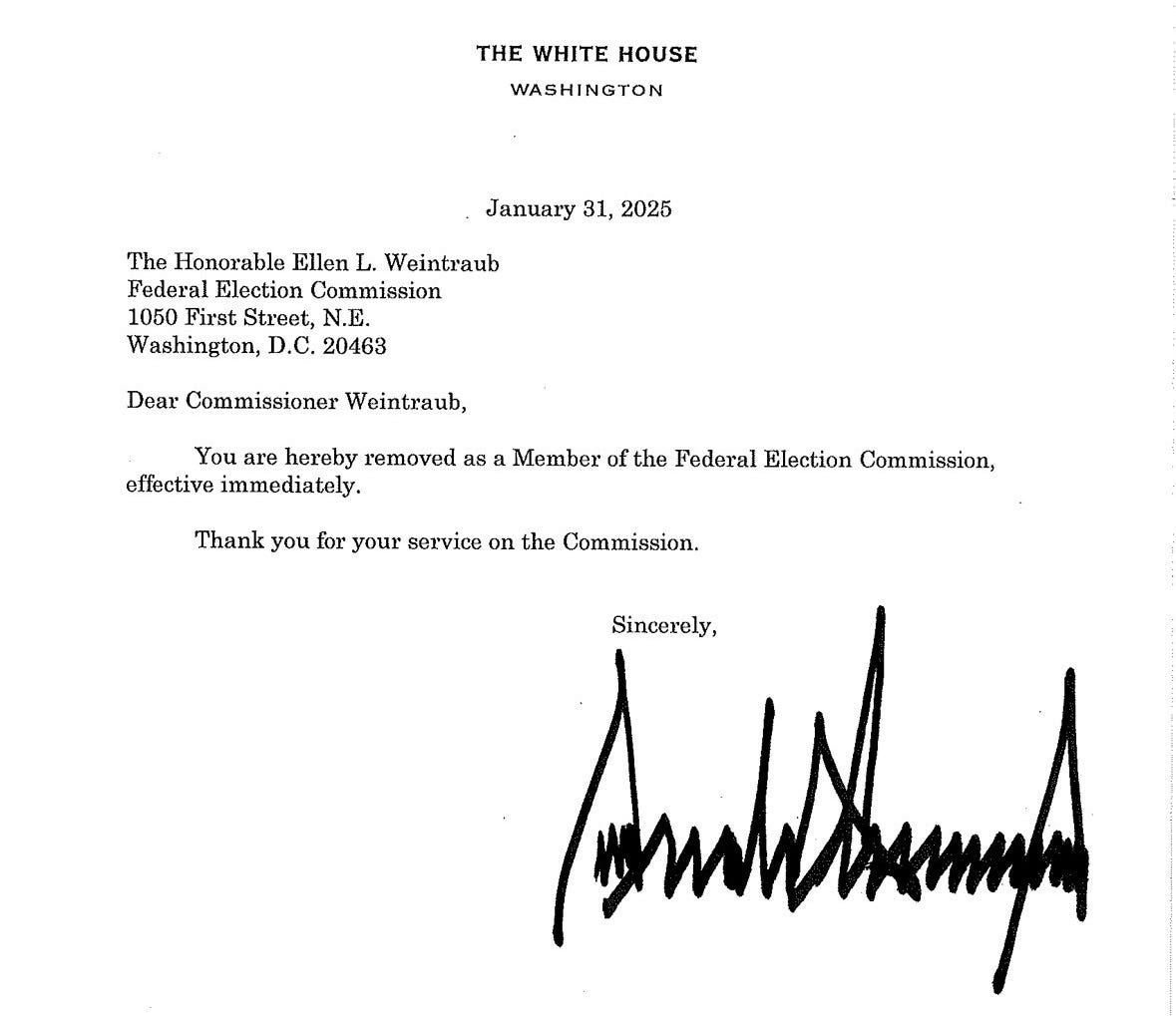
Shortly after taking office, Trump fired the Federal Election Commission’s Democratic chair, Ellen Weintraub, leaving the agency with just the minimum four members it needs to meet. Weintraub called the firing illegal. In April 2025, Republican Commissioner Allen Dickerson resigned and the FEC no longer had a quorum. For more than a year it hasn’t had enough commissioners to authorize investigations or levy fines, and likely won’t through the midterm elections.
It’s the latest episode in the Citizens United era.
The era’s problems extend to some of the deepest anxieties in American life: whether the system is rigged against everyday Americans, whether institutions can be trusted, and whether those with the most money have a louder voice than everyone else.
At its root is a question the country has never settled: What role should money play in a democracy?
Politics’ Oldest Problem
For more than a century, Americans have wrestled with how much power private wealth should have in public elections. There’s been a pattern to it: money finds its way into politics, outrage follows, then reform, and the cycle begins again.
Money has been part of American politics since before there was an America.
In 1755, George Washington lost badly in a race for Virginia’s House of Burgesses. When he ran again in 1758, his supporters turned to a common tactic in colonial Virginia: offering alcohol to voters.
Washington’s election expenses included 46 gallons of beer, some 35 gallons of wine, cider, brandy and rum punch. This time Washington won.
Even then, lawmakers were wrestling with where to draw the line. Virginia had already prohibited candidates from giving voters food or drink to win their votes. But the law still permitted the practice of “treating” voters in some circumstances. It’s an early example of the difficulty in regulating money and influence in elections.
It’s something that would bedevil American democracy for the next two and a half centuries. Running for office costs money, and whoever supplies that money can gain influence over who gets elected and what happens after they enter office.
The First Reform Era
By the late 19th century, the rapid industrialization of the U.S. — the expansion of railroads and the rise of the steel and oil industries — had created vast private fortunes.
The concentrated wealth of the Gilded Age became a defining force in American political life.
In the 1896 presidential election, Ohio businessman Mark Hanna helped lead William McKinley to the presidency by raising large sums from the likes of John D. Rockefeller’s Standard Oil and J.P. Morgan.
Hanna, considered a pioneer in presidential fundraising, is often credited with saying two things mattered in politics: “The first is money, and I can’t remember what the second one is.”
But the influx of giant fortunes into politics raised a basic question: how much influence should wealth have over elections?
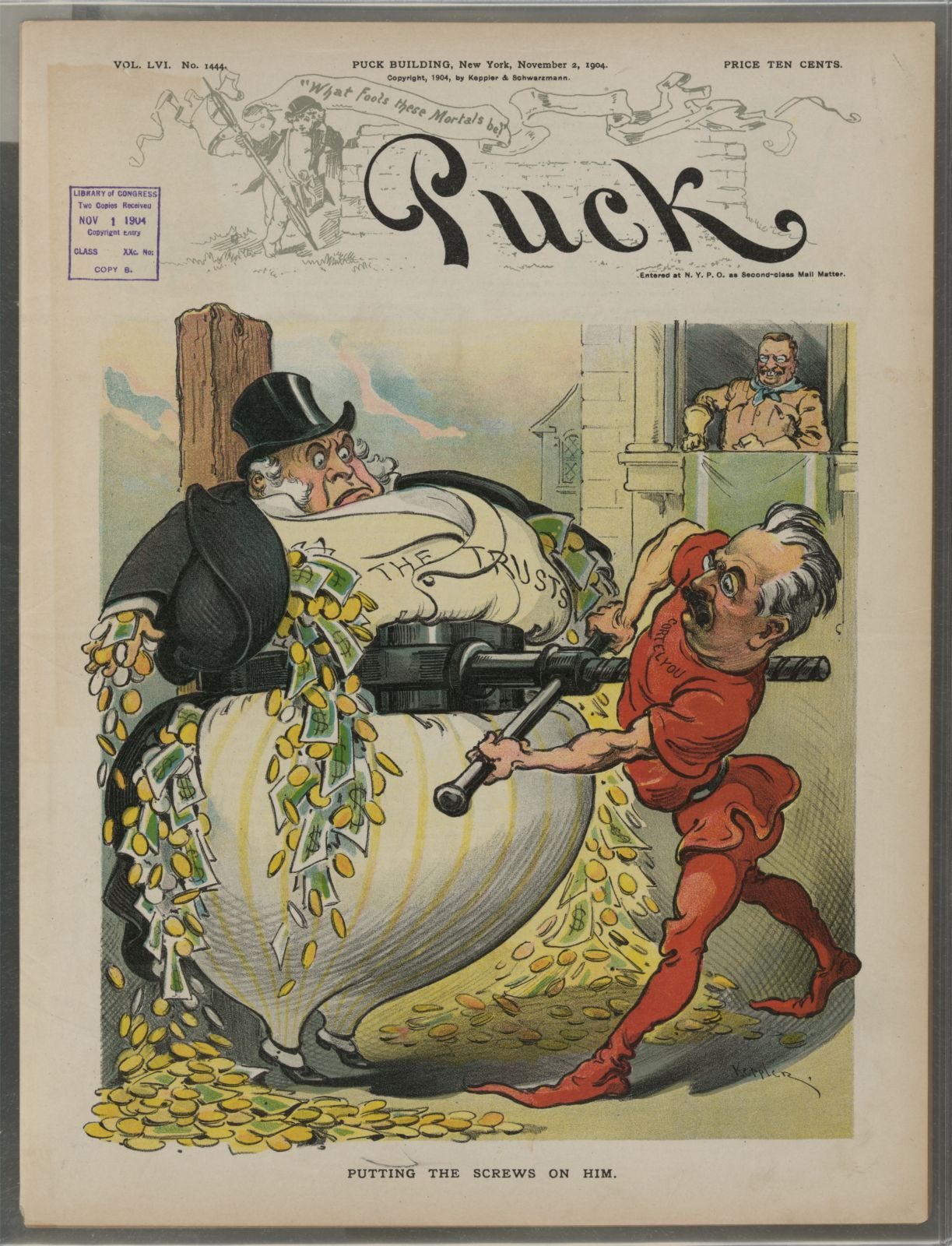
Theodore Roosevelt’s 1904 campaign drew heavily on corporate donations, and public backlash followed. It grew so intense that Roosevelt ultimately called on Congress to ban corporate contributions.
In 1907, Congress followed through and passed the Tillman Act, which banned corporate contributions in federal elections. Three years later, Congress passed the Federal Corrupt Practices Act. It imposed disclosure requirements in House races; Congress extended them to Senate elections in 1911.
The reforms reflected an increasingly widespread conviction that voters should know who was funding campaigns and that enormous wealth should not be able to buy political influence.
Post-Watergate Reforms and the First Amendment
Through much of the 20th century, Congress kept adding rules and money kept finding new routes. When Congress restricted union contributions in 1943, unions invented a workaround: the political action committee, funded by voluntary contributions from members. Corporations and other groups eventually did the same.
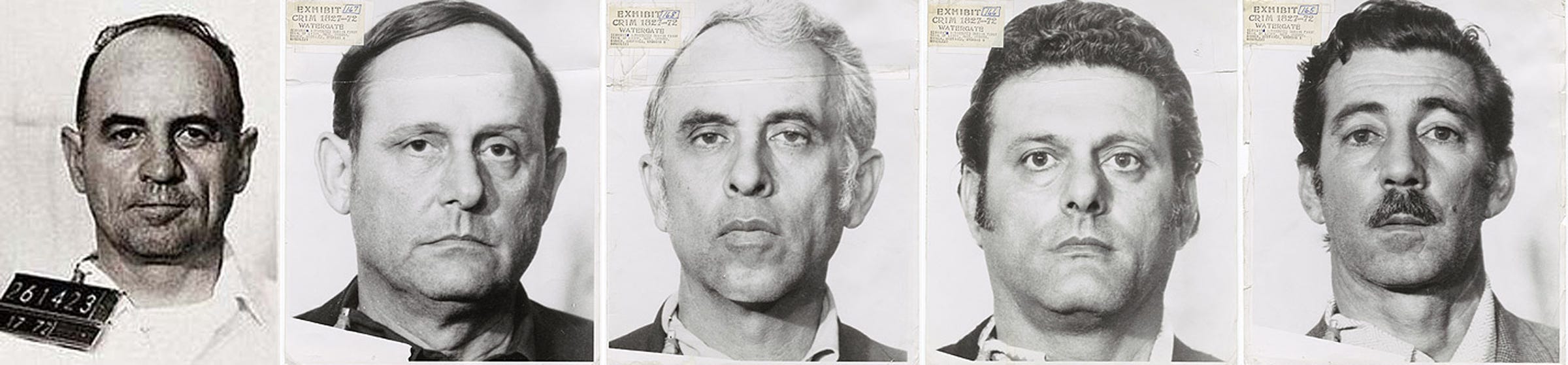
Then Watergate happened.
Investigations into President Richard Nixon’s 1972 reelection campaign revealed large contributions made to influence policy and buy ambassadorships. Nixon was recorded saying anyone who wanted to be ambassador “must at least give $250,000.” There were illegal corporate donations and a secret slush fund that paid for the Watergate burglars, along with “hush money” to cover it up.
Congress responded in 1974 by rewriting the Federal Election Campaign Act. The new law created a comprehensive framework regulating money in federal elections. It capped contributions to candidates, limited campaign spending, strengthened disclosure requirements, and created the Federal Election Commission to enforce it all.
Congress also put in place public financing of presidential campaigns. Beginning in 1976, nominees who accepted public money agreed to limit their spending. Gerald Ford and Jimmy Carter each took about $21.8 million and raised no private money for the general election.
As it happened, that reform would ultimately fall victim to private money. In 2008, Barack Obama became the first major-party nominee to turn down the public money in a general election because he could raise much more from private donors. The program still exists but competitive candidates stopped using it.
But even as Congress in the 1970s was building its most extensive set of rules yet, the Supreme Court was drawing limits around what government could do.
In 1976, in Buckley v. Valeo, the Court established a constitutional distinction between two kinds of money in political campaigns.
On the one hand, the Court upheld limits on direct donations to a candidate. Large contributions directly to a candidate, it reasoned, could create corruption or the appearance of corruption. So Congress can reasonably limit them.
But, on the other, the Supreme Court struck down limits on spending — for instance, independent spending by outside groups or even a candidate spending personal funds — saying such limits violate the First Amendment. The justices reasoned that limiting political spending restricts political speech, because communicating a political message almost always requires spending money.
From that point forward, American campaign finance law developed along two tracks. Money going into campaigns could be regulated, but money spent independently of candidates and their campaigns, even if for the same cause, generally could not.
The cycle would continue — but now the Supreme Court had added constitutional limits to reforms.
McCain-Feingold
By the 1990s, there was an explosion in “soft money” — money political parties raised outside the normal federal contribution limits and used for things like voter-registration drives and general party advertising. Corporations, unions and wealthy donors were also paying for ads that stopped just short of telling viewers how to vote.
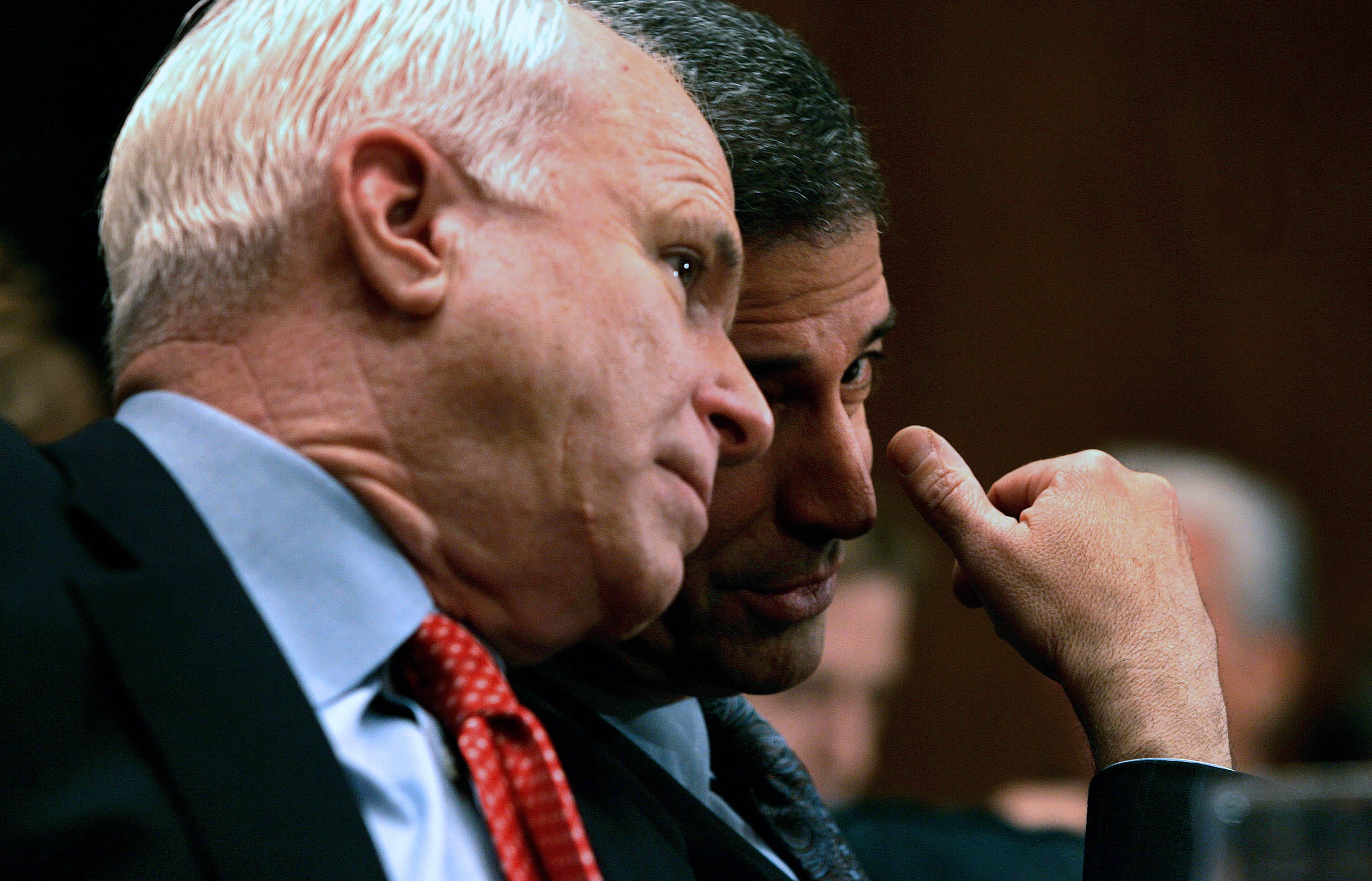
U.S. Senator John McCain said the soft money system “made a mockery of the law.”
In 2002, McCain, an Arizona Republican, and Senator Russ Feingold, a Wisconsin Democrat, pushed through the Bipartisan Campaign Reform Act. Known as McCain-Feingold, the law banned national political parties from raising soft money and restricted corporate and union funding of broadcast ads close to elections. It was widely seen as the most significant rewrite of federal campaign finance law since Watergate.
A New Cycle, A Harder Challenge
But the tensions created by Buckley lingered.
If spending was necessary for political speech, how far could the government restrict who spends it? And why should a corporation or union not be able to express its views under the First Amendment like an individual?
Those questions reached the Supreme Court in 2010.
In Citizens United, a 5-4 majority held that the government could not bar corporations and unions from spending their own money on independent political advocacy. And because independent spending wasn’t coordinated with a candidate, the majority concluded, it didn’t create the kind of quid pro quo corruption that justified limits.
In other words, not only were corporations and unions no longer barred from making independent expenditures, they could make them without limit.
Two months later came the final piece.
In SpeechNow.org v. FEC, a federal appeals court applied Citizens United to groups that do nothing but independent spending. If that spending couldn’t corrupt candidates, the court reasoned, then donations to those groups couldn’t be limited either.
The super PAC was born.
More than a century after Theodore Roosevelt called for limits on corporate political money, and more than two centuries after George Washington bought rum punch for Virginia voters, campaign finance law is now at a new place.
Give money directly to a candidate, and the government can limit how much you give. Spend money independently to elect that candidate, and there is no limit on how much you can spend.
Previously, when money was injected into politics in ways people didn’t like, Congress could pass new laws. That happened with the Tillman Act in the early 1900s, the Federal Election Campaign Act amendments in the 1970s after Watergate, McCain-Feingold in the early 2000s.
What’s different this time is that the barrier isn’t a statute Congress can rewrite. As a result of Citizens United, and then SpeechNow, it rests on the Supreme Court’s interpretation of the First Amendment. Changing that requires a reinterpretation by the Supreme Court, or a constitutional amendment.
Congress has tools it can use. It can require disclosure. It can fund campaigns publicly. It can limit direct contributions to candidates. But when it comes to independent political spending, the limits are on what Congress can do.
The cycle is playing out again today. Money is finding its way into politics in new ways. Public polling shows deep unhappiness. But, this time, the old solution — legislation — is not enough.
The old cycle remains. The way out has changed.
Prefer to listen? I narrate each edition myself. Scroll up to find the audio version at the top of this page.
Check out previous series:
China’s Rare Earth Dominance | AI Safety | Decline of Local News | End of Amateurism in College Sports | Shrinking Competition in Congress | Social Media and Teen Mental Health | A World Rearming as the Global Rules-Based Order Weakens | America’s National Debt Crisis | Reinventing the American Dream | The New Space Age
Solving For takes on one hard problem at a time — unpacking the stakes, exploring the forces behind it, and surfacing real paths forward. Each series unfolds in three parts. Learn more.