


This week I’m continuing my recovery from surgery to repair a broken collarbone. Things are going great, but this post comes without my usual narration. If you’d rather listen, Substack’s AI audio version is available.
With the U.S. midterm elections on Tuesday, and as we gear up for our next series — on the revolution in biology — I’ve written an essay on the politics of solving problems. Tackling the problems of the moment is, of course, the priority for any political candidate. It’s what wins elections. Yet solving longer-term challenges builds futures, even if voters don’t often reward it. As we pick new leaders, the question is whether the people we elect can do both. Looking back on the 11 series we’ve published, I came up with a list of potential solutions to stubborn problems.
Solving For is for people who want to dig into hard problems and explore solutions — unpacking the stakes, examining the forces, and surfacing paths forward. We’ve published series on topics ranging from rare earth elements and space to the American Dream. You can check them out at solvingfor.io.
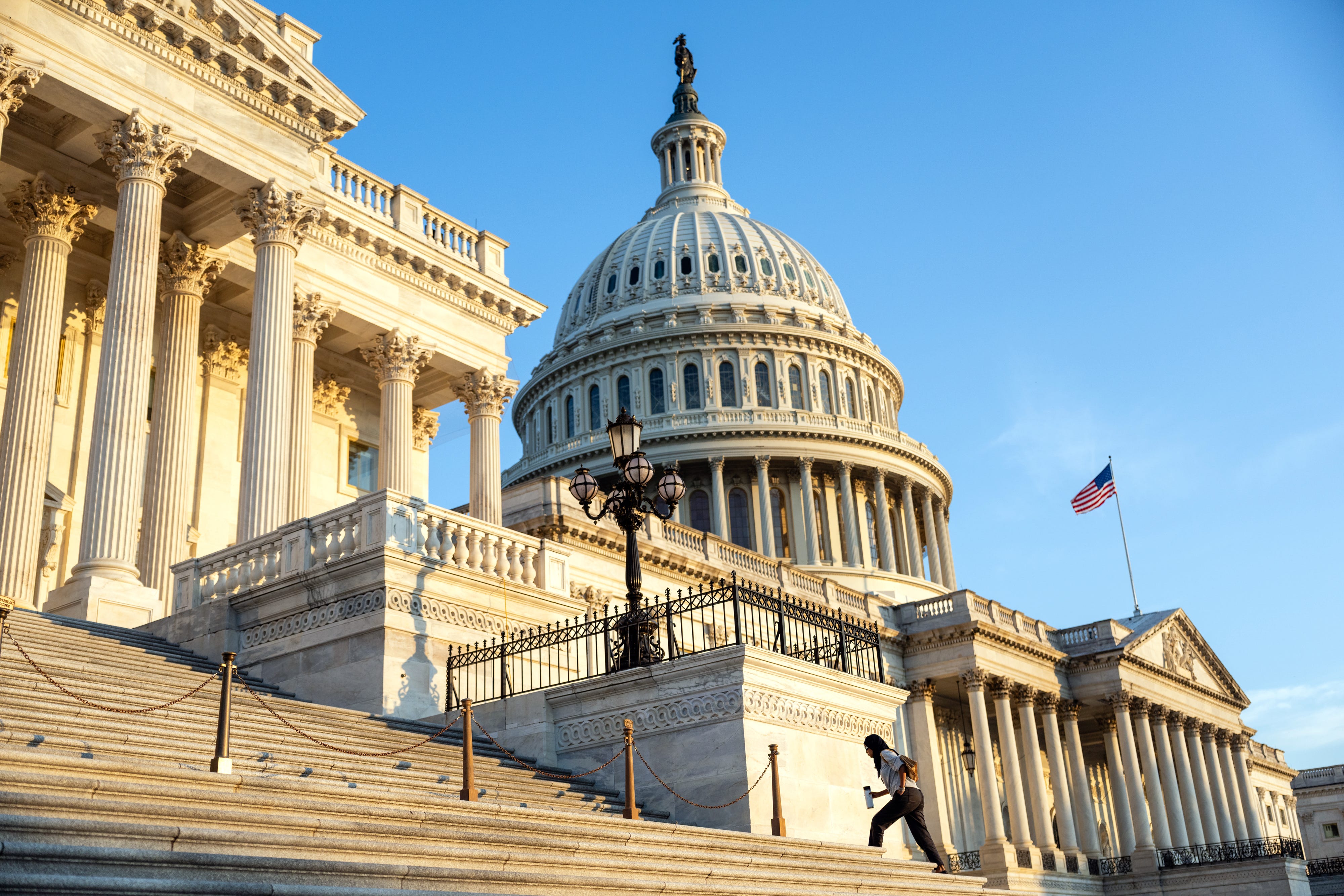
On Tuesday, voters will decide who holds power in Congress. For most, that decision turns on life today: the cost of gas and groceries, the affordability of healthcare, whether they think leaders are acting in the public’s interest or their own.
That’s how it should be. Political leaders should be judged on problems people are dealing with now.
Yet many of the challenges shaping our future run on a much longer time frame. The federal government’s debt is larger than the entire U.S. economy. Trust in government is so low that a Pew survey found fewer than 1 in 5 Americans trust Washington to do what’s right. Social mobility has been at the heart of the American ideal, yet the odds are no better than a coin flip that a child today will earn more than their parents. For children born in 1940, it was a near certainty — 9 in 10.
These challenges aren’t separate from what voters feel today. Often, they’re part of the cause. But solving them requires something elections rarely reward: action now for a payoff that comes much later. So they often get put off, election after election.
That deferral has costs. When problems never seem to get solved, people start to doubt they will ever be. The longer that goes on, the more people doubt the system too.
Historian Gary Gerstle describes American politics as being defined by “political orders”: sets of ideas and policies broadly accepted across many elections.
The New Deal order, launched under Franklin Roosevelt, shaped American life from the 1930s into the 1970s. It created Social Security, insured bank deposits and later established Medicare. Republicans, from Eisenhower onward, largely accepted it.
The neoliberal order emerged in the 1970s and took hold under Ronald Reagan. It emphasized tax cuts, deregulation, and expanded trade through NAFTA and China’s entry into the World Trade Organization. Democrats carried it forward. Bill Clinton declared “the era of big government is over.”
That order broke in the 2010s, and now we’re in an in-between moment. No one has yet won the argument over what comes next. How we handle the problems we keep putting off will help decide who does.
Meeting today’s needs while building for tomorrow is hard in any era. Yet it’s been done before, even in far worse circumstances.
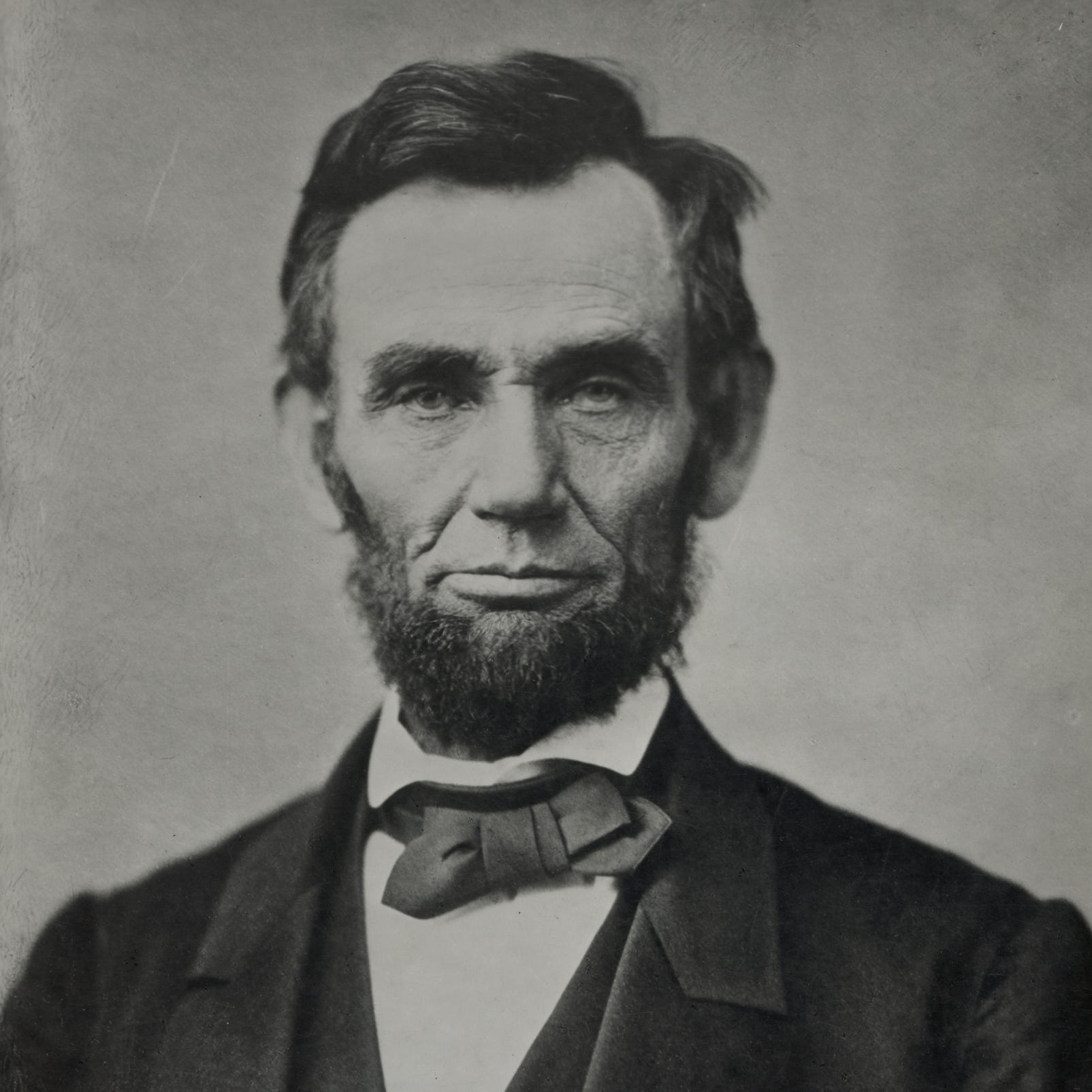
In 1862, the Civil War raged and the country’s survival was in doubt. The Union Army suffered heavy casualties at Shiloh and in the Seven Days Battles. Morale wavered across the North. Yet that year, Abraham Lincoln signed three laws that looked well beyond the war.
On May 20, he signed the Homestead Act, driving settlement in the West in what would become one of the largest transfers of land to ordinary Americans in U.S. history. On July 1 — the final day of the Seven Days Battles — he signed the Pacific Railway Act, authorizing the first transcontinental railroad. When it was finished, in 1869, a trip across the country that once took months took roughly a week. On July 2, Lincoln signed the Morrill Act, which created land-grant colleges. Today, 57 universities, from Ohio State to Cornell, trace their roots to it.
Even in the middle of the war, Lincoln and Congress were building the country that would follow.
That’s the challenge now: not just to take on long-term problems, but to build solutions to survive the next election, and the one after that.
The trouble is, our public conversation isn’t especially fluent in solutions to our stubborn, longer-term challenges. We’re far better at naming what’s broken than at knowing what to do. Solving For was started because I wanted to understand what we can do, and how we can build that future.
Which got me thinking. If we drew up a list of solutions from our first 11 series, what would it include?
The answers fall into three broad areas: making democracy work, widening the path to ownership and opportunity, and harnessing the technology revolution.
None of these problems will likely be solved in the next Congress, or the one after it. But that’s the point: hard problems need time, and that means starting now.

Make Democracy Work
A well-functioning democracy depends on competitive elections, informed voters, and influence that can’t simply be bought. Yet, each is under strain.
Limit money in politics. In 2024, 300 billionaires and their immediate families accounted for nearly one-fifth of reported federal contributions, according to an analysis by The New York Times. Before 2010, when Supreme Court rulings cleared the way for super PACs, that share was less than 1%. The legal roots go back to Buckley v. Valeo in 1976, when the court ruled that limits on political spending are limits on speech. Because that’s a constitutional ruling, Congress can’t change it by passing a law. But a 28th Amendment could, giving Congress and the states the authority to set limits on campaign spending. The nonprofit American Promise is leading an effort to do this. Amending the Constitution is hard and time-consuming; it hasn’t been done since 1992. But it has been done 27 times.
Make elections competitive again. In 2024, fewer than 1 in 10 races for the U.S. House of Representatives were decided by 5 points or less. One reason safe seats persist is that the lawmakers who draw the district lines are the ones who benefit from them. When districts are safe and competition goes down, partisanship often goes up. Three fixes: ban partisan gerrymandering, open primaries to all voters, and adopt ranked-choice voting, which pushes candidates to seek support beyond their base.
Rebuild local news. Since 2005 nearly 40% of local newspapers in the U.S. have closed. When a community loses its newspaper, the impacts cascade: scrutiny goes, accountability crumbles, civic engagement declines, connections fray, trust erodes, polarization increases. Nonprofit newsrooms like The Salt Lake Tribune and The Baltimore Banner show another model works. Scaling it will take more philanthropy, and government can help through tax credits and state funding.

Widen the Path to Ownership and Opportunity
James Truslow Adams coined “the American Dream” in 1931. He defined it not as wealth, but as the chance for everyone to reach their full potential, regardless of circumstances at birth. In the middle of the last century, generational advancement had become a near certainty. But now it’s 50-50.
Baby bonds. A publicly funded account at birth, growing until adulthood, would give every child a head start. In an Oklahoma experiment, a study found that children given accounts didn’t just accumulate more savings for college or a future down payment — but parents were more hopeful about their child’s future and had stronger educational expectations. Evidence suggests that baby bonds programs work best when they’re universal, automatic and progressive. Connecticut launched a program in 2023. The Trump administration pushed Congress to create a baby bond program, calling it Trump Accounts. It’s a start, though directing more support to children from lower-income families would bring it closer to the baby bonds model. And a program named for a sitting president likely won’t survive when power changes hands. Give it a name everyone can get behind, so it lasts.
Fair rules. A thriving economy should reward work as much as wealth. Yet income from work is taxed more heavily than income from investment. The top federal income tax rate on wages is 37%. On long-term investment gains, it’s 20%. Supporters say lower rates on investment encourage saving and growth. But as more fortunes are built through stock holdings rather than a paycheck, the system increasingly rewards wealth over work. Venture capitalist Vinod Khosla told The Wall Street Journal this summer that capital gains and ordinary income should be taxed “the same.” OpenAI made a similar argument in an April paper. The deeper issue isn’t just economic; it’s about fairness too.
Building, not blocking. The 2025 bestselling book, Abundance, by Ezra Klein and Derek Thompson, made the case that well-intentioned regulations have made it difficult to build the homes, energy projects, and infrastructure people need. The result: fewer homes, higher prices and diminished opportunity. Occupational licenses, meanwhile, cover nearly a quarter of the U.S. workforce today, up from 5% in the 1950s. An Obama administration report found excessive licensing can raise prices and restrict employment opportunities. The fixes include reducing unnecessary hurdles to building homes and infrastructure, and to building a career.

Harness the Technology Revolution
AI is arriving faster than the rules meant to govern it. Two decades ago, when social media arrived, government took a hands-off approach. Leaders of frontier AI labs — Anthropic’s Dario Amodei, Google DeepMind’s Demis Hassabis, among them — say that posture won’t work this time because the risks are too great.
AI safety through U.S.-China agreement. The two countries leading AI development are also rivals. Each fears that slowing down will hand the other the lead. It’s a prisoner’s dilemma. Meanwhile, the two major risks that AI leaders warn about are misuse and the loss of control. During the Cold War, the U.S. and Soviet Union faced the same dilemma in the nuclear arms race. Eventually, each side realized there was a larger, shared risk by not establishing guardrails. They built hotlines and verification systems. In 1968 they signed the nuclear Non-Proliferation Treaty. In September, the U.S. and China agreed to open a channel for AI incidents. It’s a step. Now is the time to go further.
Rein in social media for teens. Meta became one of the world’s most valuable companies by winning the continual attention of more than 3 billion people. The social media giant targeted children as young as 10. Researchers, such as Jonathan Haidt, connect the rise in social media to the surge in teen depression, loneliness and anxiety. In 2024 the U.S. Surgeon General urged Congress to require warning labels on social media platforms, like those on cigarettes. In December 2025, Australia became the first country to ban children under 16 from social media. In August, Meta agreed to pay states up to $17.1 billion and make changes to its products. Yet, there is more to do. Pass the Kids Online Safety Act. Adopt age-appropriate design codes. Make schools phone-free. Shift the norm to no social media before 16. No single step fixes the problem. Together, they can change what’s become normal.
Rare earths independence. China dominates the mining and processing of rare earth elements that go inside everything from smartphones to fighter jets. It built its position over decades. Closing the gap starts with four steps: rebuild domestic mining and processing, partner with allies who have mining and processing capacity, boost rare earth recycling, and reinvest in materials science at U.S. universities to drive the next breakthroughs.
Deciding What’s Next
There are, of course, many other problems to solve, from the national debt to affordable healthcare. What they share is that they require sustained effort, with payoffs potentially years away, but consequences that are enormous.
Gerstle’s insight is that political orders, once won, last for decades. The New Deal won the argument that government should protect people from the worst economic shocks. The neoliberal order won the argument that markets, freed from government, would deliver growth, though the gains were unevenly shared. The next order will be decided by whoever makes the more convincing case for what comes next. Ideas to solve our most stubborn problems are a place to start that argument.
And the solutions that last are built so others can carry them forward, long after the people who started them have moved on.
Lincoln signed the Morrill Act with the outcome of the war still in doubt. He couldn’t have known that Ohio State, Cornell, and dozens of other universities would grow from it. He signed it anyway.
On Tuesday, we’ll rightly judge candidates on the here and now. Then we should ask the people we elect what they’re building for what comes next.
CHECK OUT PREVIOUS SERIES: