


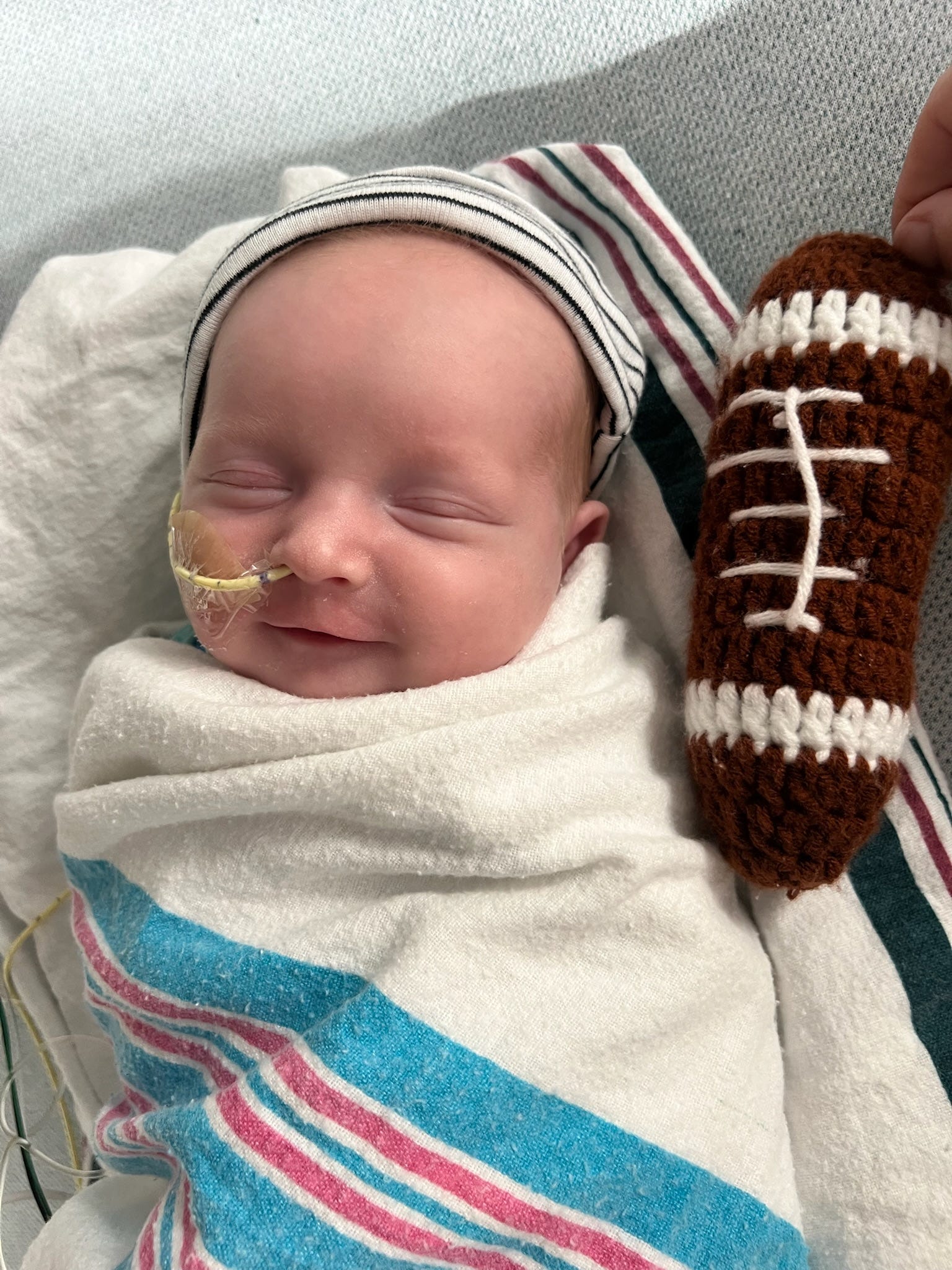
Biology is changing from a science that studies life into one that can redesign it. Gene editing, mRNA and AI have converged, and the result is cures that would have seemed impossible a decade ago — including one built in six months for a single baby.
I wanted to understand what’s happening and what it means. This series is the result. Today, we start with the promise and its risks. Next week, how we got here. The week after, ways forward.
One note: an AI audio version is available now; my narrated version follows shortly.
Solving For is for people who want to dig into hard problems and explore solutions — unpacking the stakes, examining the forces, and surfacing paths forward. We’ve published series on topics ranging from rare earth elements and space to the American Dream. You can check them out at solvingfor.io. (Was this forwarded to you? Sign up.)
Over the past century, scientists have remade matter and split the atom. Now, they’re rewriting life.
In the early 1900s chemistry gave us plastics, synthetic rubber, and the fertilizer that transformed farming. By the mid-20th century, physics gave us nuclear power, machines that let doctors see inside the body, and the transistor, which computing, the internet, the smartphone and AI all rest on.
In the first half of this century, it’s biology’s turn.
Three advances have come together. First, CRISPR gave us a way to rewrite specific letters in our DNA. Second, mRNA gave us a way to tell our cells what to build. And, third, AI gave us a way to predict which approach is most likely to work.
Together, they're changing biology from a science of understanding life into one increasingly capable of redesigning it.
Most are still in trials. But the result is gene editing that targets disease at its source, from a mutation in a single baby to an early trial aimed at inherited high cholesterol that puts millions at risk. It’s personalized vaccines and engineered cells that teach the body to fight its own tumors, or to stop attacking itself in diseases like lupus. And AI is shortening the search for new drugs.
Companies are betting on it. In its filing to go public, ahead of what could be among the largest IPOs in history, the AI company Anthropic wrote: “First, we believe that AI will profoundly accelerate the rate of progress in biology and medicine.” In April, the company spent some $400 million acquiring the biotech startup Coefficient Bio. It’s also built a molecular biology lab of its own.
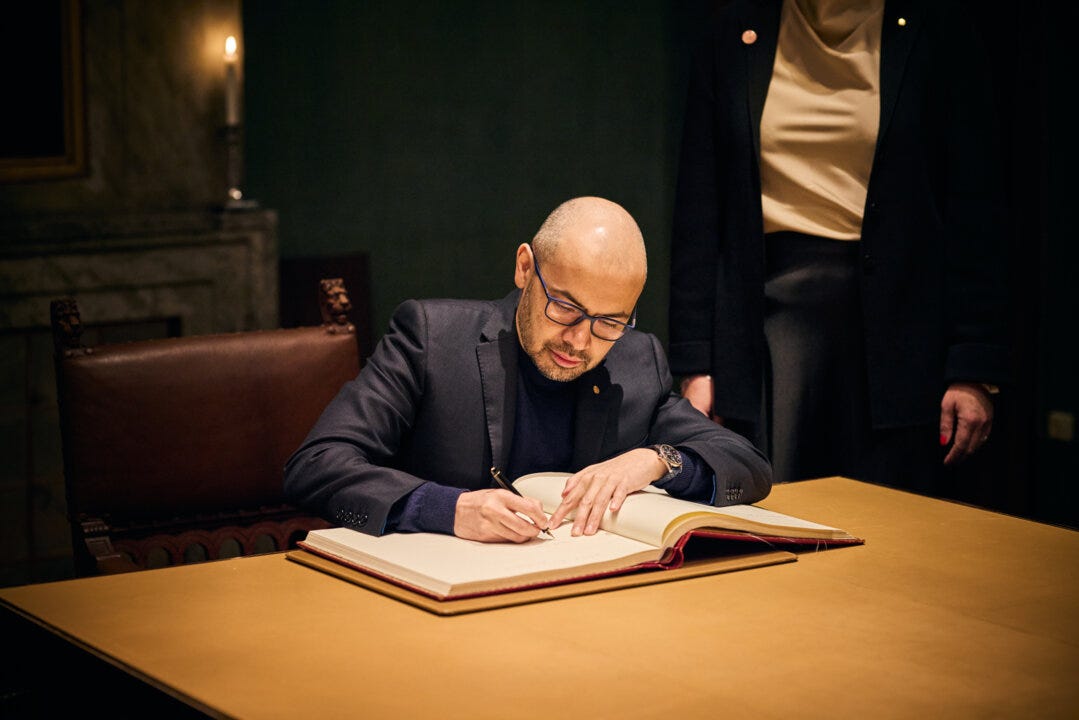
Demis Hassabis, the Nobel laureate who co-founded Google DeepMind and launched AlphaFold, was asked last year on 60 Minutes whether AI could end all disease. He said it was within reach, “maybe within the next decade or so.”
The central question is how to get the cures this new age promises to everyone who needs them, without opening the door to harm.
Life-improving scientific advances have often brought life-risking ones. Sometimes from the very same scientists.
German chemist Fritz Haber created the fertilizer process that helps feed billions, then led Germany’s poison gas program in World War I. Italian-born physicist Enrico Fermi built the first nuclear reactor, then helped build the atomic bomb.
For biology, today’s risks run in several directions.
There is the risk of someone engineering a dangerous pathogen on purpose. This week at FT’s Future of AI Summit, Bill Gates warned that the technology could be used to cause a pandemic “significantly worse than COVID.”
Even without bad intent, a flawed gene edit or a lab accident can’t be easily recalled once it’s set loose.
Gene edits of an embryo don’t just affect that person but can pass to every generation that follows, raising ethical questions.
And there are questions of privacy and government control. A bipartisan commission created by Congress reported last year that China has collected DNA from Uyghur Muslims on a mass scale, using it to identify and track them as part of a broader campaign of repression.
Three things make these dangers harder to manage. AI is speeding the work up. More people can do it. And a rapidly escalating race with China to lead in biotech means no country wants to be the one that slows down. The same commission warned that if China reaches biotech’s “ChatGPT moment” first, “we will never catch up.”
With chemistry and physics, the rules came after the damage. Biology, fueled by AI and geopolitical competition, may not give us that much time.
Three stories show what’s at stake. One begins with a newborn in Philadelphia. Another with a mother in Mississippi. And the third with a scientist in China who decided the rules didn’t apply to him.
The Promise: The Story of KJ Muldoon
It began in a hospital room in Philadelphia in August 2024 when a neonatologist caring for a newborn named KJ Muldoon suspected something was wrong.
Tests showed KJ couldn’t process protein. Ammonia had built up in his blood. At high levels, ammonia can lead to brain damage and death.
KJ had a rare genetic condition called CPS1 deficiency. About 1 in 1.3 million babies are born with it. A liver transplant was the best treatment, but he was too small and too unstable to have one yet, and only about half of babies survive long enough to get one.
Doctors at the Children’s Hospital of Philadelphia offered KJ’s parents an option that had never been tried on anyone: a gene-editing therapy built for him alone. Dr. Rebecca Ahrens-Nicklas, at CHOP, and Dr. Kiran Musunuru, at Penn Medicine, had been working toward this for several years.
KJ had inherited a broken copy of the same gene from each parent. In each, a single misspelled letter of DNA told his cells to stop building a liver enzyme before it was finished. The doctors set out to fix one letter.
No human liver cells carried KJ’s mutation, so the team grew their own and tested versions of the editor until one worked. Then they asked the FDA for permission to treat a single patient. It was granted in a week.
The therapy was named for him: kayjayguran abengcemeran. It arrived as instructions rather than a finished drug, infused into a vein and carried to the liver, where his own cells built the editor and made the change. He got his first dose six months after his birth.
Within weeks of a second dose, he needed half as much of the medication keeping his ammonia down, and he could eat more protein. He got through two stomach illnesses without a crisis, something he couldn’t do before. In June 2025, after more than 300 days, he went home for the first time.
KJ is the first person treated with a personalized CRISPR gene-editing therapy. His doctors say it is too soon to call him cured. The treatment was designed specifically for him and will probably never be used again.
In December 2025, when Nature released its annual list of the 10 people who shaped science, it included KJ Muldoon.
The Access Gap
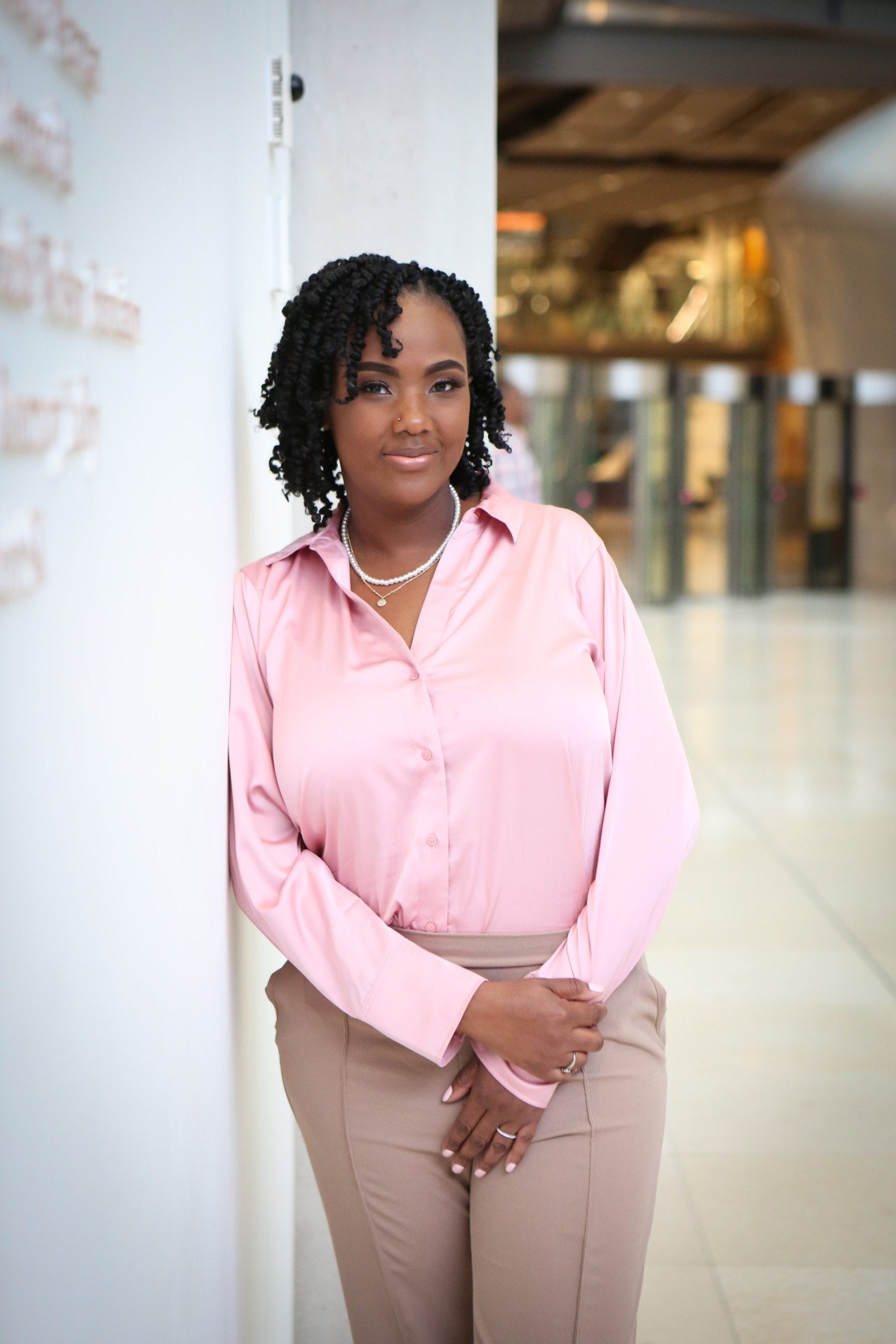
Victoria Gray was diagnosed with sickle cell disease at three months old, and had her first pain crisis the same month. She grew up sitting out gym class. As an adult, she needed a personal care assistant to help dress her and make her children’s beds. When her family bought the kids a trampoline, she couldn’t get on it.
In July 2019, at 33, she became the first person in the world treated with a CRISPR-based therapy for sickle cell. Months later, after tapering off her pain medication, she woke up one morning in a quiet house and felt nothing at all.
“My immediate reaction was, oh my God, I’m dead,” she told Personal Genetics Education & Dialogue this year. She pinched her face and her thighs. She called her children into the room so she could touch them.
She is 40 now, and a grandmother. She said she has raced her sons across the backyard and jumped on that trampoline without ending the day in a hospital.
The therapy she helped prove works. It reached the market in December 2023 as Casgevy, the first CRISPR therapy for sickle cell disease approved in the United States. In 2025, 64 people completed treatment. Vertex says about 300 began the months-long process, and expects the pace to accelerate.
About 100,000 Americans have sickle cell disease, more than 90% of them Black. At that pace, reaching everyone who needs it will take decades. Worldwide the number is nearly 8 million, with roughly 80% in sub-Saharan Africa.
The obstacle isn’t necessarily insurance; Vertex says about 90% of U.S. patients have reimbursed access. It’s the infrastructure needed to deliver the treatment: weeks in the hospital and months of appointments, at one of roughly 48 centers nationwide. Many patients live far from those centers. With the treatment costing $2.2 million a patient, there is little incentive to build more.
Globally, it’s even further out of reach for most. Obiageli Nnodu, who directs a sickle cell program at the University of Abuja in Nigeria, called the therapy a source of joy for her patients, “but it’s a moonshot away.”
Fyodor Urnov, the Berkeley scientist who worked on KJ’s therapy, has argued that academic labs can build these cures but have no affordable way to manufacture, test or approve them. “As we think about getting closer to a world where these diseases are not left by the wayside, we are probably 20% of the way in,” he said in 2023, adding that the rest will be harder.
The science keeps improving. The system to deliver it has not kept pace.

China’s Dr. Frankenstein
In China, another case raises a different question: Where should the lines be drawn?
In November 2018 a scientist based in Shenzhen named Dr. He Jiankui announced the birth in China of twin girls whose genes he edited by design. The girls’ father had HIV, so He had altered the embryos to make them resistant to HIV. A third girl followed from another couple.
Scientists around the world condemned the work as unethical, warning that the long-term effects of editing embryos were unknown and that it opened the door to designer babies and eugenics.
A Chinese court sentenced He to three years in jail for deceiving health authorities. The ensuing furor earned He the nickname: China’s Frankenstein. In interviews this year he said he embraces it. “I like the name now,” he said, because it shows “I have superpower.”
Where the three girls are now has not been revealed, and their health has not been independently verified. But what’s different — and dangerous — about editing embryos is that the changes can be passed on. The edit that changed cells in KJ Muldoon’s liver ends with him. An edit made at conception can pass to every generation that follows.
He was released from prison in 2022 and is back at it. He now lives in Beijing and has resumed gene-editing research, this time focused on eliminating Alzheimer’s disease and Duchenne muscular dystrophy. He said he’s looking for a country where a human trial would be legal.
He’s outspoken and unapologetic, arguing that he’s focused on removing disease, not developing babies with higher IQs. In interviews this year, he declared that the United States is too bound by ethics boards and regulators to compete. Chinese gene editing, he said, will take over the world the way Chinese electric vehicles have.
In September, China issued new rules banning the editing of human embryos. But some have wondered about China’s intentions. When He first announced the births of genetically edited babies, the Chinese Communist Party newspaper, The People’s Daily, called it “a historic breakthrough for China in the application of gene-editing technology for disease prevention.” In the ensuing global fury, the article was taken down.
“For a country that is adept at censorship and control, they are leaving him curiously unfettered,” Benjamin Hurlbut, an Arizona State University professor who has known He for years, said in January.
What We Build
For much of its history, biology was a science of discovery. Think of Charles Darwin, who spent more than two decades observing the natural world before publishing “On the Origin of Species” in 1859. Now it is increasingly a science of design.
A drug built in six months for one child. A cure for a disease that has caused pain and early death for centuries. But questions persist about getting the cures to everyone who needs them.
And in China, an edit made before birth that no one can undo, raising a different question: what should be allowed.
The science is advancing fast. The question is what we build around it.
Next up: Part 2 explores how we got here.
Prefer to listen? The AI audio version is currently available. A version narrated by me will be uploaded shortly. Scroll up to find the audio.
CHECK OUT PREVIOUS SERIES:
Solving For takes on one hard problem at a time — unpacking the stakes, exploring the forces behind it, and surfacing real paths forward. Each series unfolds in three parts. Learn more.