


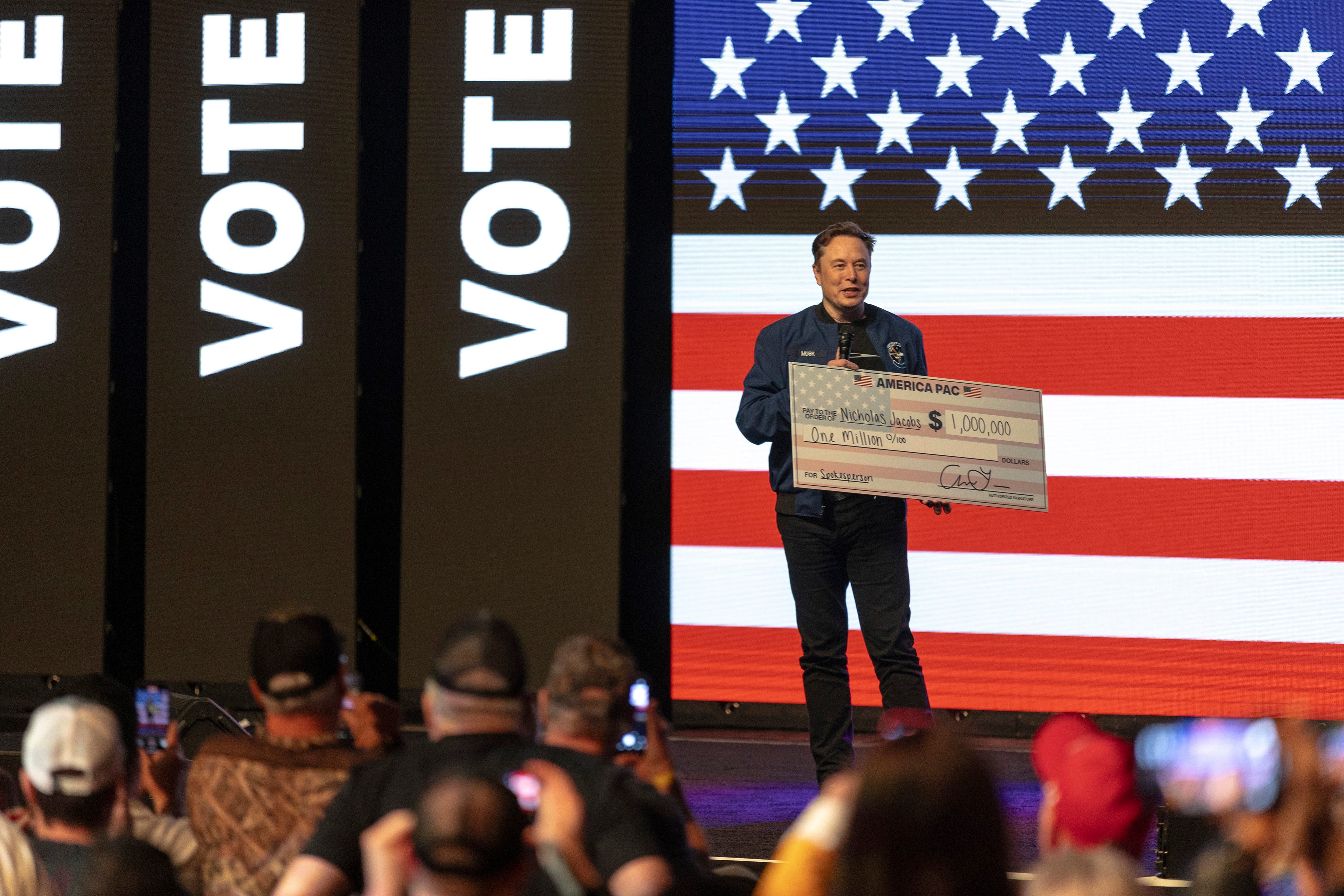
Money has always been part of American politics. But there has been a dramatic shift in recent years — increasing amounts of money coming from outside the states or districts where elections are being held, a relatively small number of wealthy donors wielding outsized influence in races, donors hiding their identities more and more, and this all threatening to further drown out the voices and influence of ordinary Americans.
Money in politics has been a primary topic for years, but I wanted to better understand the problem and what can be done. This series is the result.
We’re publishing in the middle of a midterm campaign that, for the first time ever, is on pace to outspend the presidential race that came before it. That’s, of course, part of the story.
Today, we start with the problem: a small state Senate primary in Idaho that reveals something much bigger about who our elections now answer to. Next week, we look at the forces that got us here. The week after, what might actually change it.
Every Solving For series is available to read or listen to — I narrate each one myself — at solvingfor.io. (Was this forwarded to you? Sign up here.)
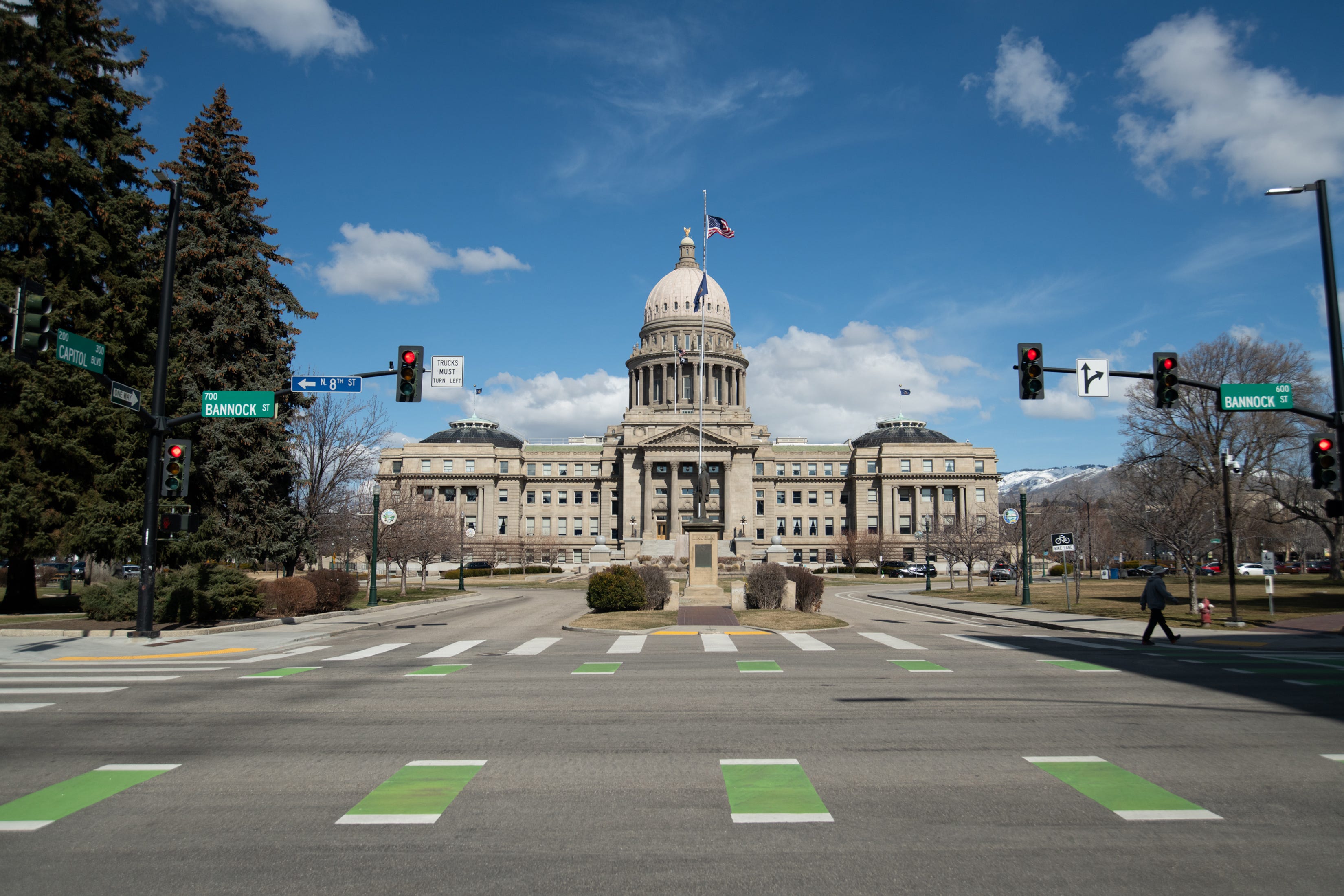
As the 2024 election season got under way, Republican Chuck Winder was a fixture in Idaho politics. The former Navy pilot had served in the State Senate for 16 years and was Senate Pro Tempore. The Idaho Statesman endorsed Winder’s re-election and called him “the model of statesmanship.”
But a Republican challenger emerged. Josh Keyser, a former Boise Police Department trainee, was now vice principal at a small private Christian school. He’d moved to Idaho six years prior. “We don’t know much about Keyser,” The Statesman’s editorial board declared, noting he declined an interview.
Even amid a rightward shift in Idaho’s Republican politics, Winder thought he would prevail. He was widely known and had raised more than $90,000 to spend in what would be a low-turnout primary in May. Keyser raised just $28,081, according to the Idaho State Journal.
But hundreds of miles away, plans were afoot in an Alexandria, Virginia office building two blocks from the Potomac River.
A political action committee there, Make Liberty Win, poured more than $107,000 into defeating Winder — more than Keyser raised for his entire campaign. The money funded text messages attacking Winder. The Senate leader was also targeted by robocalls that used manipulated recordings of his voice, according to KTVB in Boise.
Much of the spending remained out of public view until shortly before the election because financial disclosure reports were filed “right under the deadline,” wrote Idaho Education News reporter Sean Dolan. And even knowing the name of the PAC didn’t fully reveal who was behind the money: one of its major funders was an Austin, Texas-based nonprofit that does not publicly disclose its donors.
On primary Election Day, 6,134 Republicans voted. Winder lost by 282 votes. Idaho columnist Bryan Clark wrote that the state Senate “has not lost its leader this way in decades, if ever.”
Winder wasn’t alone. Out-of-state political action committees spent $1.1 million across Idaho’s 2024 primary races. The vast majority of it — $925,985 — went to attacking candidates; more than the $795,643 Idaho’s own PACs spent opposing candidates that same cycle.
“There was more money from out of state on negative ads than there was in state,” Idaho Secretary of State Phil McGrane, a Republican, said later that year.
Idaho House Speaker Mike Moyle, a Republican who was also targeted by Make Liberty Win but survived, said the spending was unlike anything he had seen before, and left candidates badly outmatched.
“A candidate is limited to a contribution of $1,000 and an out-of-state PAC can spend $1.5 million, right?” Moyle said.
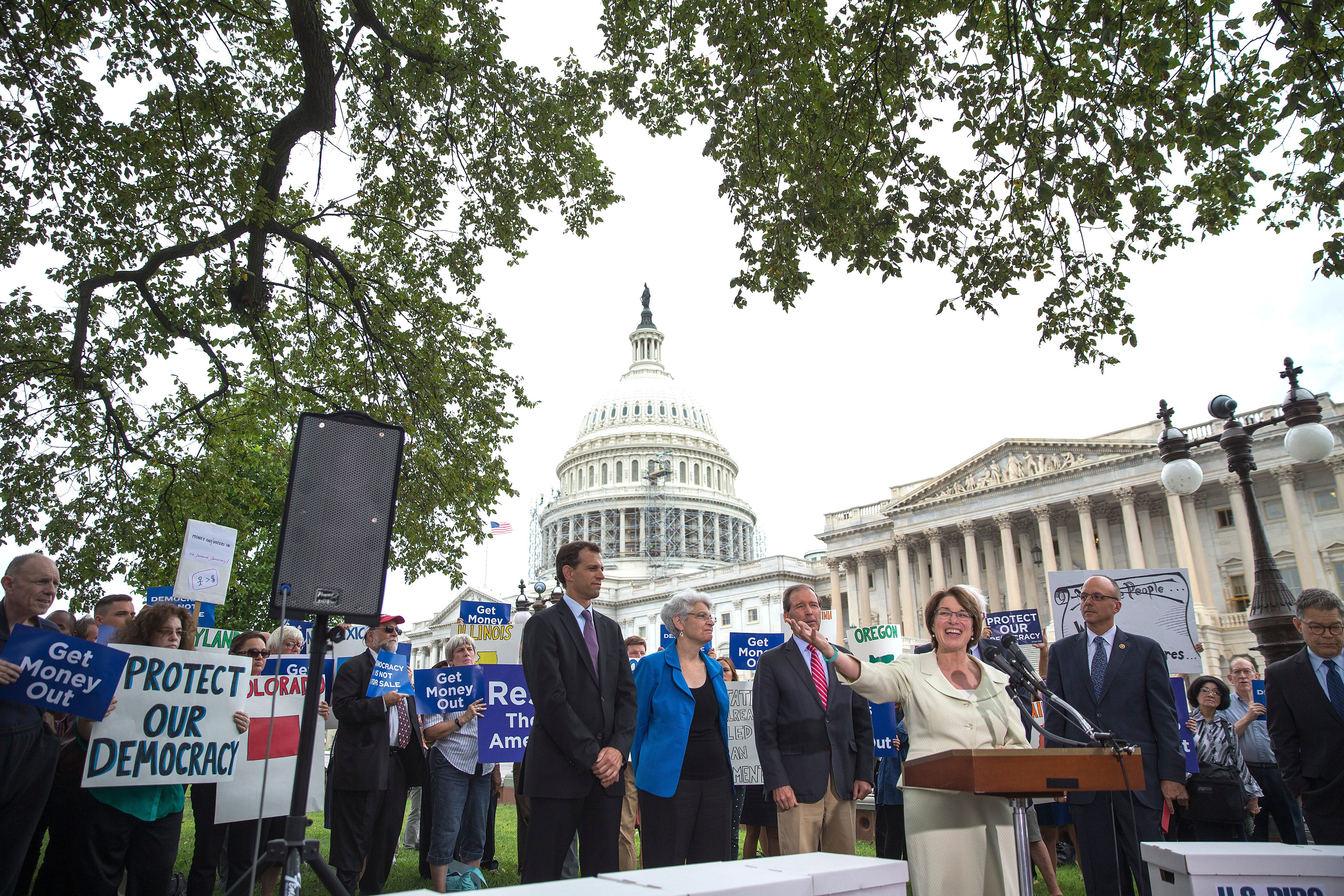
In April this year, Idaho became the 25th state to urge Congress to propose a constitutional amendment giving Congress and the states the authority to set rules on election spending.
It joined a coalition of Republican and Democratic-controlled states, organized with the non-profit American Promise, seeking to do something that hasn’t been done in more than half a century: propose and ratify a new amendment to the U.S. Constitution.
A sponsor of the resolution, Republican State Senator Carl Bjerke, said it was time to reverse “a trend that is fueling distrust, cynicism, and inequity in our electoral process.”
The Court Lifts the Lid
Money has always been part of American political life. In 1962, Jesse Unruh, the speaker of the California Assembly, told Time magazine that money was “the mother’s milk of politics.”
This year, for the first time, spending on political advertising in a midterm cycle will exceed the presidential cycle before it — an estimated $11.6 billion, according to AdImpact. The 2024 presidential race drew $11.2 billion, and $8.9 billion in 2022 midterms.
But what’s changed today is not simply how much money flows through U.S. elections, it’s who holds the financial power and what that power can do. That shift shows up in three pivotal ways.
First, more of the money helping elect candidates comes from people far removed from the voters they will represent. Second, more of it is concentrated among a small number of extraordinarily wealthy donors, sometimes hidden from public view. And, third, these forces allow a relatively narrow group to distort democracy by drowning out the voices of ordinary Americans and shaping which issues get attention, which carry political risk, and what’s politically possible.
The hinge for today’s challenge came in 2010.
In Citizens United v. FEC, the Supreme Court held that government could not bar corporations — or unions — from spending their own money independently to support or oppose candidates. Writing for a 5-4 majority, Justice Anthony Kennedy wrote that government “may not suppress political speech based on the speaker’s corporate identity.”
Two months later, SpeechNow.org v. FEC went a step further: the U.S. Court of Appeals for the D.C. Circuit said individuals could give without limit to organizations devoted solely to independent spending.
Together, the rulings created a new vehicle for political spending, the super PAC. Unlike a traditional political action committee, which can give directly to candidates but faces contribution limits, a super PAC cannot contribute directly to a campaign, but it can raise and spend unlimited sums to help elect or defeat candidates — as long as it operates independently of the campaign.
The reasoning dates back to 1976 when the U.S. Supreme Court held in Buckley v. Valeo that spending money on political speech is itself speech. The 2010 decisions expanded on this by saying that a right to free speech carries with it a right to spend money to amplify that speech — and there’s no ceiling on how loud it can become.
It’s a system built around a crucial divide. Money given directly to a candidate is capped because the Court has said large contributions create the risk of a quid pro quo, and that’s worth limiting free speech to avoid. But the Court has reasoned that independent spending — such as a super PAC producing and airing TV ads in support of a candidate on its own — doesn’t carry that risk because it’s not allowed to be done in coordination with the candidate. So, it can be unlimited.
Layered on top of this is one more wrinkle. Even as super PACs are required to disclose their donors, money can flow to them through nonprofit groups — namely, 501(c)(4) organizations — that do not have to identify the people behind the money. Thus, the super PAC’s donor list is visible but may list the non-profit and not the original source of the money behind the donation. This is “dark money.”
The net result: a political system in which candidates operate under fundraising limits and donor disclosure requirements. Meanwhile, outside groups raise and spend without limit, can keep their donors’ names hidden, and can still work to elect or defeat the very same candidate.
As attorneys for the Brennan Center wrote in testimony to the U.S. Senate, the result is that “American voters have been left in the dark about the individuals and groups spending millions of dollars to influence our votes.”
What makes this problem so hard to solve is that the Court has grounded its rulings in the First Amendment, meaning Congress and state legislatures cannot simply legislate them away.
Short of the Supreme Court changing course, restoring broad authority to limit independent election spending would require an amendment to the Constitution. This is why 25 state legislatures have now asked for one. And why changing the rules governing big money in politics presents such a formidable challenge.
Where it Comes From
The first concern is that the current system weakens a basic premise of representative democracy: elected officials answer to the people who elect them.
Trevor Potter — a Republican, former chairman of the Federal Election Commission and general counsel to both of John McCain’s presidential campaigns, and a founder of the Campaign Legal Center — put it simply: “the founders’ concept was that the people who were elected were going to represent their voters.”
But increasingly, the money electing them comes from somewhere else.
In 2024, Senate candidates raised just 27.5 percent of their itemized contributions from donors within their own states. House candidates raised only 17.6 percent from inside their districts, according to OpenSecrets — the second-lowest levels on record.
Then comes the money spent outside the campaigns altogether. Outside spending in federal elections reached a record $4.5 billion in 2024, up from $499 million in 2010, according to OpenSecrets.
As more and more money comes from somewhere else, elected leaders’ allegiance to voters who elected them grows thinner and thinner.
Who is Behind It
The second concern is the concentration of money and power — and how it’s increasingly wielded secretly.
A New York Times analysis found that in 2024 just 300 billionaires and their immediate families contributed more than $3 billion to federal elections. That amounts to nearly one-fifth of all reported federal campaign contributions, even as the group represented a tiny fraction of overall political donors.
Some individuals wrote checks on a scale once almost unimaginable. Elon Musk gave more than $291 million during the 2024 cycle, according to OpenSecrets. Five other donors or donor couples each gave more than $100 million. This includes Timothy Mellon ($197 million), Miriam Adelson ($148 million), Richard and Elizabeth Uihlein ($143 million), Ken Griffin ($108 million), and Jeffrey and Janine Yass ($101 million). All six supported Republican candidates and causes. Major Democratic donors, such as Michael Bloomberg, Dustin Moskovitz and Reid Hoffman, gave tens of millions.
But, increasingly, the original donors are hidden.
In 2024, more than $1 billion flowed into super PACs from nonprofits that did not disclose who was behind it. One of those super PACs, Future Forward, the dominant outside group backing the Democratic presidential ticket, received more than $266 million from its affiliated nonprofit, whose donors generally were not publicly disclosed.
The phenomenon crosses party lines: even as many Democrats have championed campaign finance reform, they have thrown themselves into this system. “When we get power, we can change all of the rules so that everyone plays nice,” Alexandra Acker-Lyons, who advises progressive donors, told The New York Times. “But until we have power, we can’t do that.”
The result is a political system in which enormous sums are being spent to shape people’s opinions on candidates without voters knowing who supplied the money to do it.
Increasingly, said Dan Weiner of the Brennan Center for Justice, it’s a system “where transparency is just optional.”
How it Controls the Room
The third concern is what concentrated political money actually does — and how it distorts the debate.
Research by political scientists Martin Gilens and Benjamin Page predating Citizens United found that the financial elite and business interests already had substantially more independent influence over federal policy than average citizens. A follow-up book in 2017 found that when 60 to 70 percent of Americans favored a policy change, it was enacted only about 40 percent of the time.
“The public is often thwarted through inaction,” said Page.
Two fights in recent years show the pattern. Universal background checks for gun sales have polled above 85% for over a decade and never passed Congress. The Kids Online Safety Act passed the Senate 91-3 and polled at 86% support, yet failed to become law amid heavy lobbying. Major tech companies spent more than $51 million, including Meta spending more than $18 million alone.
A very recent example is the cryptocurrency industry. It created a super PAC called Fairshake and spent nearly $196 million in the 2024 cycle supporting crypto-friendly candidates of both parties. Congress passed the Genius Act in 2025, creating industry-friendly rules for stablecoins. The SEC alone has dropped or paused nearly 60 percent of its crypto enforcement cases since Trump took office. Yet this week the industry’s sweeping cryptocurrency bill, the Clarity Act, failed to advance despite the heavy political spending — in part because of concerns related to Trump and his family’s own crypto company, World Liberty Financial.
The story illustrates both the reach and the limits of political money. It does not guarantee an outcome. But it ensures an industry has a seat at the table, helps set the terms of the debate, and can remind lawmakers the political costs of saying no.
The Empty Building
There are still federal campaign-finance laws, and the Federal Election Commission is supposed to enforce them. After all, in this current system, a super PAC is not allowed to coordinate with a candidate’s campaign. Each is supposed to operate independently of the other, even if they share the same goal.
But this election year no one is watching.
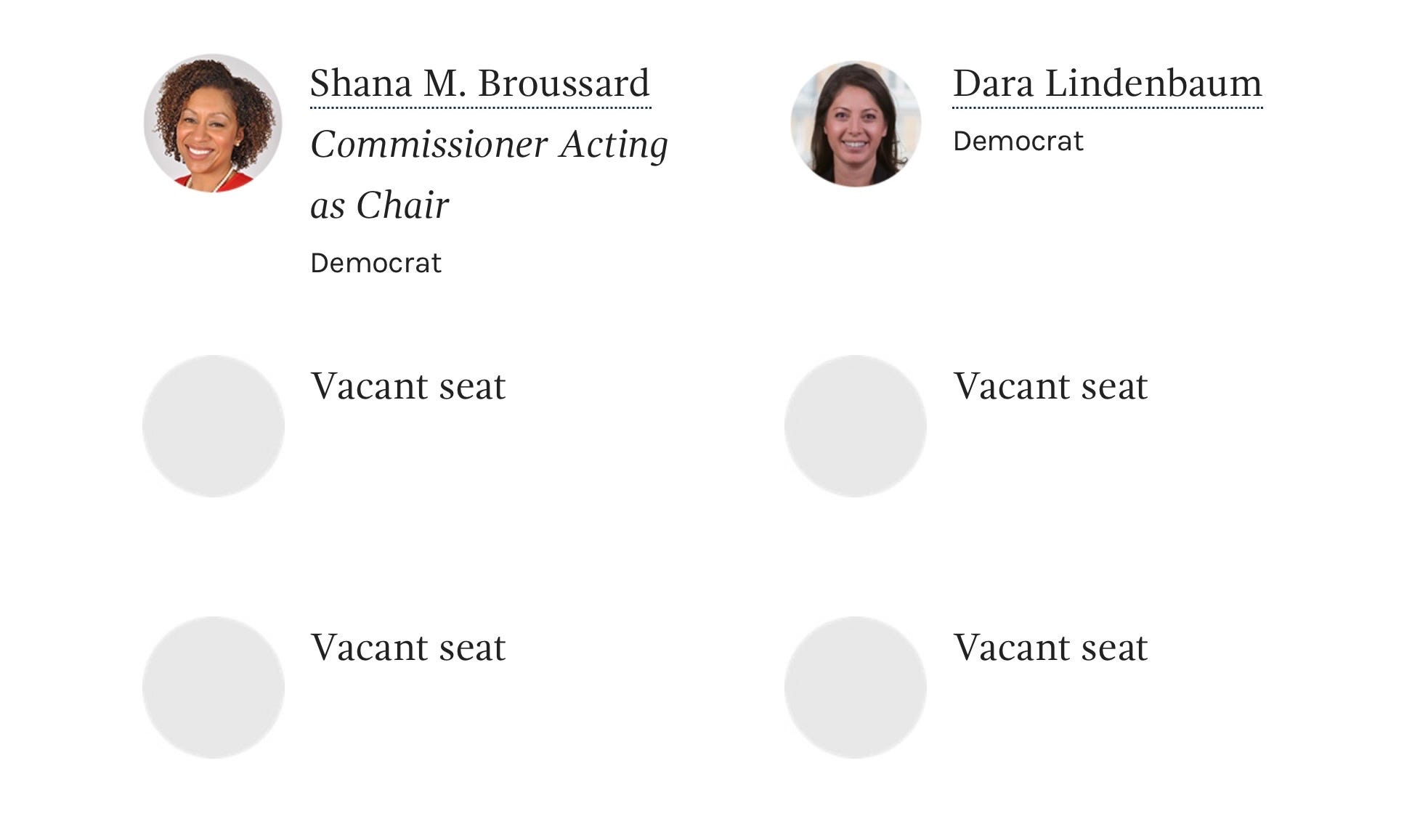
The commission is designed to have six members. Today it has two. Federal law generally requires four votes for major actions, including enforcement decisions, regulations and advisory opinions. The FEC has lacked a quorum since April 2025 — it hasn’t convened a single meeting in nearly a year and a half.
“Without a quorum, the FEC is a watchdog without a bark or bite,” said Michael Beckel, senior research director at Issue One.
Which brings us back to Idaho.
The truth is that almost none of what happened to Chuck Winder was illegal.
An outside group hundreds of miles away spent nearly four times more money attacking him than his opponent raised for his entire campaign. Some of the original sources behind that money were obscured. And Winder lost by 282 votes.
The system did not malfunction.
It worked largely as the law allows it to work.
Prefer to listen? I narrate each edition myself. Scroll up to find the audio version at the top of this page.
Check out previous series:
China’s Rare Earth Dominance | AI Safety | Decline of Local News | End of Amateurism in College Sports | Shrinking Competition in Congress | Social Media and Teen Mental Health | A World Rearming as the Global Rules-Based Order Weakens | America’s National Debt Crisis | Reinventing the American Dream | The New Space Age
Solving For takes on one hard problem at a time — unpacking the stakes, exploring the forces behind it, and surfacing real paths forward. Each series unfolds weekly in three parts. Learn more.